California Road Trip: Our Final Morning in New Orleans
Our time in New Orleans was coming to an end
Before we loaded up the Jeep Gladiator and continued the long drive back to Florida, I decided to head out on my own one more time. I wanted to pick up a few souvenirs and take some last-minute photos of the French Quarter. It was a gray morning, and some of the streets were still relatively quiet. That gave me a chance to slow down and really look at the architecture and historic landmarks that make this part of New Orleans so unique. I made my way toward Jackson Square, St. Louis Cathedral, and the Mississippi River, taking pictures along the way.
One Last Walk Through the French Quarter
Even before reaching Jackson Square, there was plenty to photograph. The French Quarter is filled with historic buildings featuring balconies, decorative ironwork, colorful facades, and covered sidewalks. Walking the streets early in the day gave me a completely different perspective than the busy evening we had experienced on Bourbon Street.
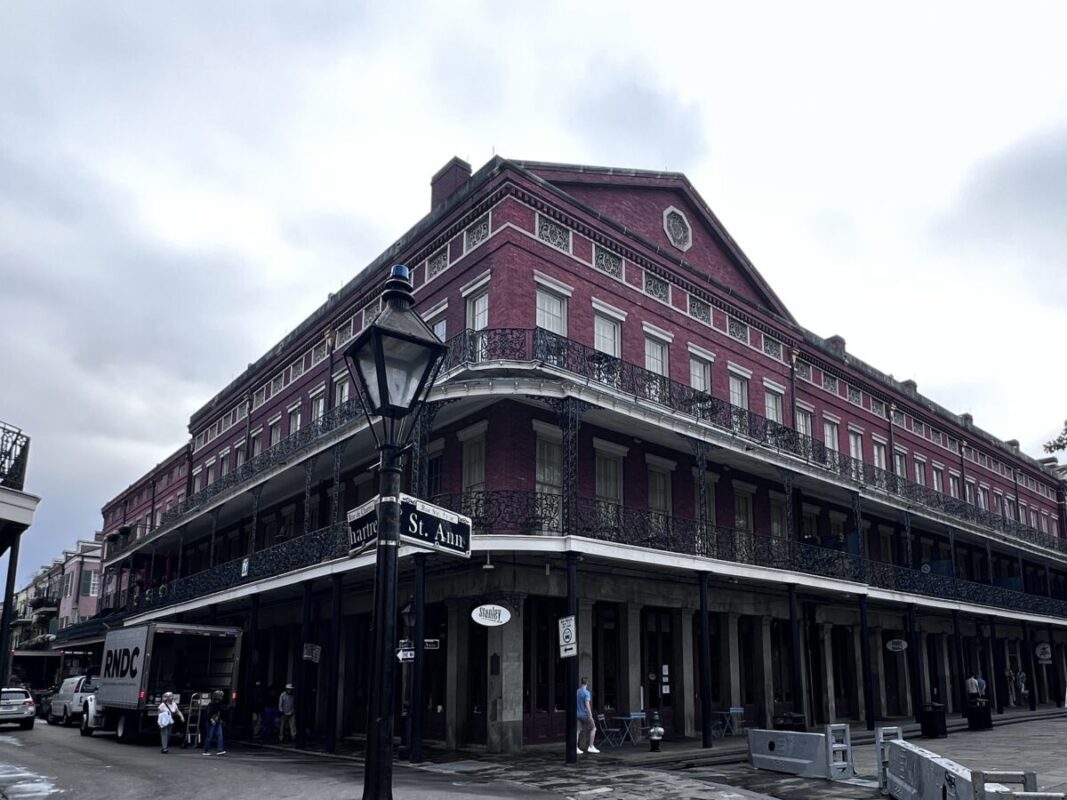
Pontalba Buildings surrounding Jackson Square
One of the buildings that immediately caught my attention was the large red-brick building at the corner of St. Ann Street. The Pontalba Buildings are among the most recognizable architectural features surrounding Jackson Square. Built in 1849–1851, they helped establish the distinctive appearance of the square that visitors see today.
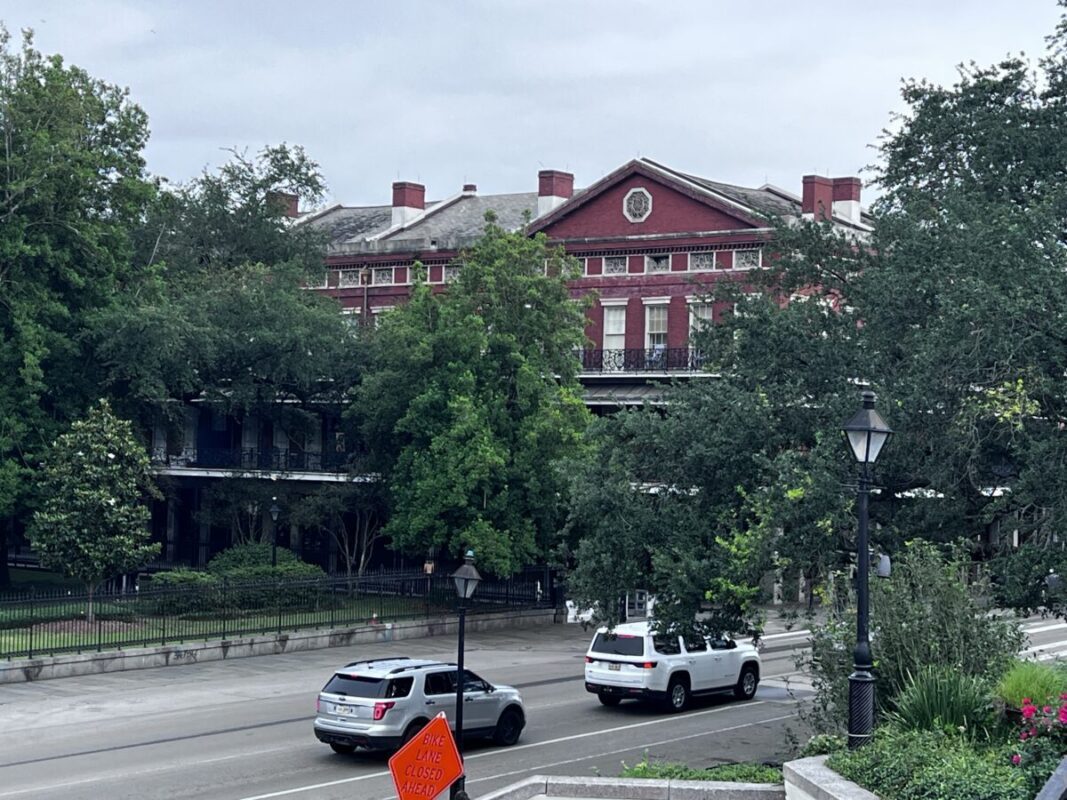
Shops and Restaurants along St. Ann St.
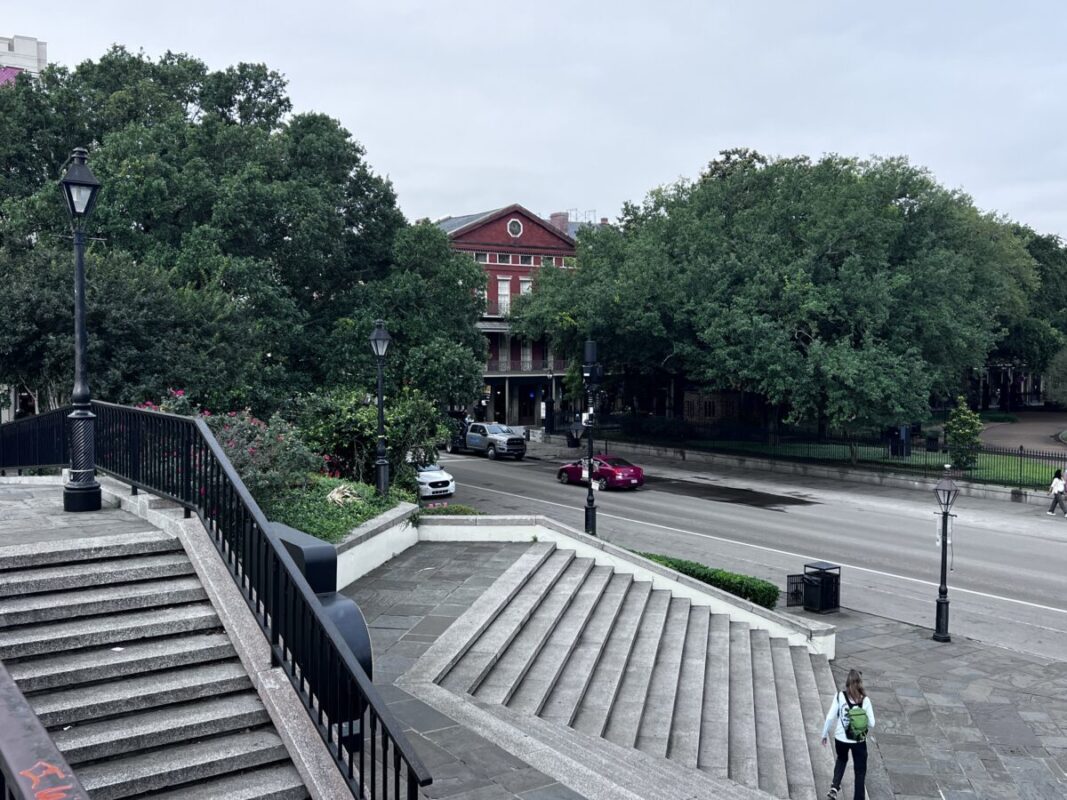
Shops along St. Peters Street
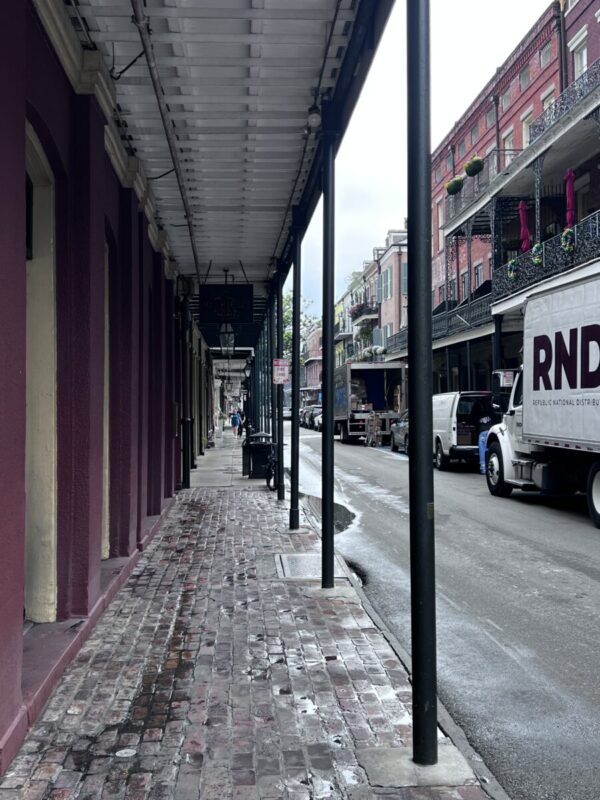
French Quarter Sidewalk
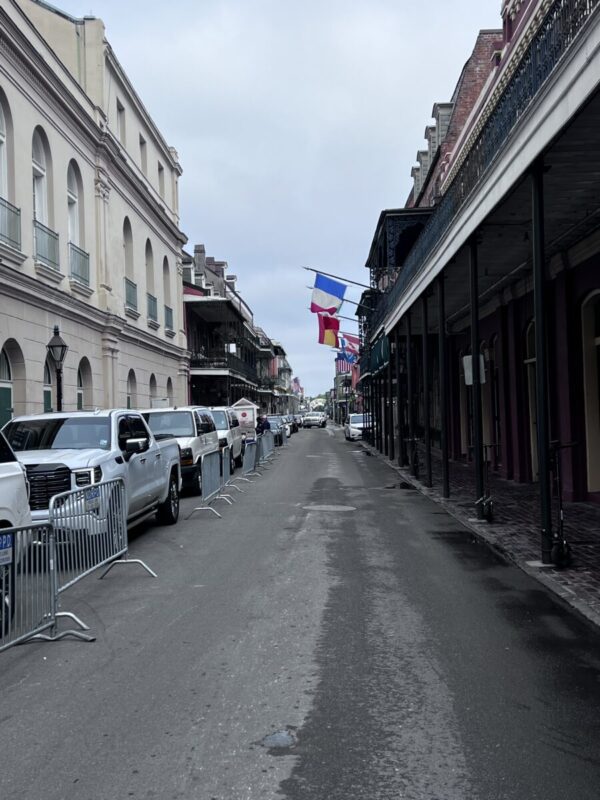
French Quarter Street
After spending some time around the monuments, I continued wandering through the surrounding streets. The architecture changes from block to block, but the balconies and ironwork remain a constant reminder of the neighborhood’s distinctive character. Even buildings that aren’t major landmarks are interesting to photograph. That’s one of the things I enjoy most about walking around New Orleans—you don’t necessarily have to be looking for a particular attraction to find something worth photographing.
A Sobering Memorial
While walking through the Quarter, I also came across a memorial remembering the victims of the January 1, 2025 attack on Bourbon Street.
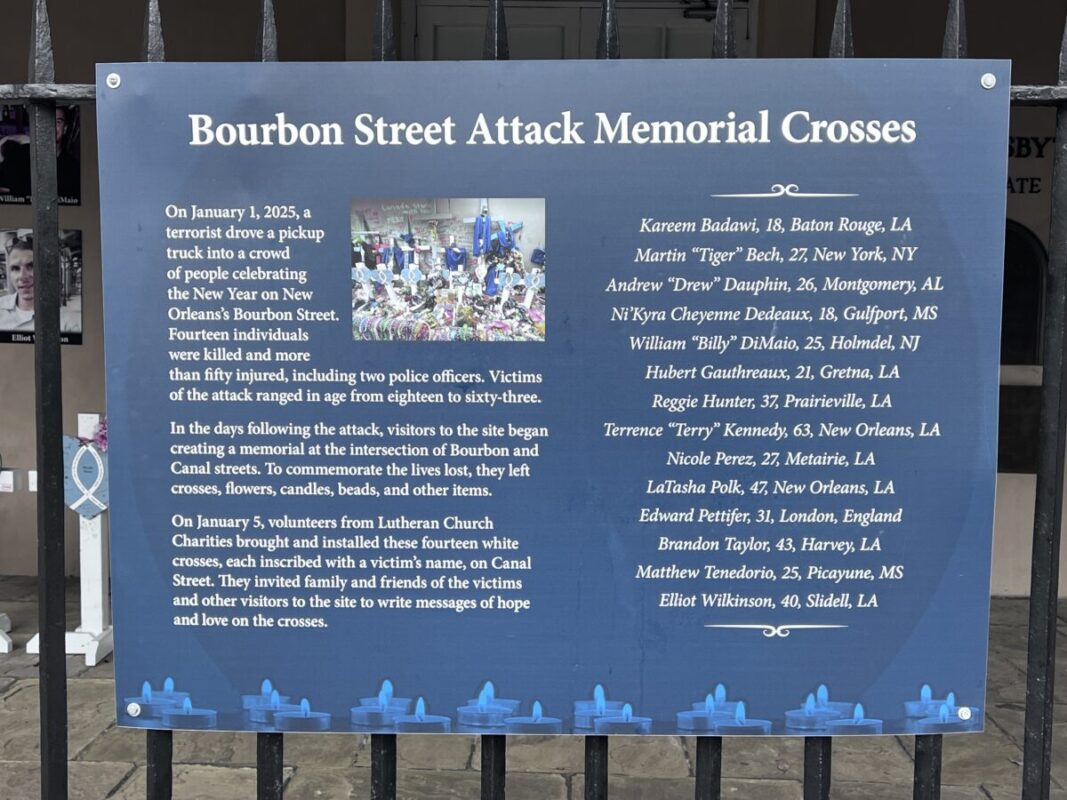
Bourbon Street Attack Memorial Crosses
The memorial commemorates the fourteen people who lost their lives and the many others who were injured when a pickup truck was driven into a crowd celebrating New Year’s Day. The memorial includes fourteen white crosses, each bearing the name of one of the victims.
It was a sobering moment during an otherwise leisurely morning of sightseeing. Seeing the names and reading the story on the memorial was a reminder that the places we visit can carry much more history than what we see on the surface.
Jackson Square and St. Louis Cathedral
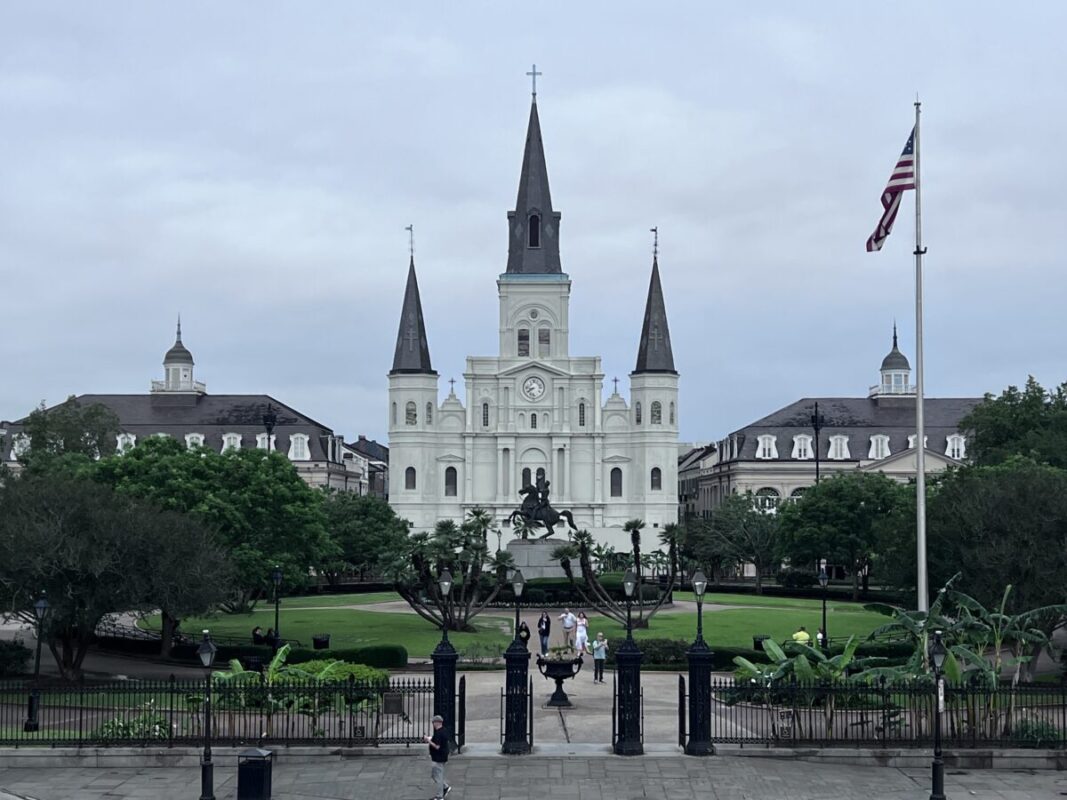
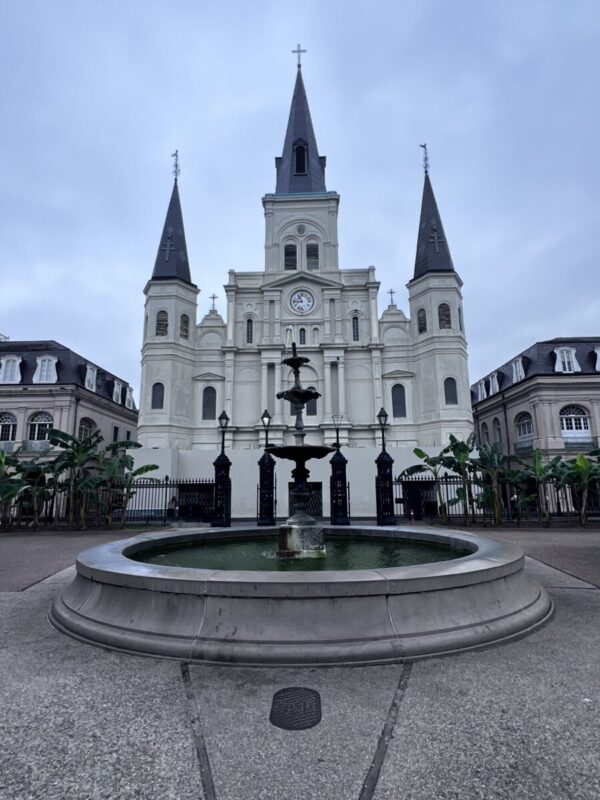
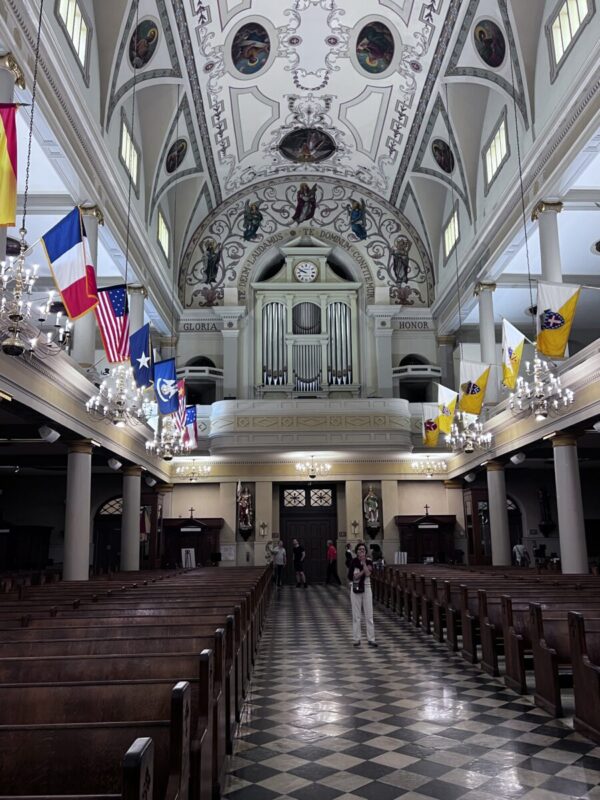
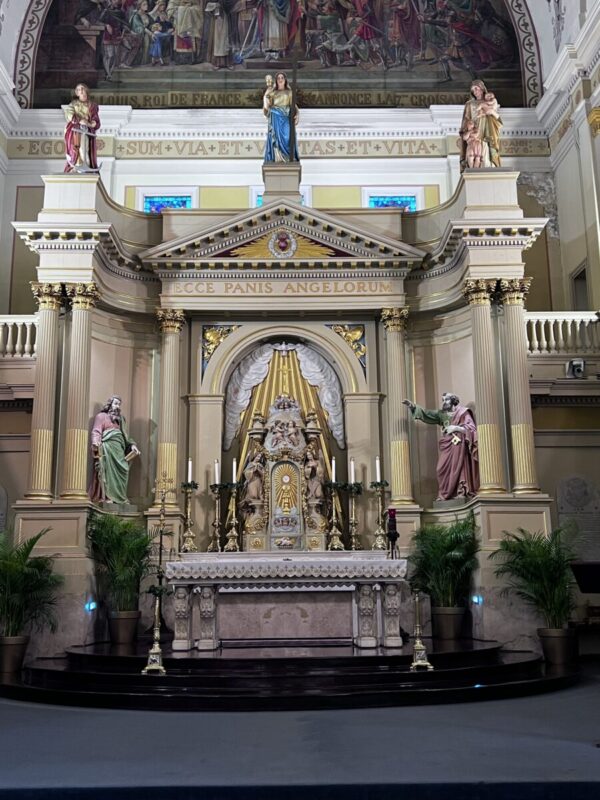
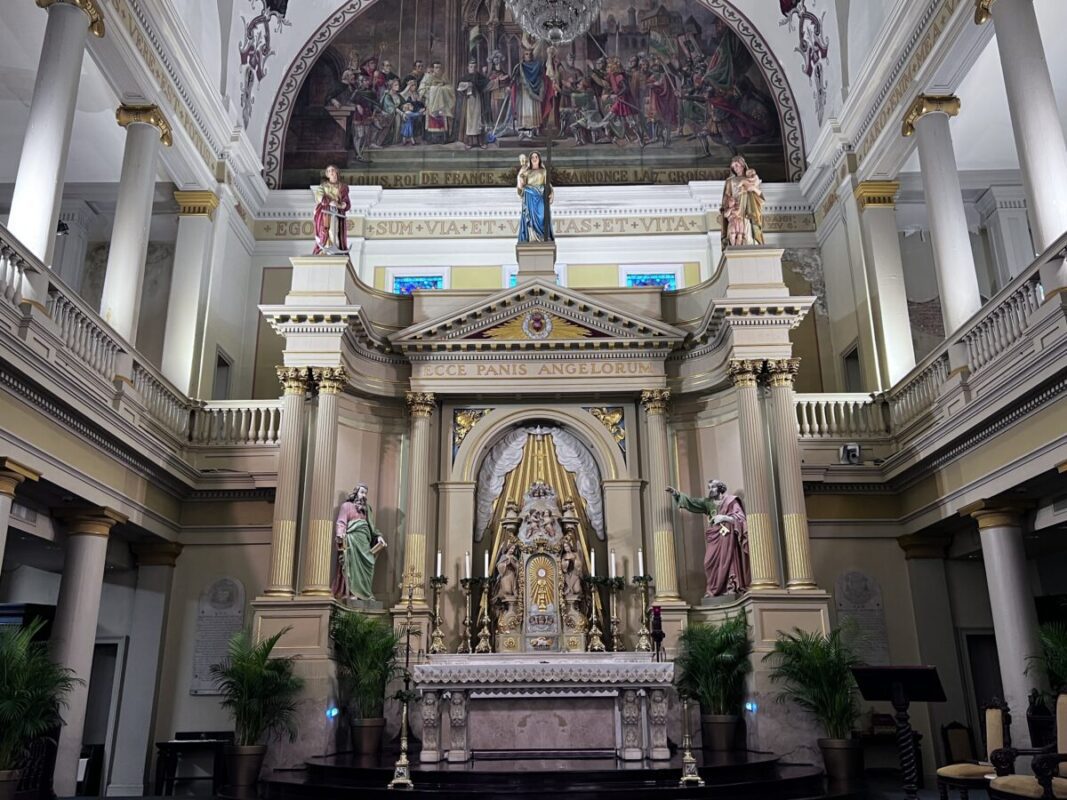
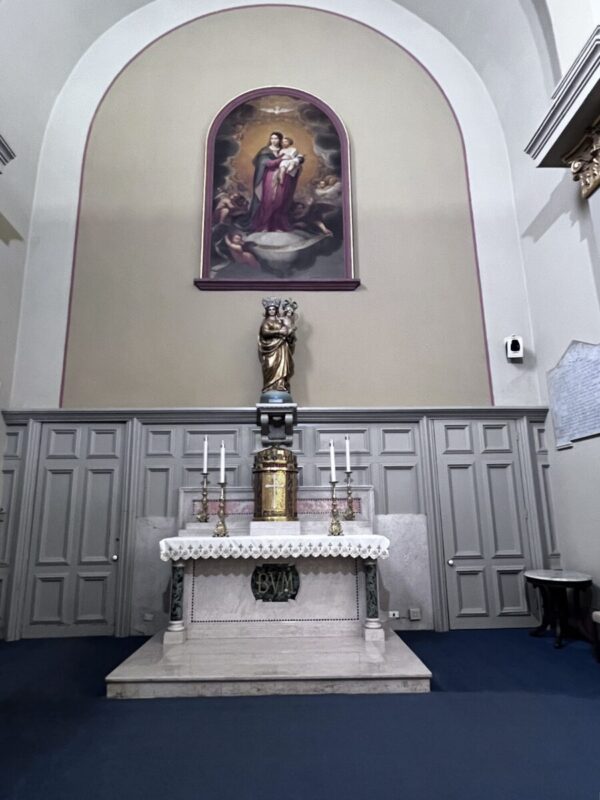
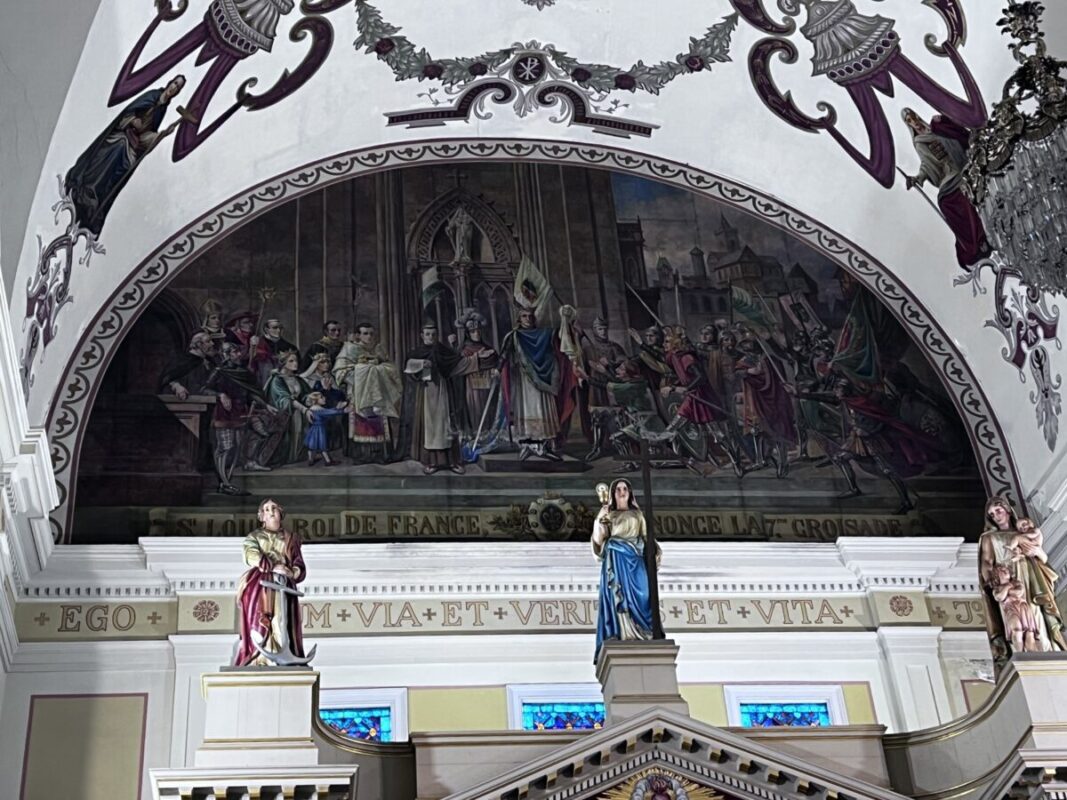
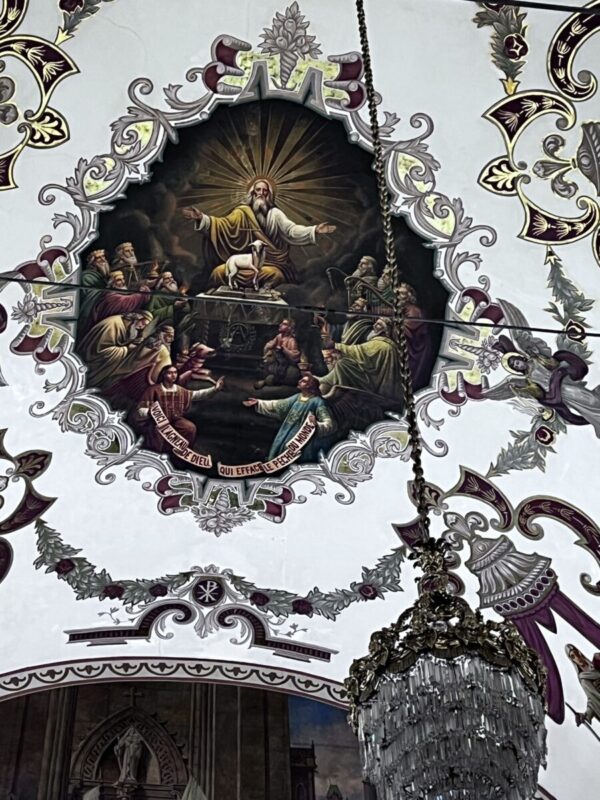
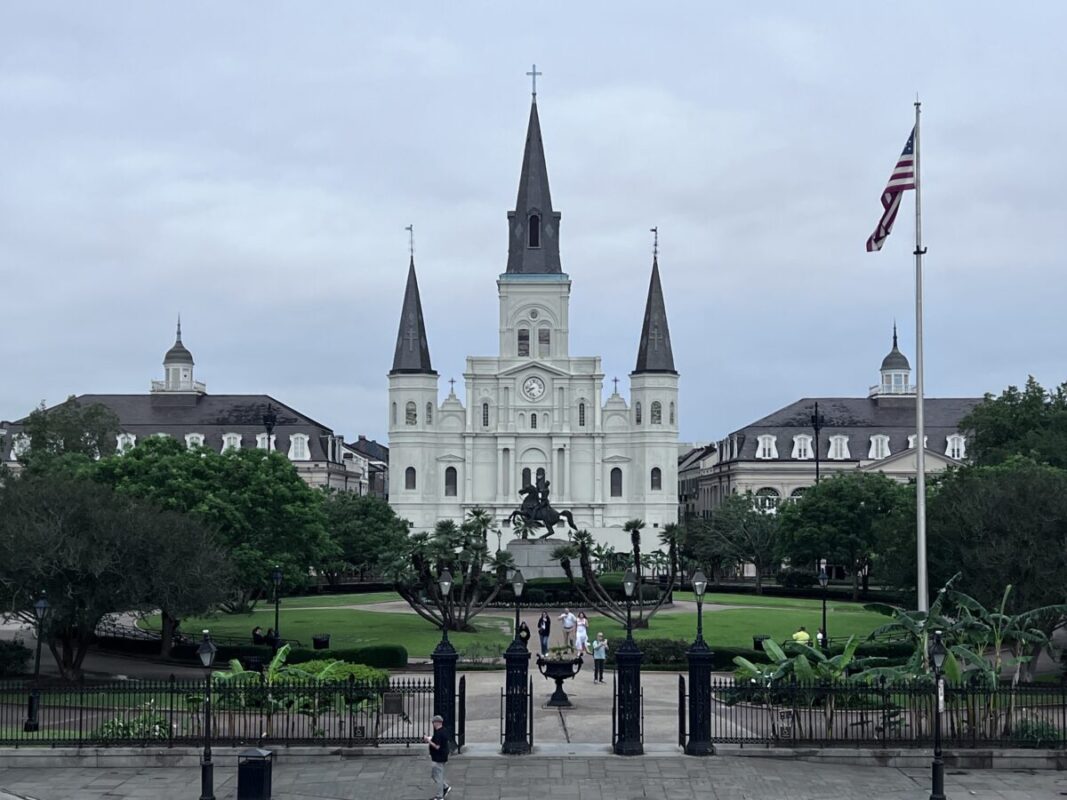
From there, I continued toward Jackson Square. Jackson Square sits in the heart of the French Quarter, overlooking the Mississippi River. The 2.5-acre park is one of New Orleans’ best-known landmarks and is also a National Historic Landmark. The view across the square toward St. Louis Cathedral is one of those classic New Orleans scenes that never gets old. The cathedral community dates back to the founding of New Orleans in 1718, making it one of the oldest continuously active Catholic cathedral communities in the United States. I took several pictures of the cathedral from different angles, including a straight-on view showing the fountain in the foreground.
The cathedral was not the only historic building that caught my attention. The Presbytère sits immediately beside it and forms part of the impressive architectural ensemble surrounding Jackson Square. Construction of the Presbytère began in 1791 and was completed in 1813. The square itself has changed considerably over the centuries. What began as the Place d’Armes eventually became Jackson Square, and the surrounding gardens, ironwork, buildings, and monuments created the appearance we see today.
Of course, you can’t visit Jackson Square without seeing the monument that gives the square its name. The equestrian statue of Major General Andrew Jackson stands prominently in the center of the square. I liked the way the palm trees framed this view of the statue. The monument is especially striking when viewed against the historic buildings surrounding the square.
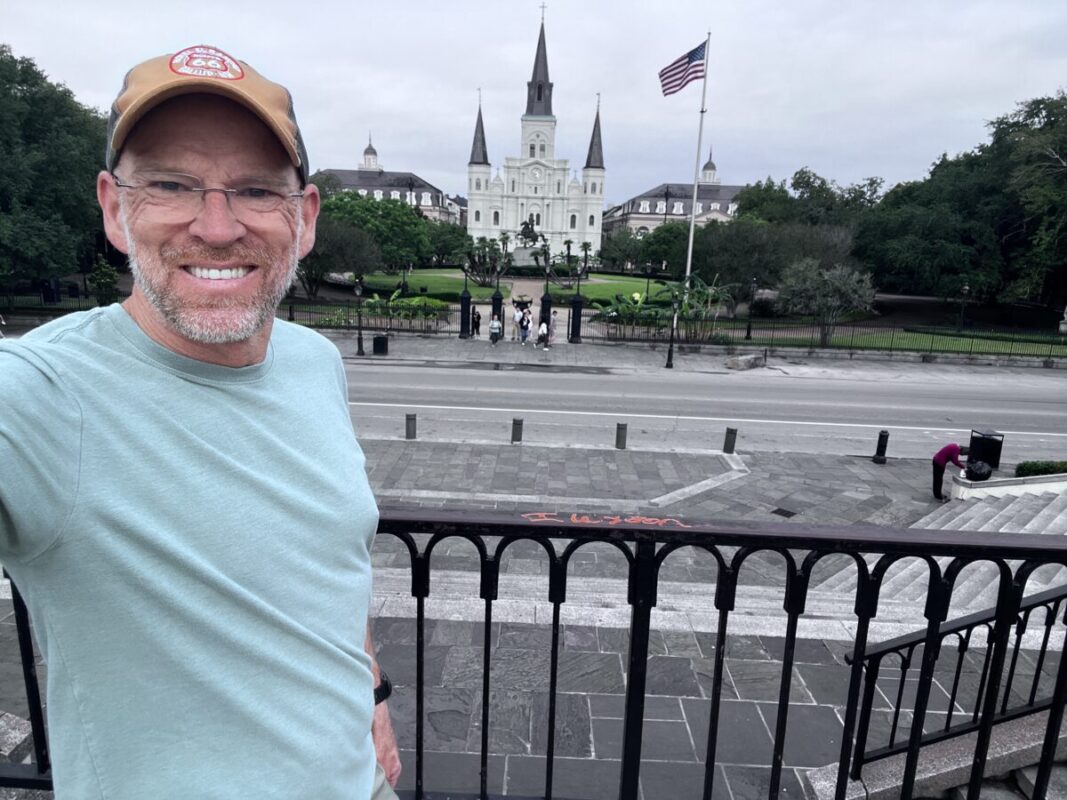
In front of the square and cathedral
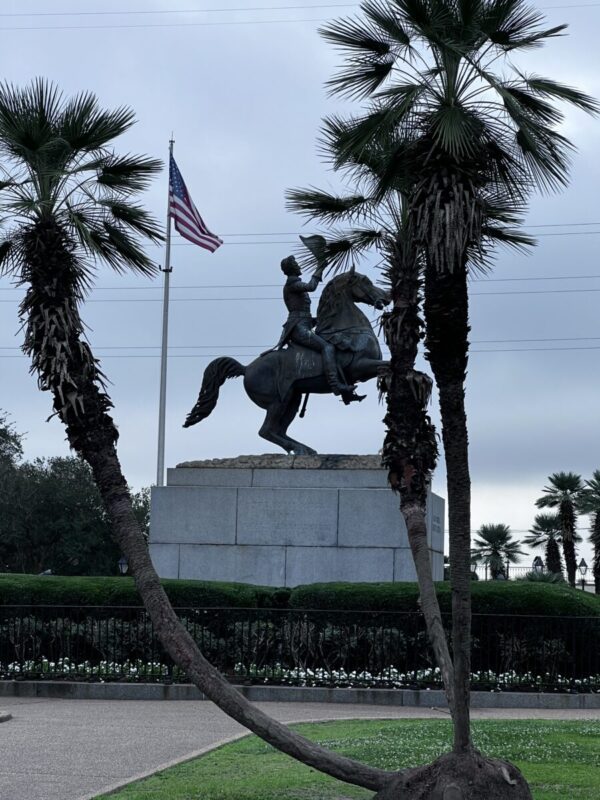
Andrew Jackson
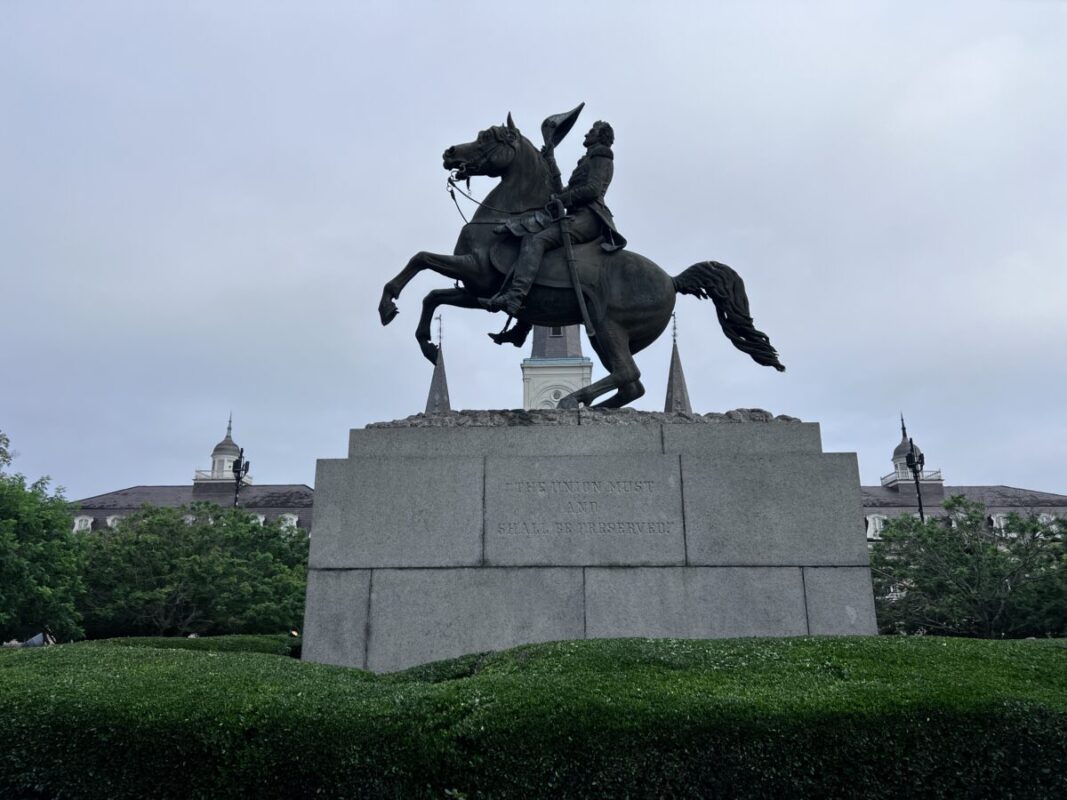
Andrew Jackson
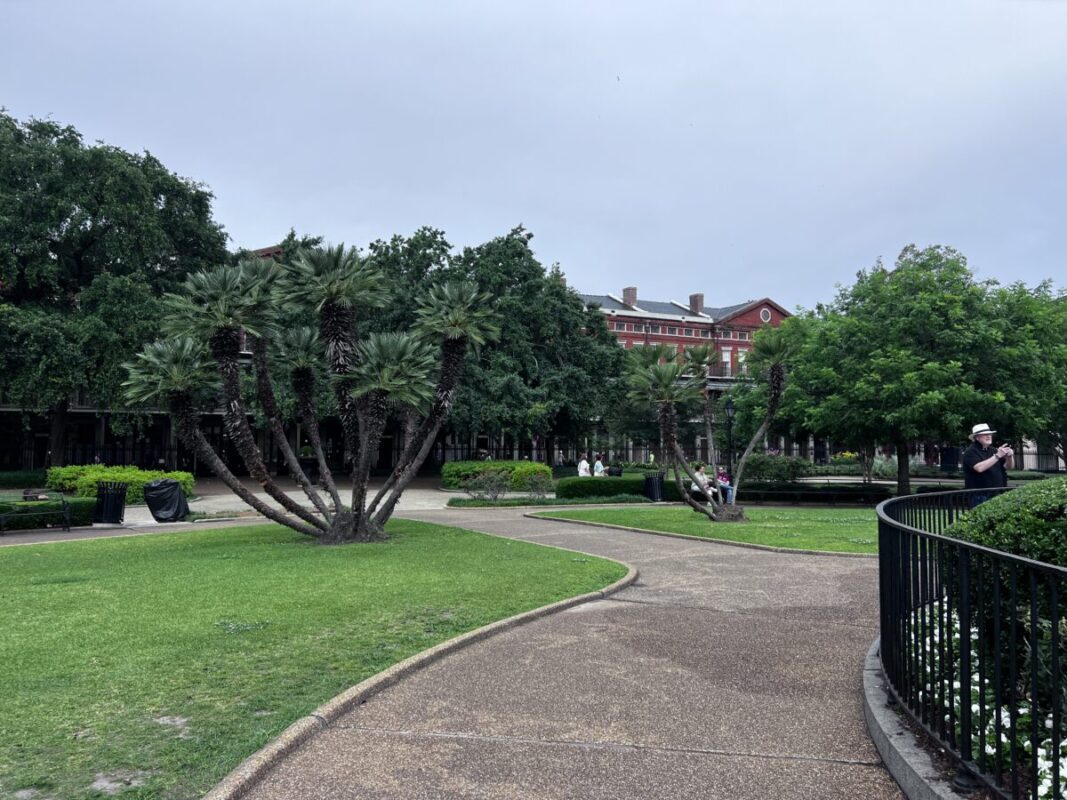
Buildings on St. Anne
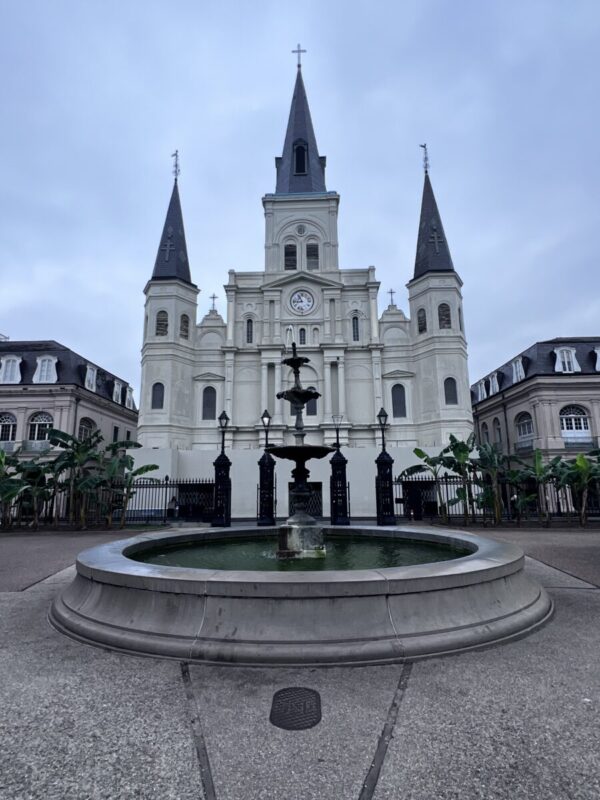
St. Louis Cathedral
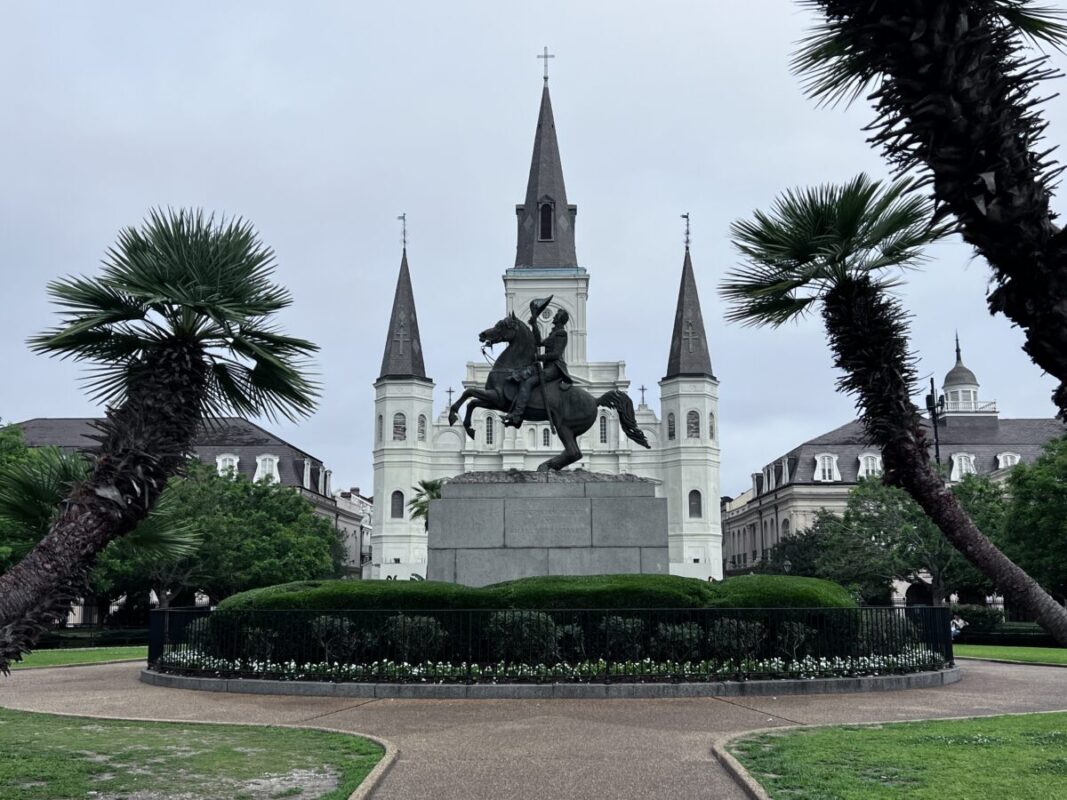
Andrew Jackson in front of the Cathedral
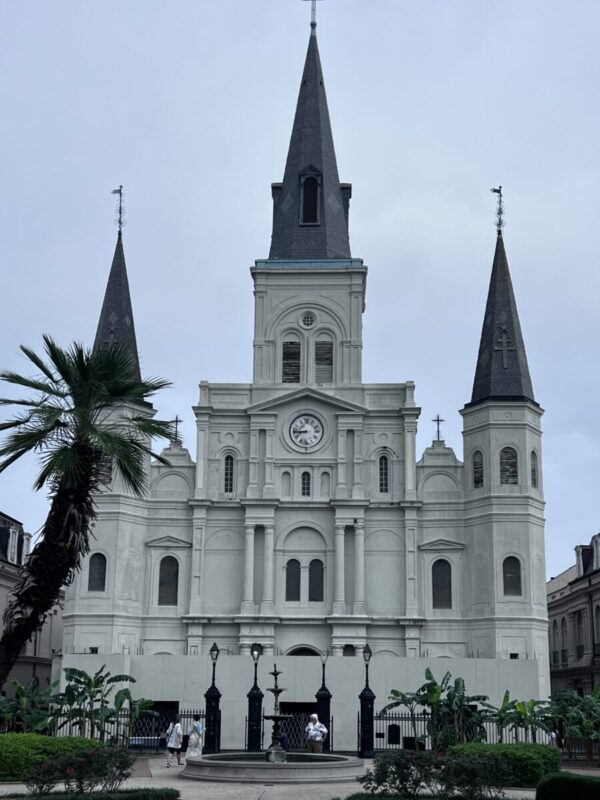
St. Louis Cathedral
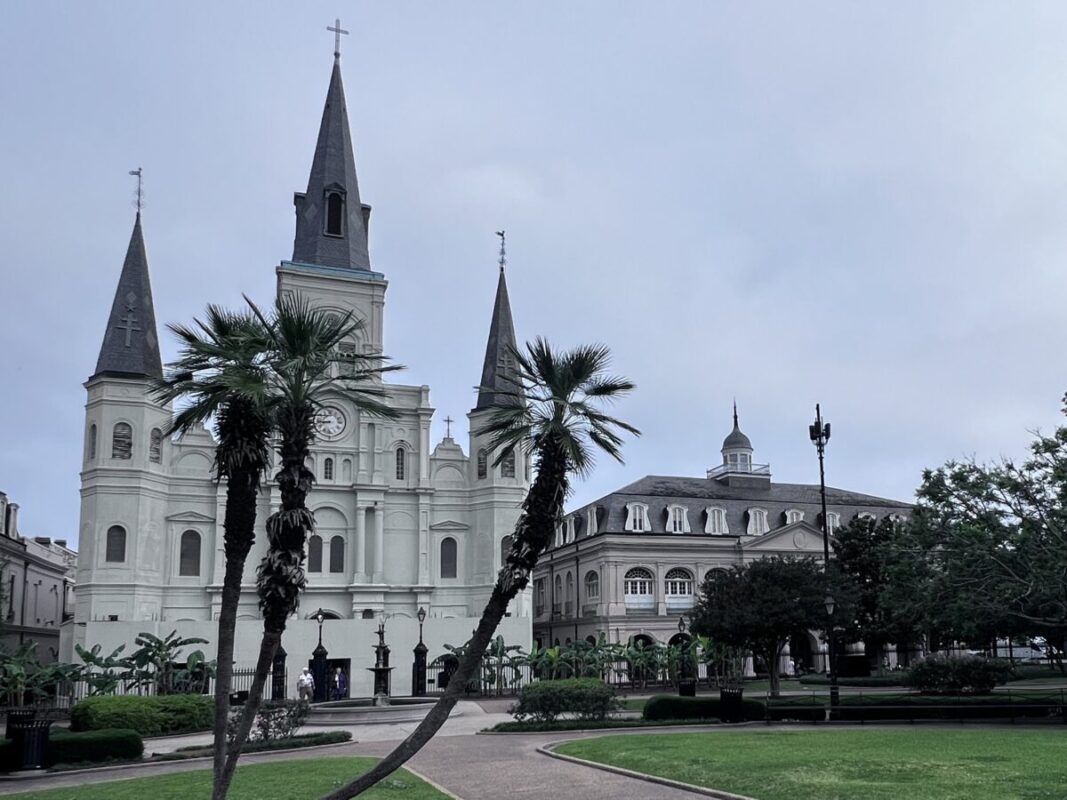
St. Louis Cathedral/Louisiana State Museum
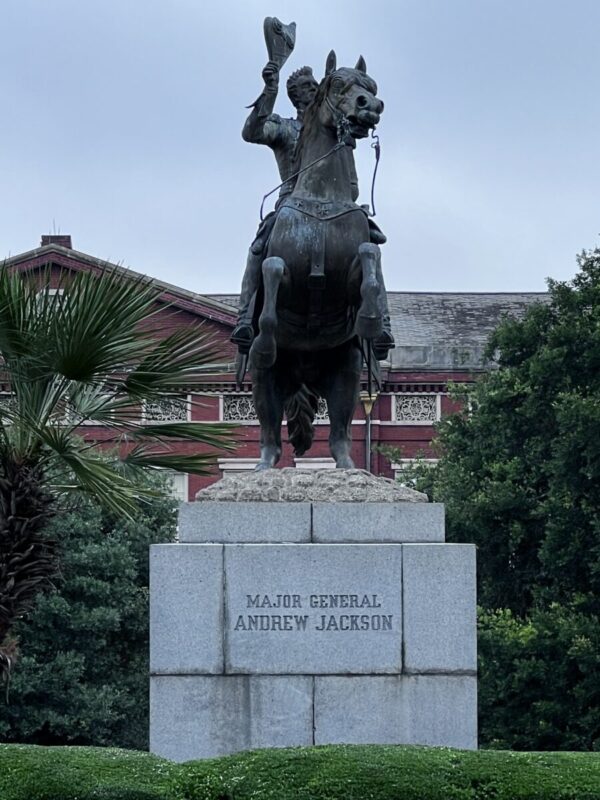
Andrew Jackson close-up
The Founder of New Orleans
As I continued walking, I came across another monument that tells an important part of New Orleans’ story.
Jean-Baptiste Le Moyne de Bienville monument
The monument honors Jean-Baptiste Le Moyne de Bienville, the French colonial official associated with the founding of New Orleans. The monument was created by sculptor Angela Gregory and depicts Bienville along with other figures representing the city’s early history. I walked around the monument and took several pictures because each side provides a completely different view. Seeing the monument from the side also made it easier to appreciate the different figures incorporated into the sculpture. It’s one of those landmarks that could easily be overlooked if you’re simply walking through the French Quarter, but taking a few minutes to look at it reveals another piece of New Orleans history.
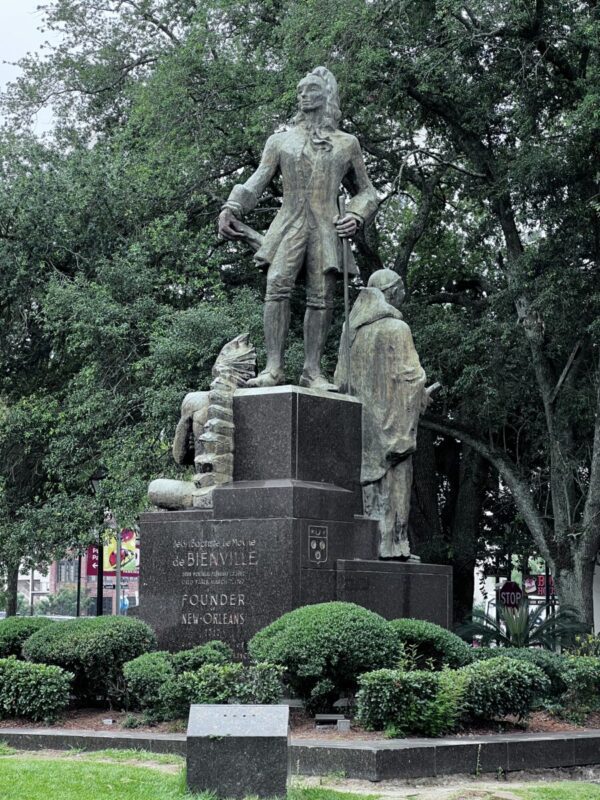
Bienville monument
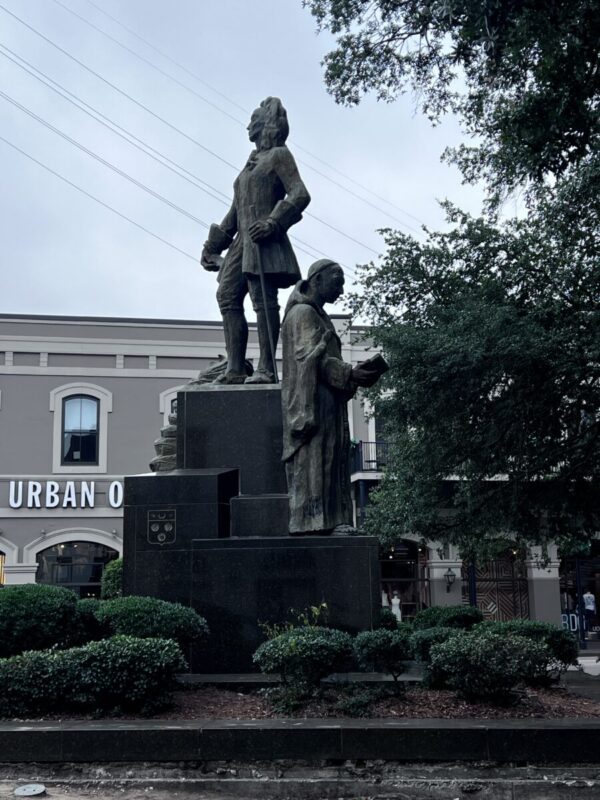
Bienville side view
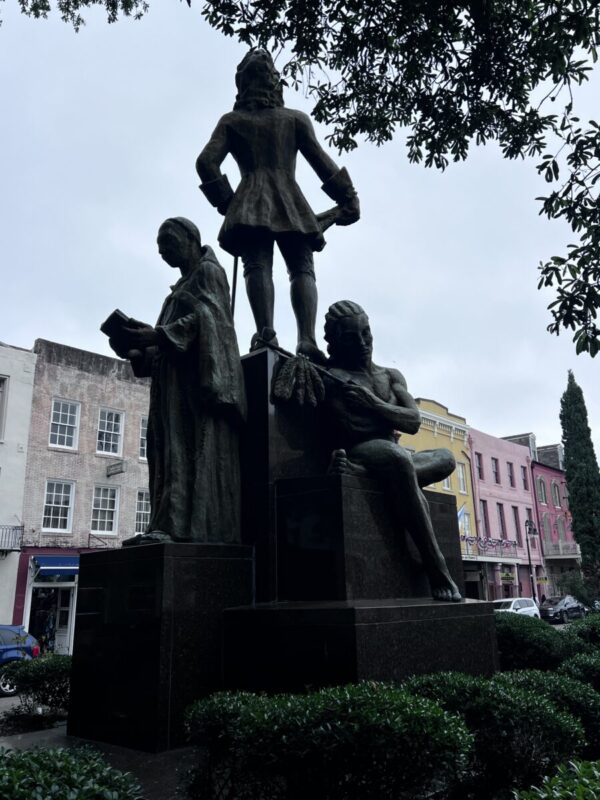
Bienville monument reverse view
One Last Look at the Mississippi River
Eventually, I made my way down toward the riverfront. The Mississippi River has been central to New Orleans since the city’s earliest days, and the riverfront provides a completely different view of the city compared with the narrow streets of the French Quarter. The Steamboat NATCHEZ was docked along the riverfront when I arrived. The NATCHEZ is one of the most recognizable sights along the New Orleans riverfront and continues to operate sightseeing cruises on the Mississippi. I also captured a few wider views of the river. Watching the barge make its way down the river was a nice reminder that this isn’t just a scenic waterfront. The Mississippi remains an active working river and an important part of New Orleans.
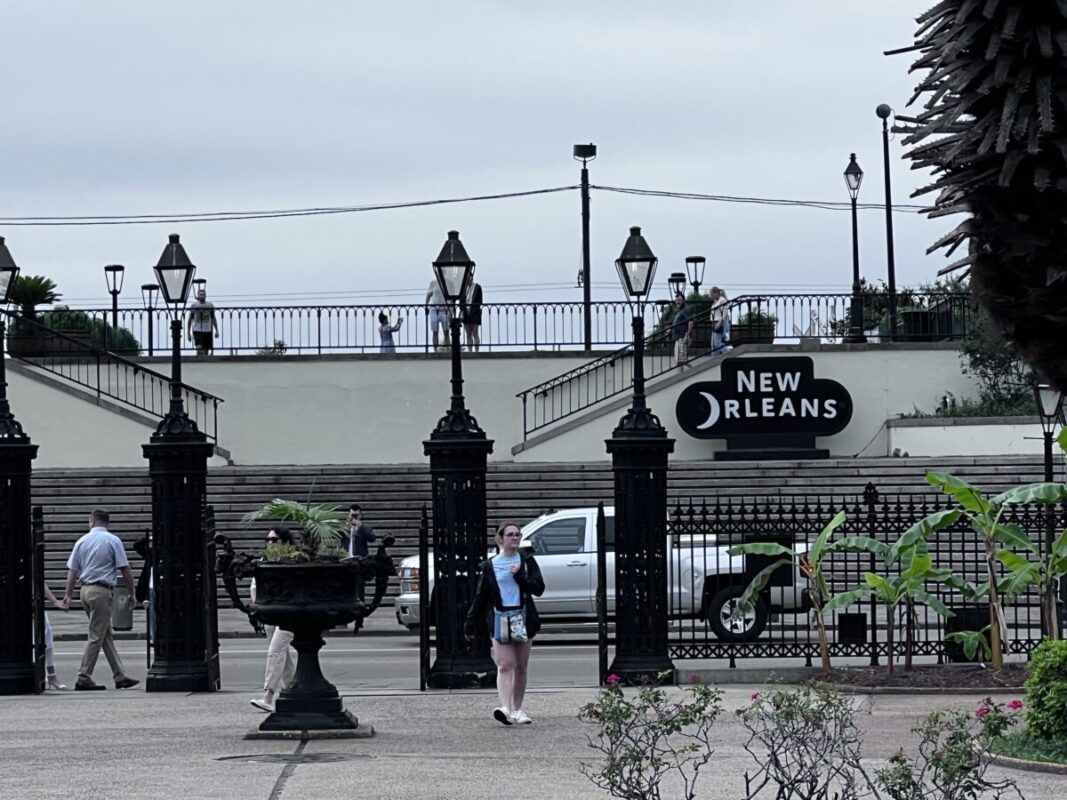
New Orleans Sign

Mississippi River

NATCHEZ Steamboat

NATCHEZ Steamboat and Bridge
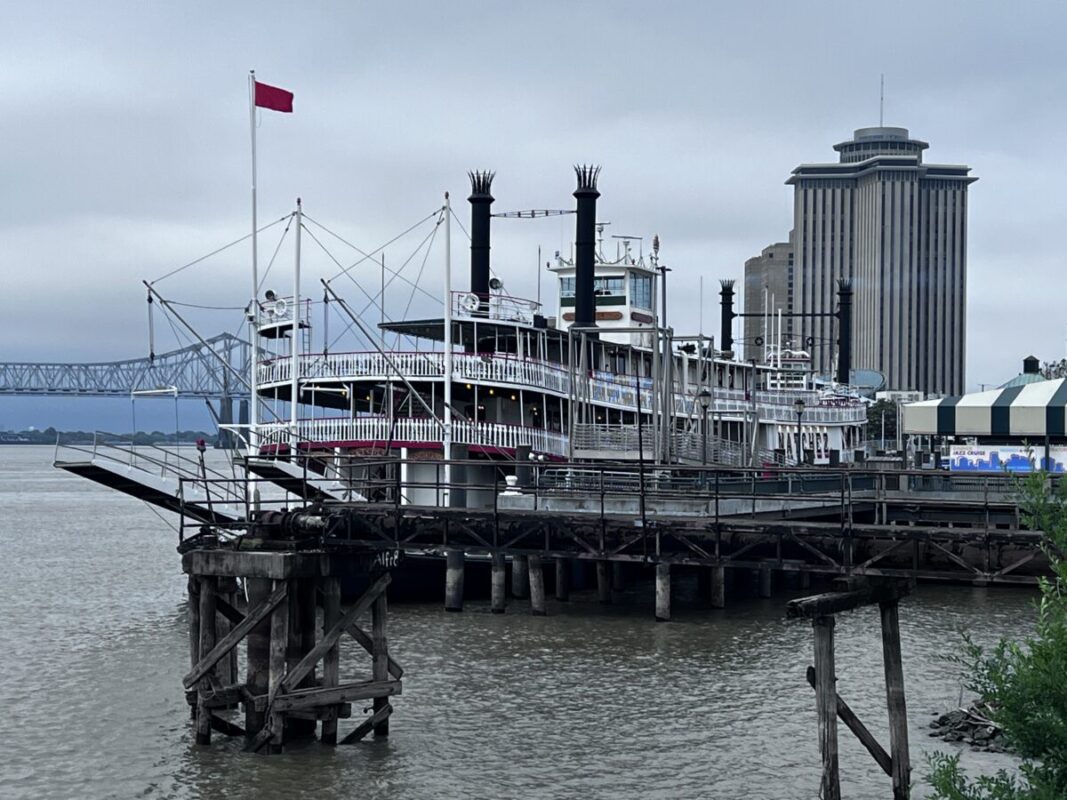
NATCHEZ Steamboat

Barge
Another Piece of New Orleans History
Before heading back, I also photographed the Jackson Brewery building. The Jackson Brewery, also known as Jax Brewery, dates to 1891 and was originally built as a brewery. The building later closed as a brewery and was converted into shops. Its location near the river makes it an easy landmark to encounter while exploring the lower French Quarter.
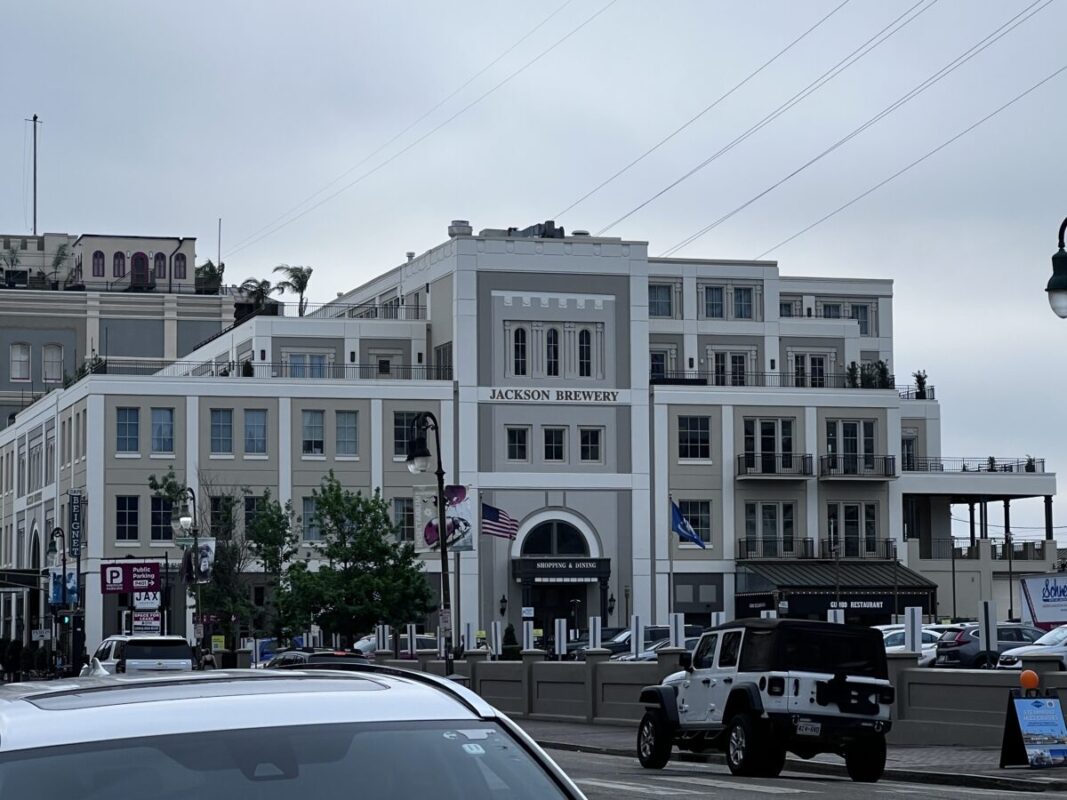
Jackson Brewery
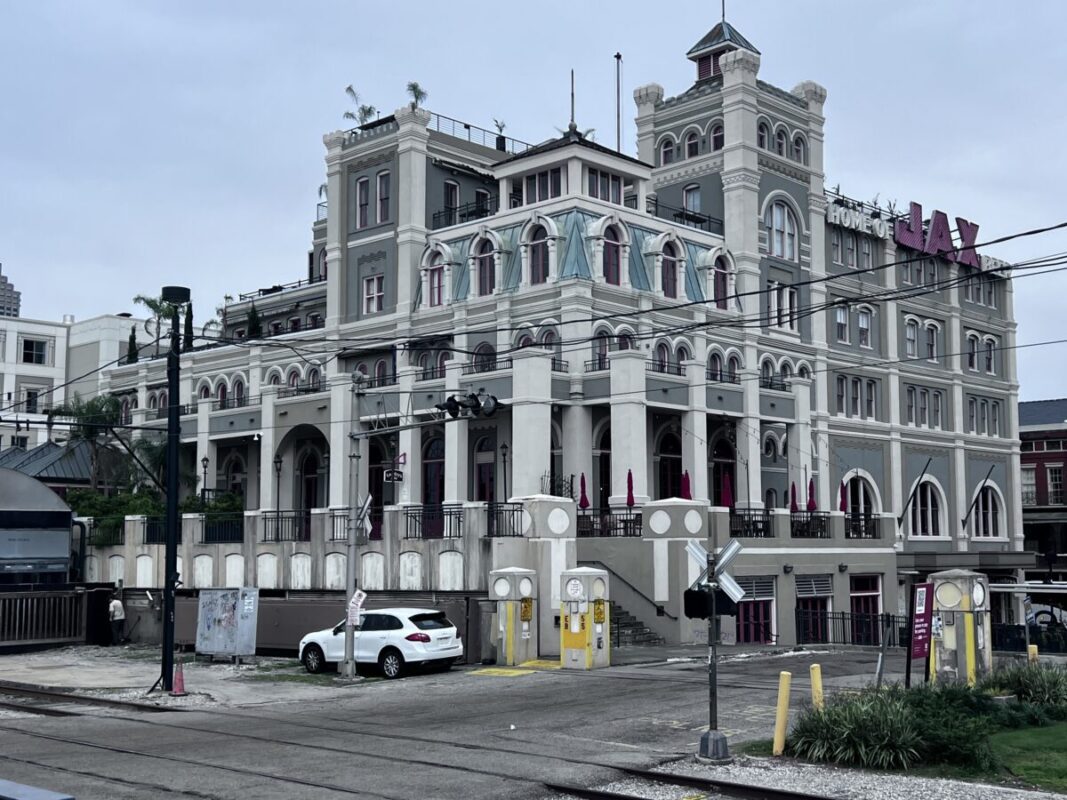
Backside of Jackson Brewery
One Last Morning in New Orleans
By this point, I had spent the morning walking much farther than I originally intended. What started as a quick trip to pick up souvenirs turned into one final opportunity to photograph New Orleans before leaving. I had photographed St. Louis Cathedral, Jackson Square, Andrew Jackson, the Bienville monument, the French Quarter streets, the Mississippi River, and the Steamboat NATCHEZ. I also encountered a memorial that provided a much more sobering reminder of the city’s recent history. That mix of beautiful architecture, centuries of history, riverfront scenery, and unexpected discoveries is what makes New Orleans such an interesting place to explore.
After taking my final pictures, it was time to head back. Our stay in New Orleans had come to an end, and the road home was waiting. We had already traveled thousands of miles during our California road trip, and there were still plenty of miles ahead of us before we would finally arrive back in Florida. But before leaving New Orleans, I’m glad I took the time to go out on my own that morning. Sometimes the unplanned walks turn out to be some of the best parts of a road trip.