California Road Trip: Exploring St. Louis Cemetery No. 1 in New Orleans
St. Louis Cemetery No. 1: Exploring One of New Orleans’ Most Historic Cemeteries
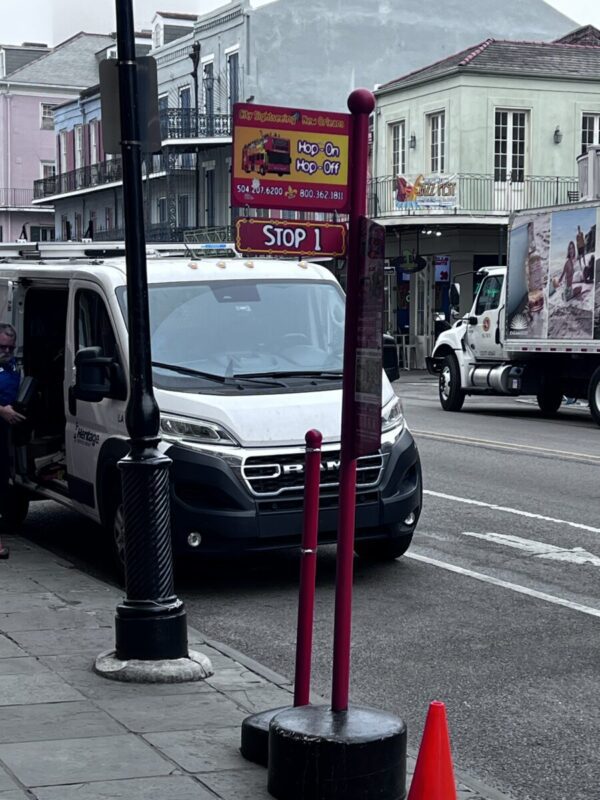
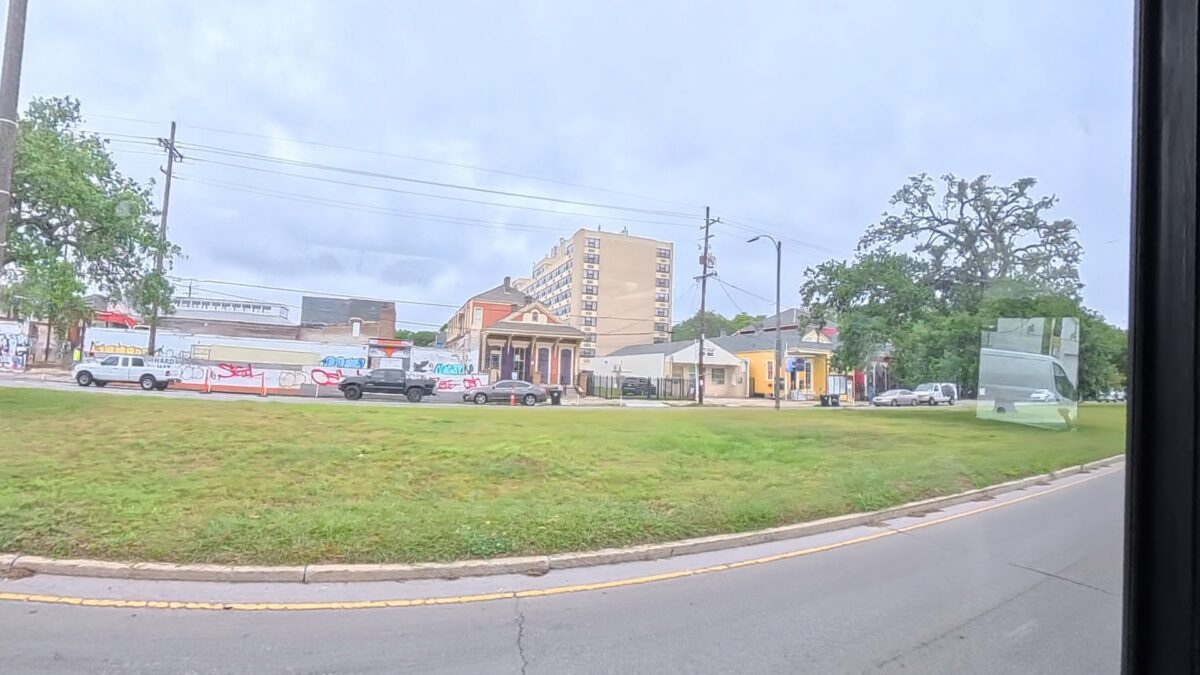
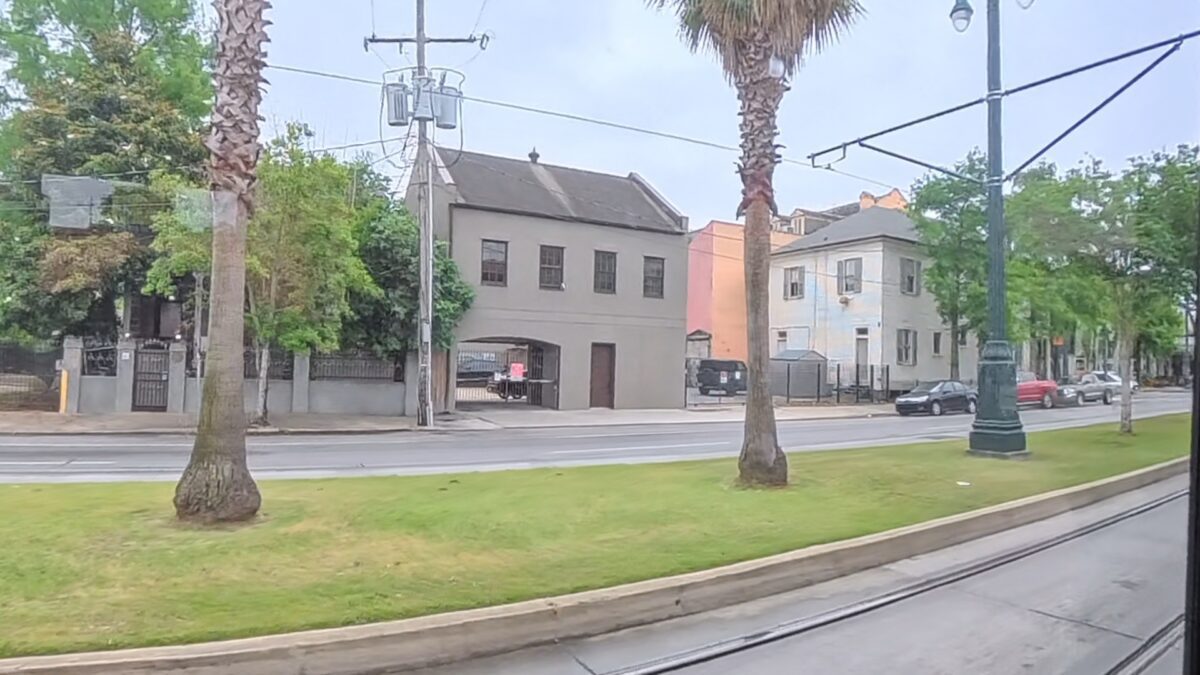
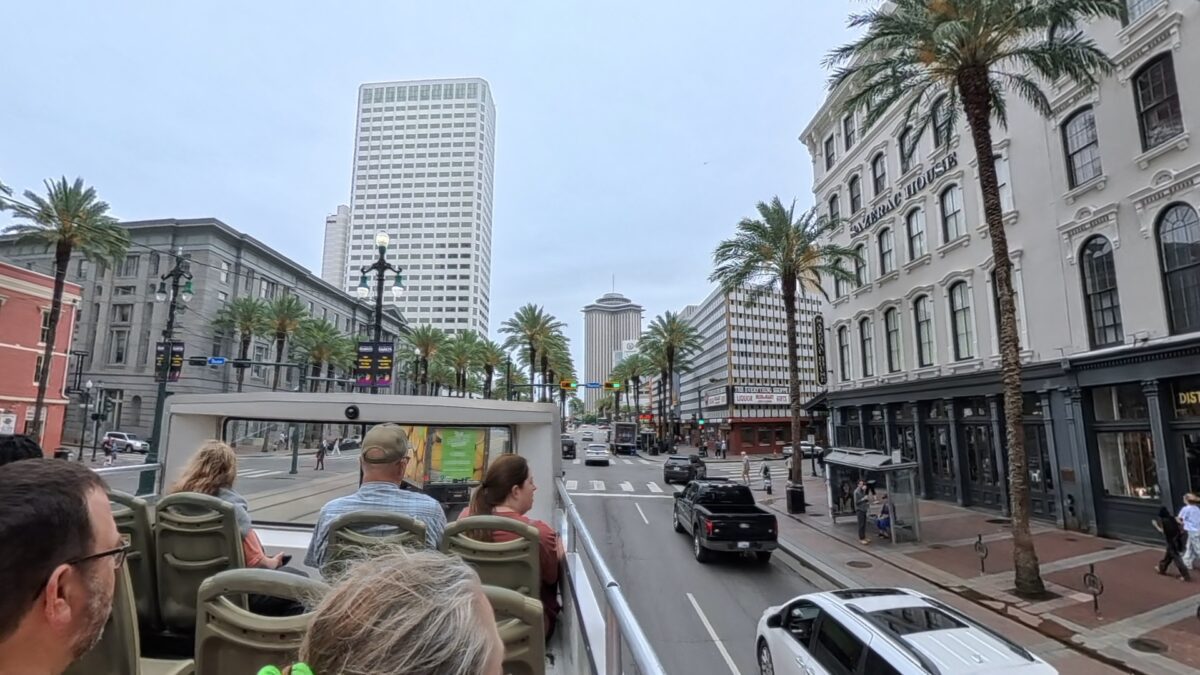
Stop 5 on the New Orleans Hop-On, Hop-Off Bus Tour
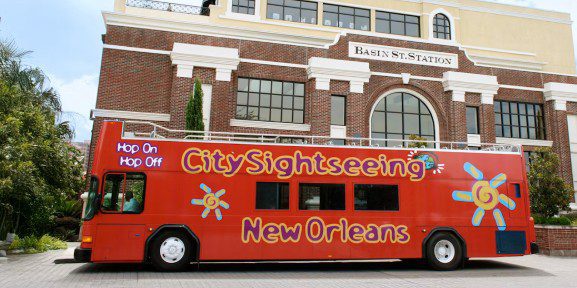
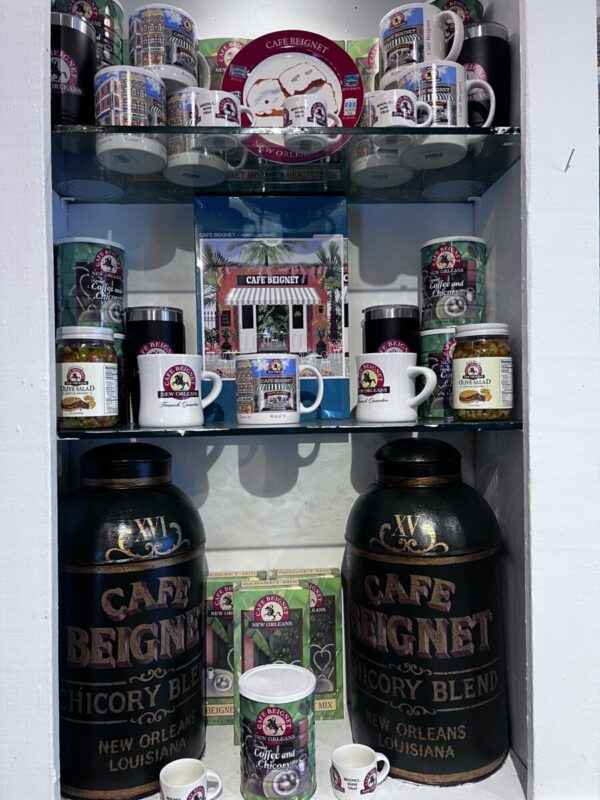
During our New Orleans hop-on, hop-off bus tour, we decided to get off at Stop 5, Basin Street Station, to visit one of the city’s most famous landmarks—St. Louis Cemetery No. 1. The cemetery tour begins at Basin St. Station, located at 501 Basin Street, where we purchased our tickets before heading across the street to the cemetery. Basin St. Station was a convenient place to begin the experience, with a visitor center, gift shop, and small café where you can purchase souvenirs, drinks, and snacks while waiting for your tour. The official cemetery tour currently meets at Basin St. Station and provides managed access to the historic cemetery.
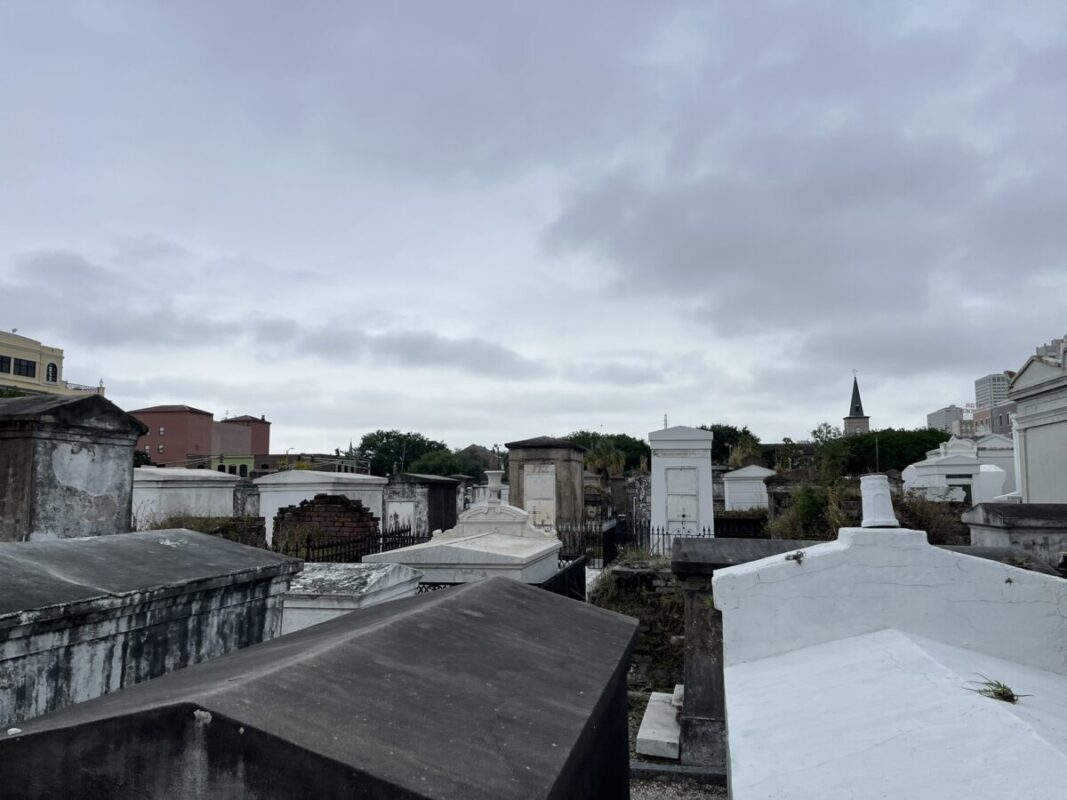
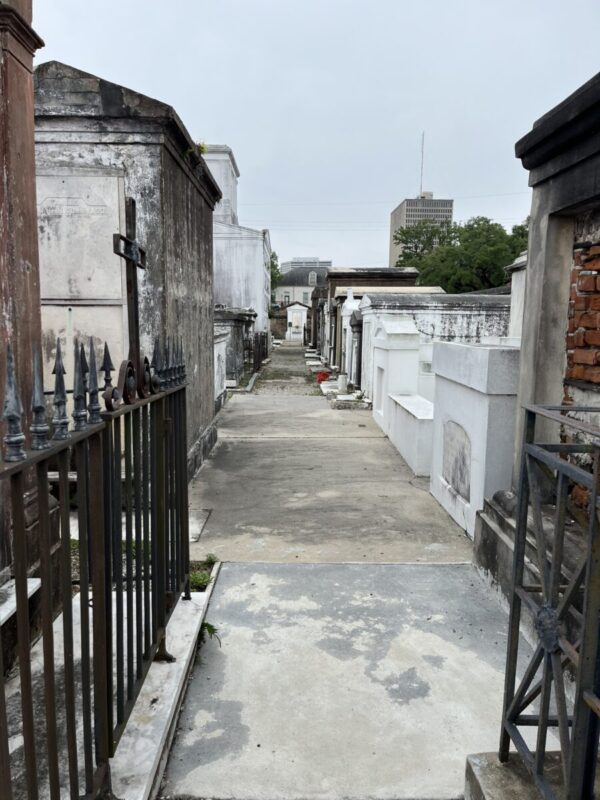
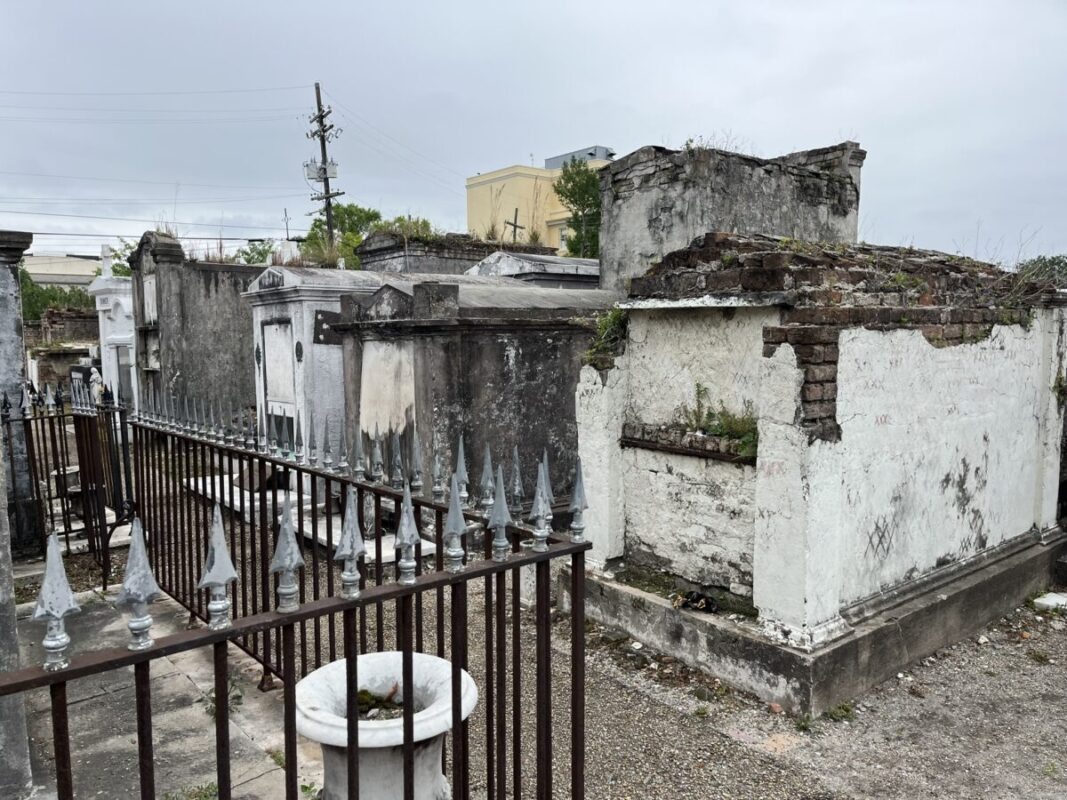
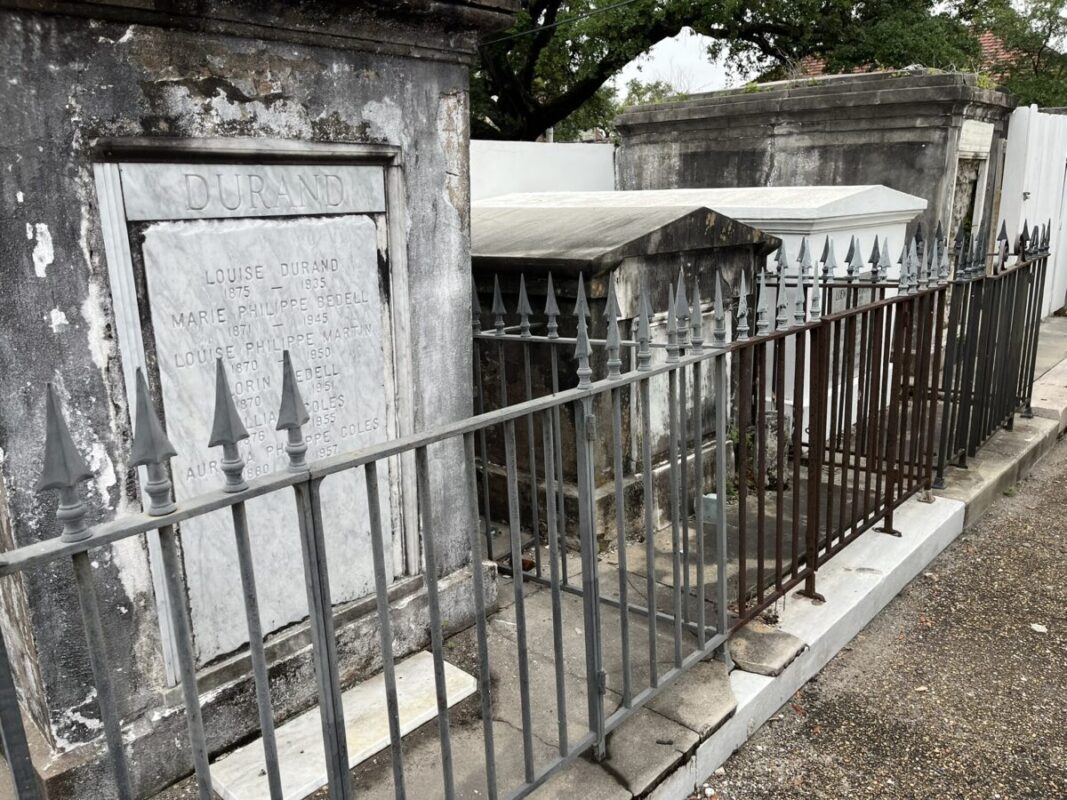
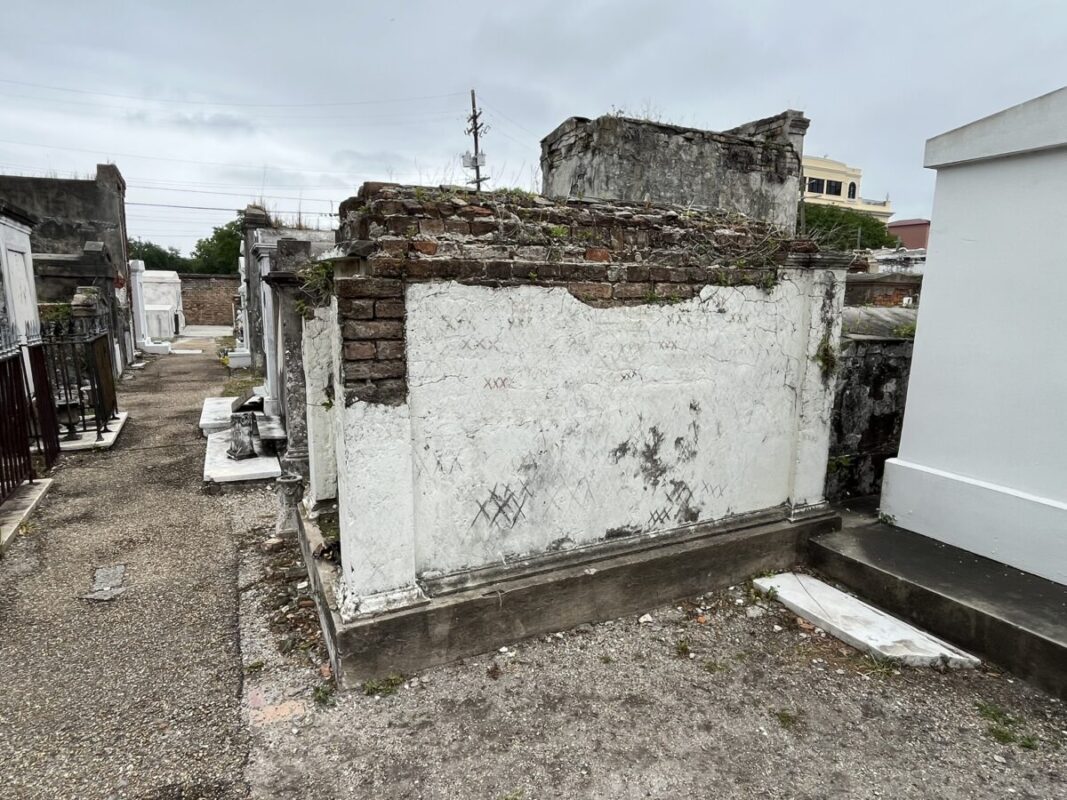
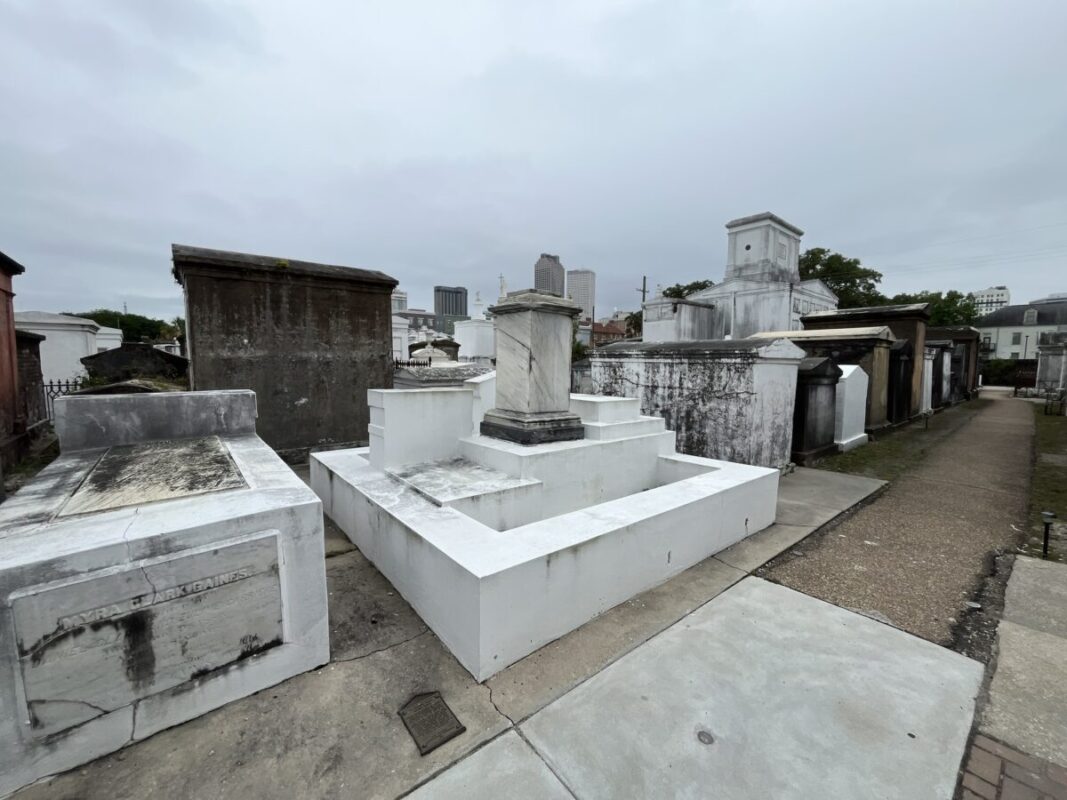
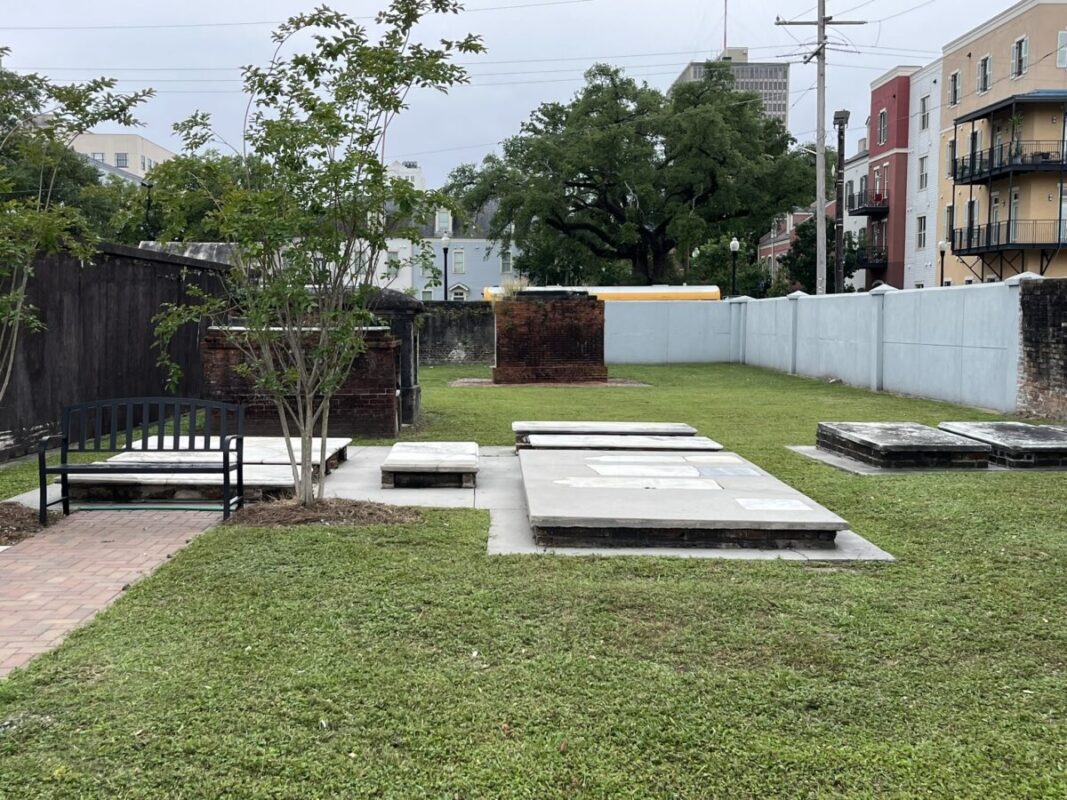
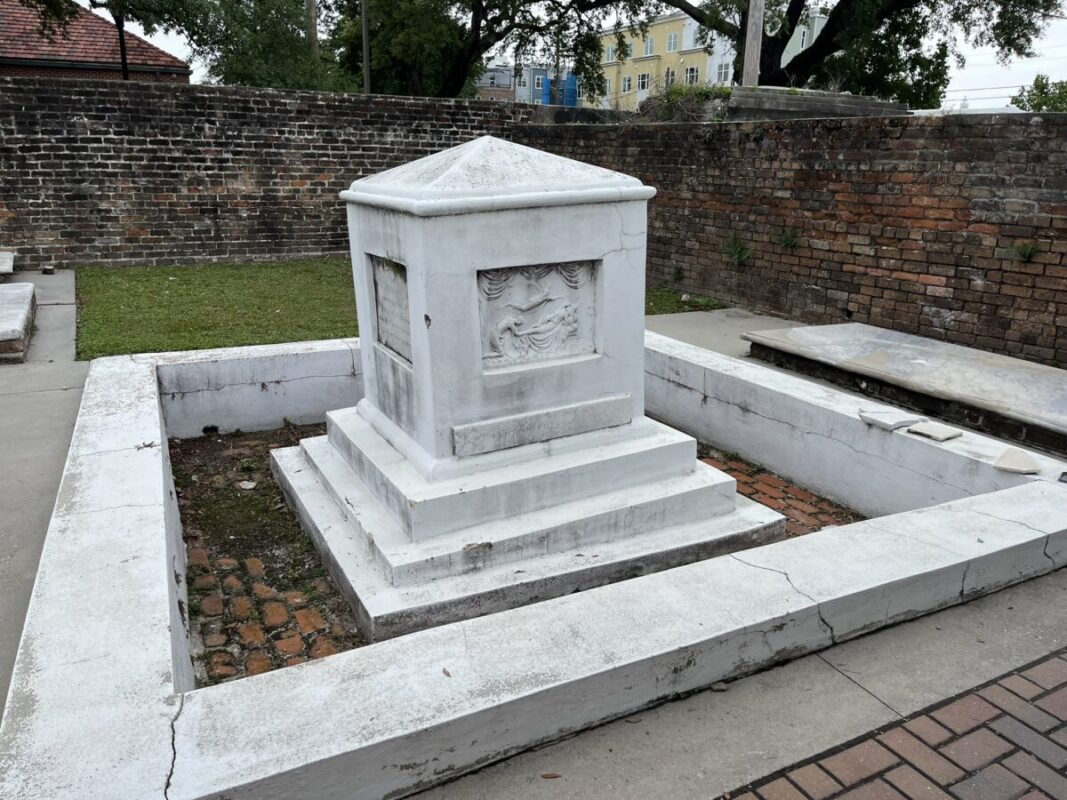
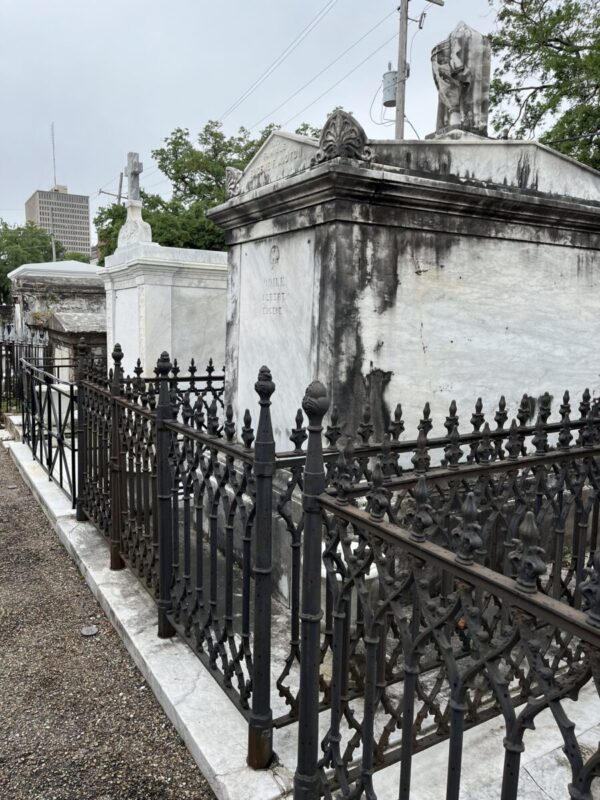
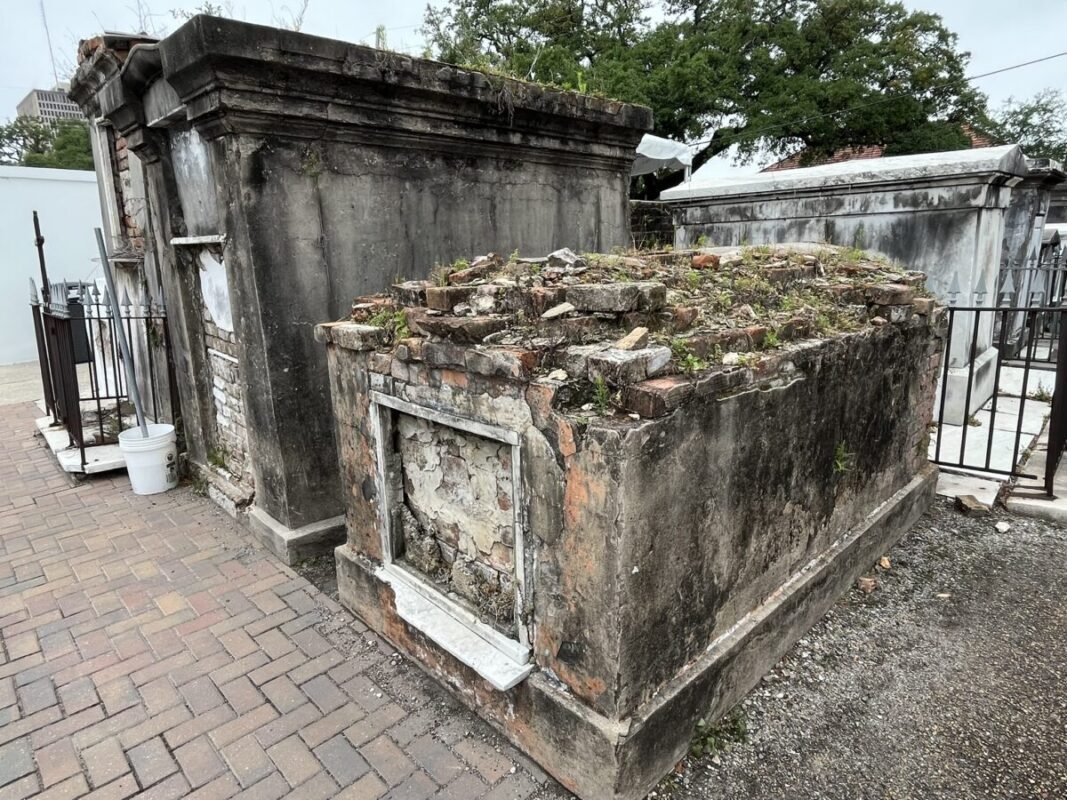
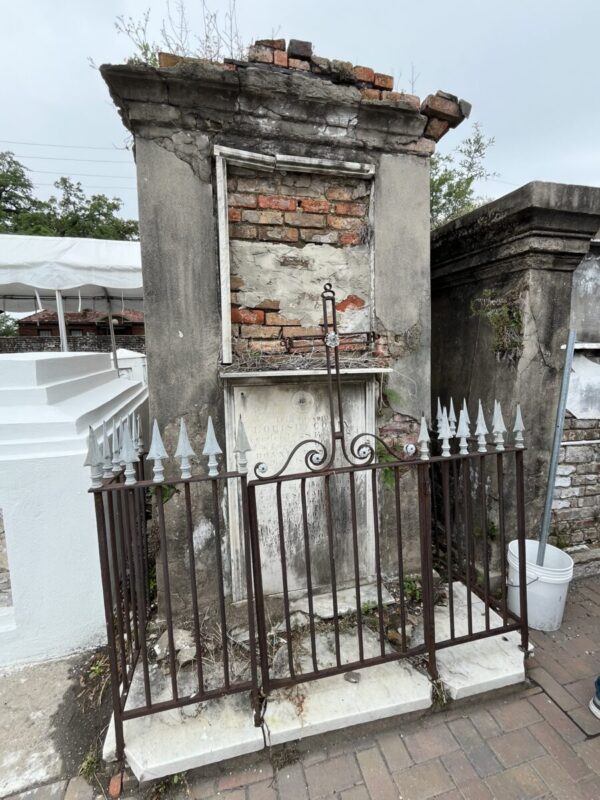
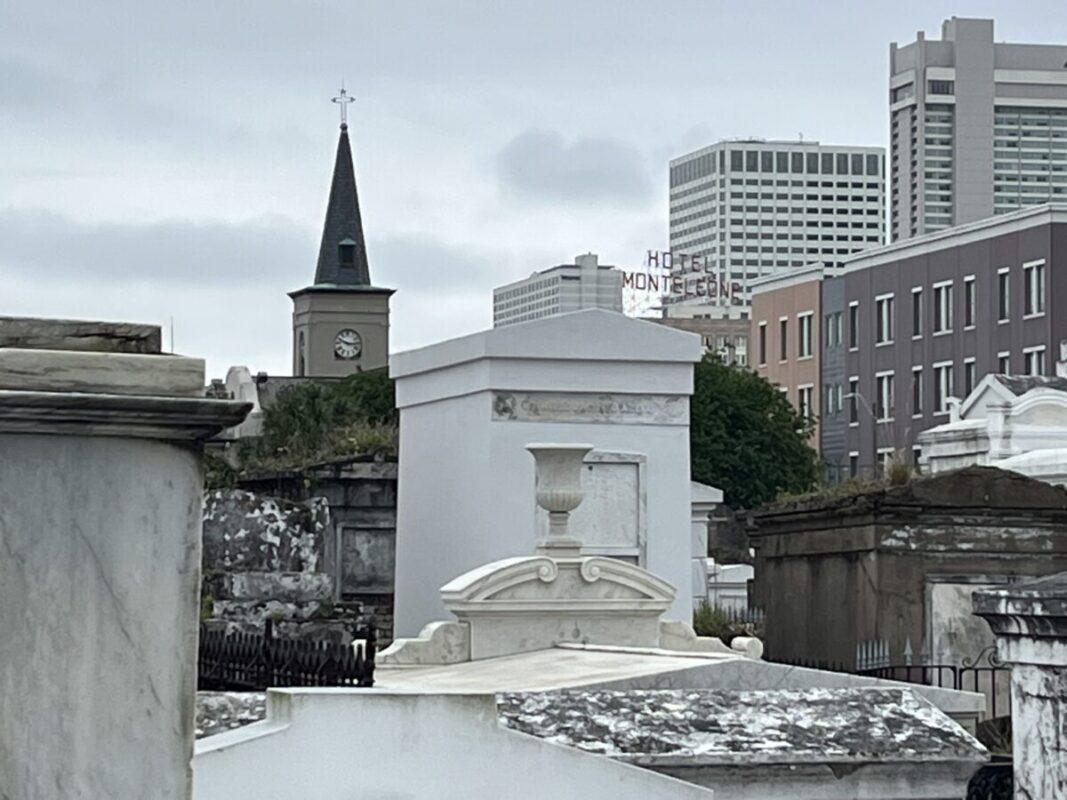
After checking in, we made the short walk across the street to St. Louis Cemetery No. 1. Established in 1789, it is New Orleans’ oldest surviving cemetery and is famous for its maze of above-ground tombs. Unlike a traditional cemetery where graves are spread across grassy grounds, St. Louis Cemetery No. 1 feels almost like a small city, with narrow walkways running between brick and stucco tombs. The above-ground burial tradition developed in part because of New Orleans’ high water table and the difficulty of maintaining traditional underground graves.
Basin St. Station
St. Louis Cemetery No. 1
Why You Can Only Enter With a Guided Tour
One of the first things we learned was that St. Louis Cemetery No. 1 is not open for visitors to simply walk in on their own. Since 2015, general public access has been restricted, and visitors must enter with a licensed guide or an Archdiocese-approved tour. The restriction helps protect the cemetery’s fragile historic tombs and sacred character, particularly after years of vandalism and damage. The cemetery is still an active burial site, so managed visitation also helps preserve it for future generations.
Our guided tour gave us an opportunity to get much closer to the tombs while learning about the people buried there and the unusual burial customs that developed in New Orleans. It was fascinating to see the different architectural styles, from simple family tombs to elaborate society tombs built by organizations whose members shared burial space.
Pope Leo XIV’s Family Connection
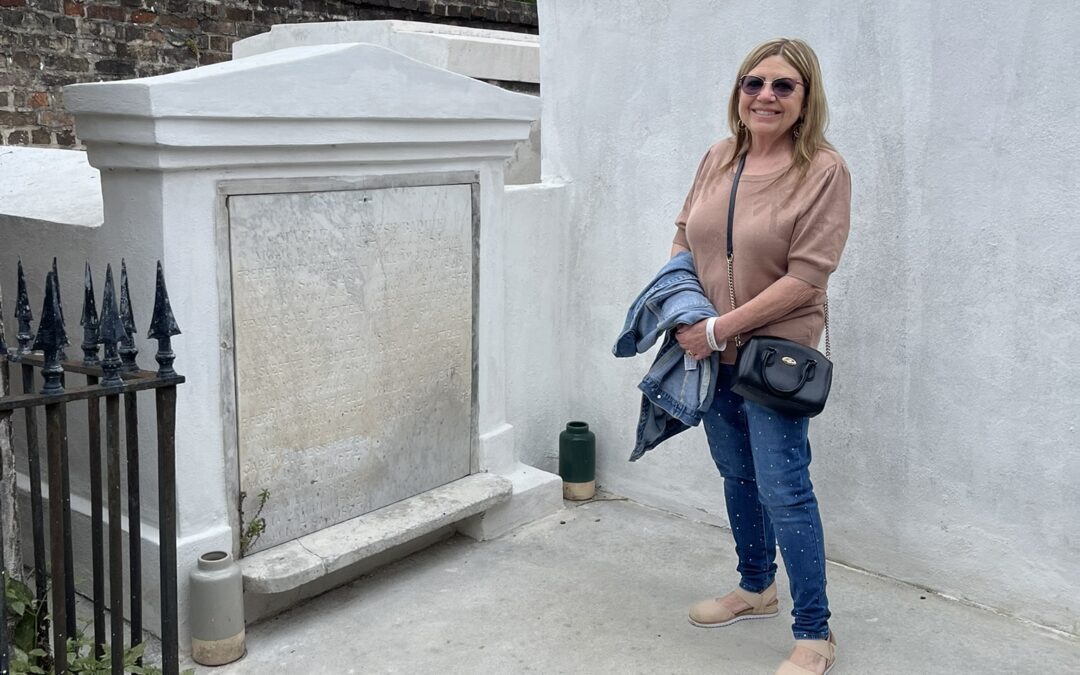
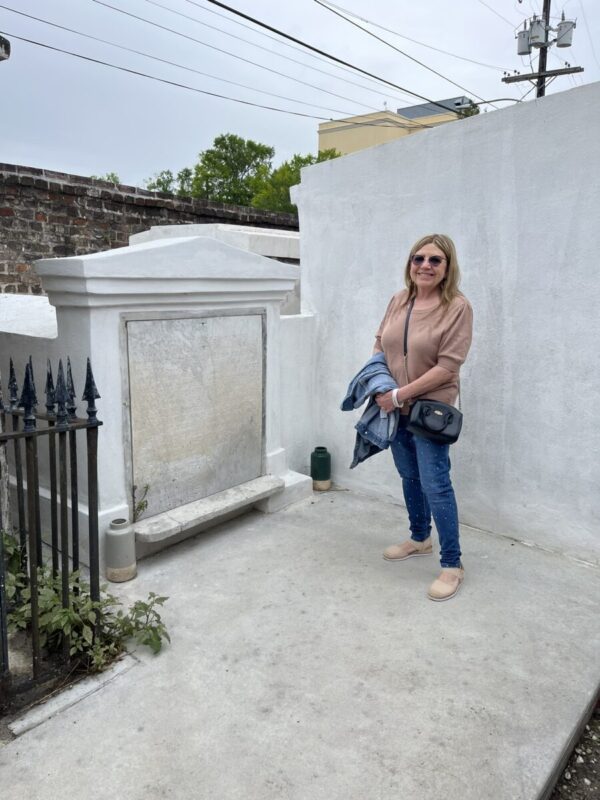
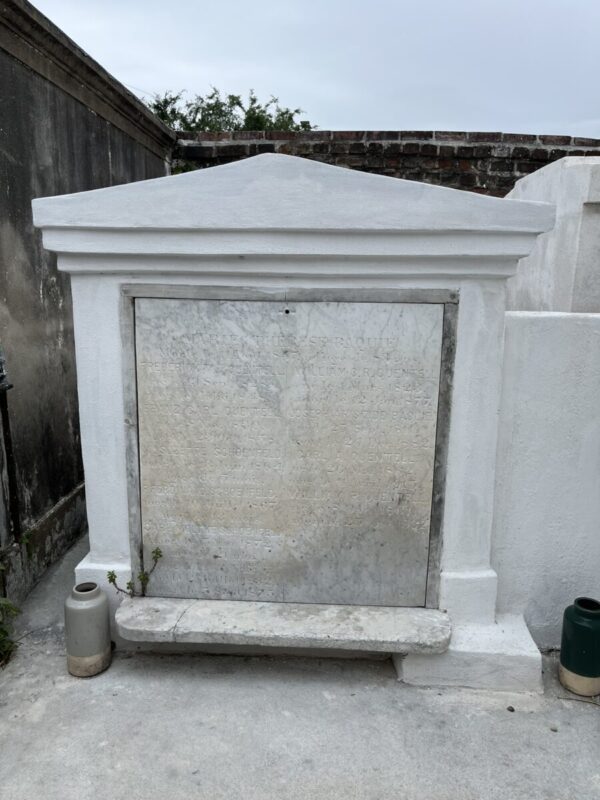
Another fascinating discovery during our visit was the connection to Pope Leo XIV, born Robert Francis Prevost. His maternal family has roots in New Orleans, and a family tomb in St. Louis Cemetery No. 1 belongs to his maternal ancestors. A 2025 article in the Clarion Herald identifies the restored tomb as belonging to the maternal family of Pope Leo XIV and identifies Joseph Aristide Baquié and his mother, Therese Rancurel Baquié, as his great-great-grandfather and great-great-great-grandmother, respectively.
Learning that a future pope’s family history is connected to New Orleans added another unexpected layer of history to our visit. St. Louis Cemetery No. 1 is filled with stories spanning generations, and this recent connection makes the cemetery even more interesting for visitors today.
Nicolas Cage’s Future Pyramid Tomb
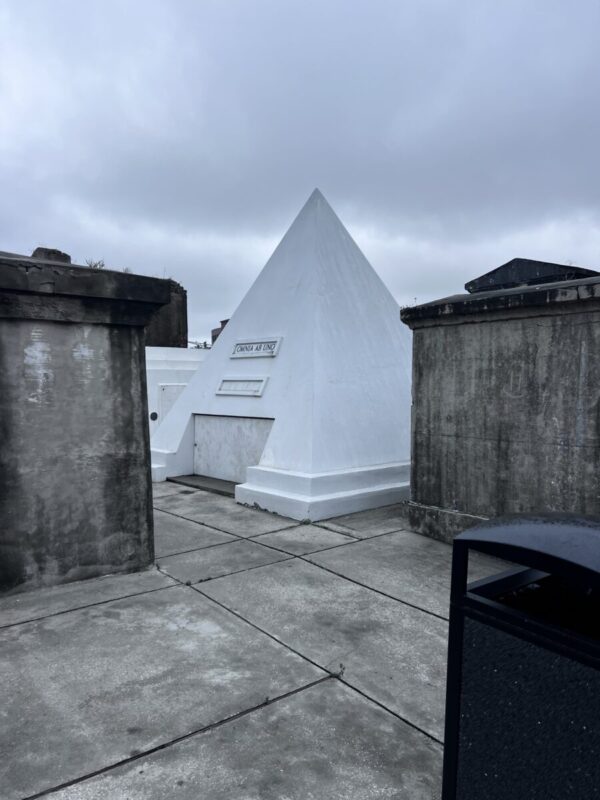
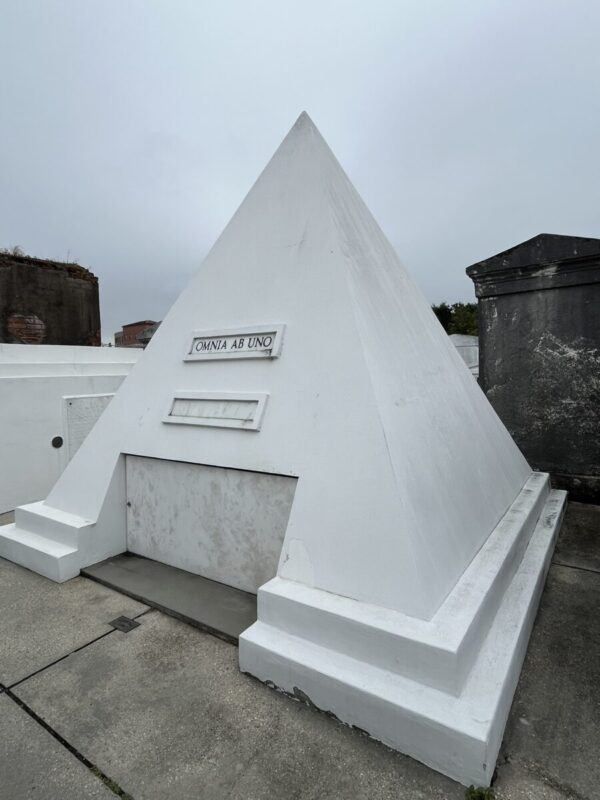
One of the most recognizable tombs in the cemetery belongs to actor Nicolas Cage—although he is obviously not buried there yet. His distinctive white pyramid-shaped tomb stands out dramatically among the traditional New Orleans mausoleums. The pyramid bears the Latin inscription Omnia Ab Uno, generally translated as “Everything From One.” Cage purchased the tomb as his future resting place, making it one of the cemetery’s most photographed landmarks.
The pyramid is certainly unusual compared with the surrounding tombs, and it immediately catches your attention as you walk through the cemetery. Whatever inspired Cage’s choice of a pyramid, it has become one of the most recognizable modern additions to this historic “City of the Dead.”
Marie Laveau’s Tomb
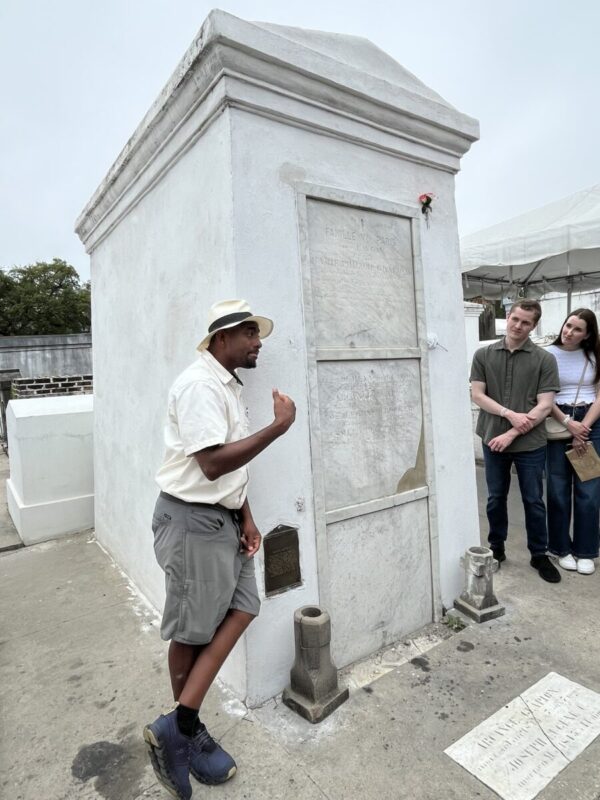
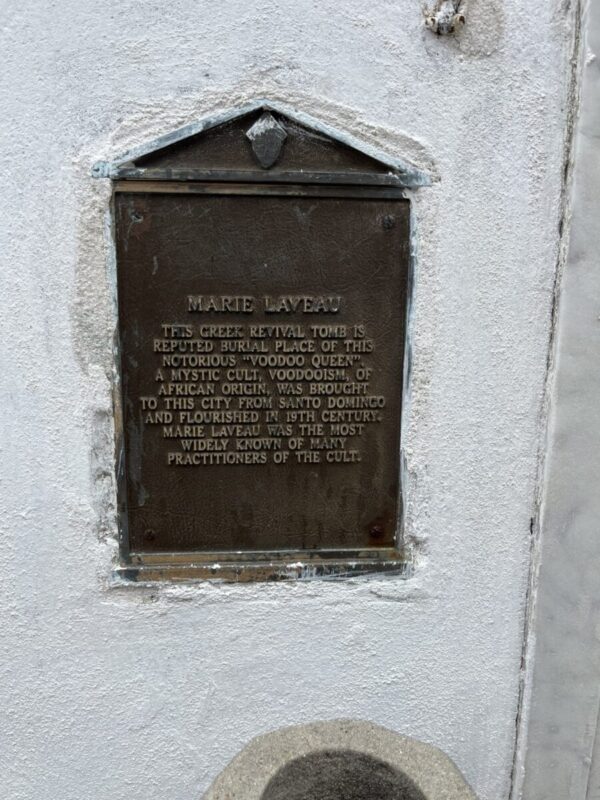
Perhaps the most famous permanent resident of St. Louis Cemetery No. 1 is Marie Laveau, the legendary Voodoo Queen of New Orleans. Her tomb continues to attract visitors from around the world. Laveau was an important figure in New Orleans history, and her legacy remains deeply connected to the city’s religious and cultural traditions. Visitors have historically left offerings at her tomb, and the site remains one of the most sought-after stops on the cemetery tour.
Standing in front of Marie Laveau’s tomb was one of the most memorable moments of the tour. Whether you’re interested in New Orleans history, religion, folklore, or architecture, her story provides an important glimpse into the cultural traditions that helped shape the city.
The Ten-Foot Pole and New Orleans Burial Traditions
One of the most unusual parts of the tour was learning what happened when an above-ground tomb needed to be reused. Traditionally, a tomb could be reopened after approximately one year and one day. Once the remains had decomposed, the bones could be moved to the rear of the tomb or into a lower collection area, making room for another family member. Our guide explained the use of a long pole to move the remains toward the back of the vault. Historical and tour sources commonly describe this as a pole approximately ten feet long, although the often-repeated claim that this practice inspired the expression “I wouldn’t touch that with a ten-foot pole” is disputed.
It was certainly a memorable—and somewhat surprising—part of the tour. The practice demonstrates how New Orleans developed a practical system for dealing with limited cemetery space while preserving the tradition of above-ground burial.
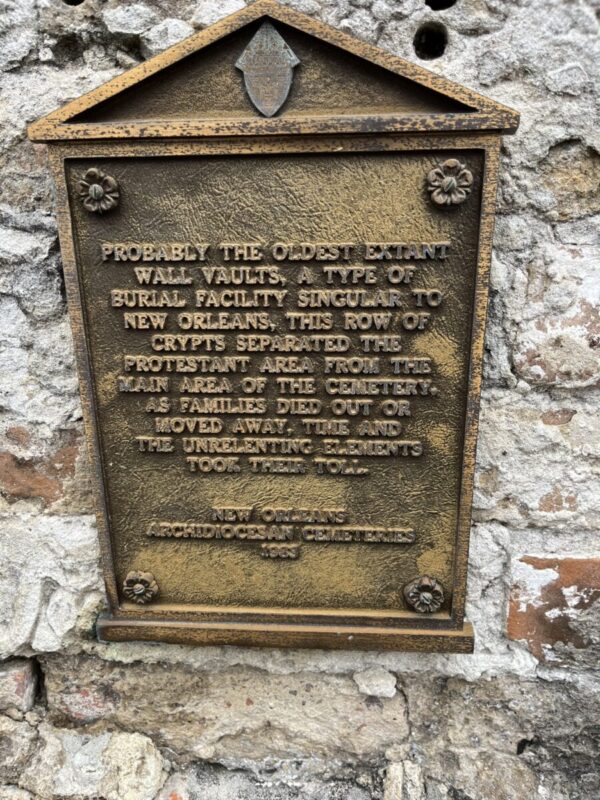
Wall Vaults
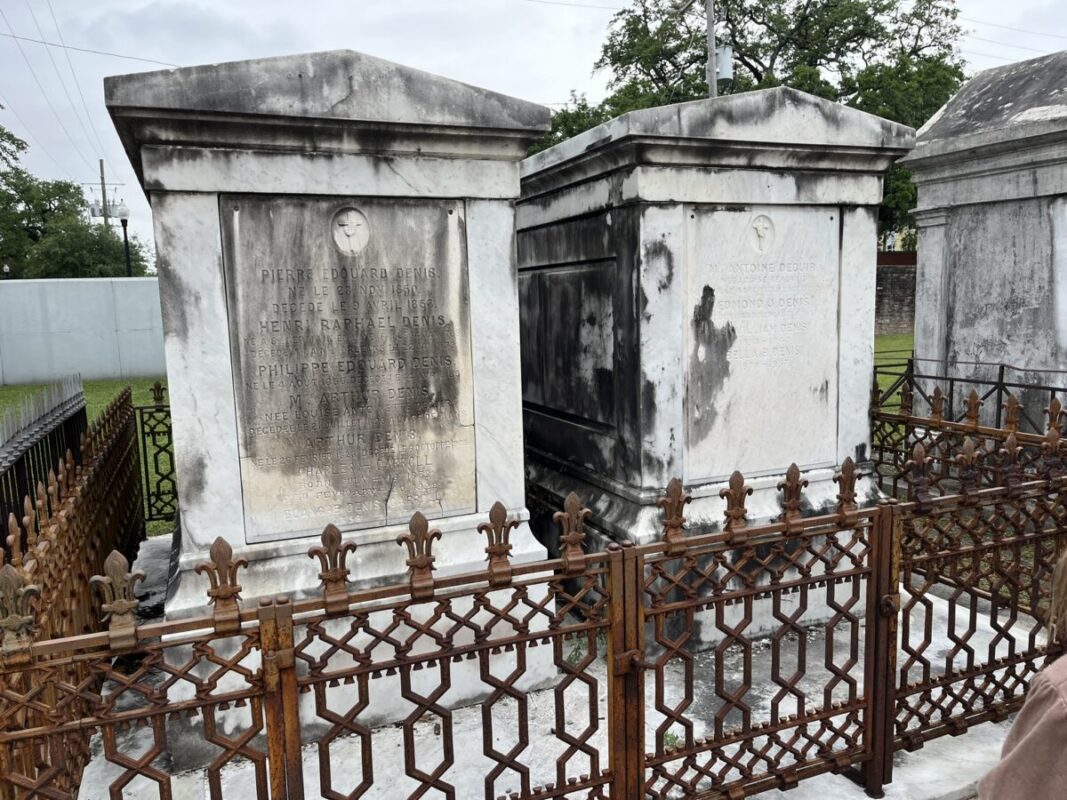
Tombs
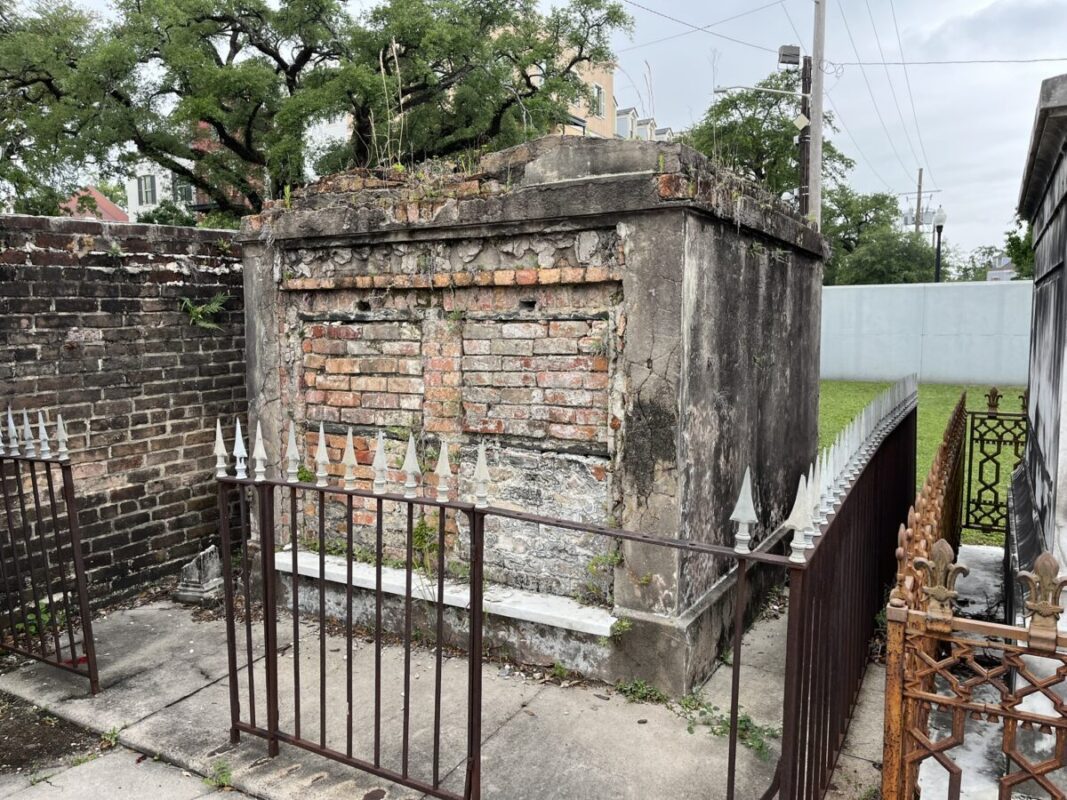
Tomb
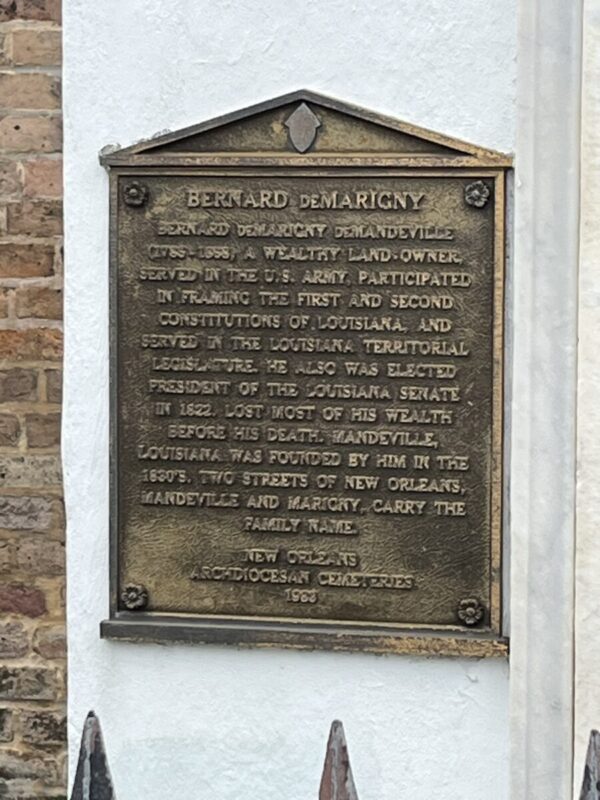
Bernard DeMarigny
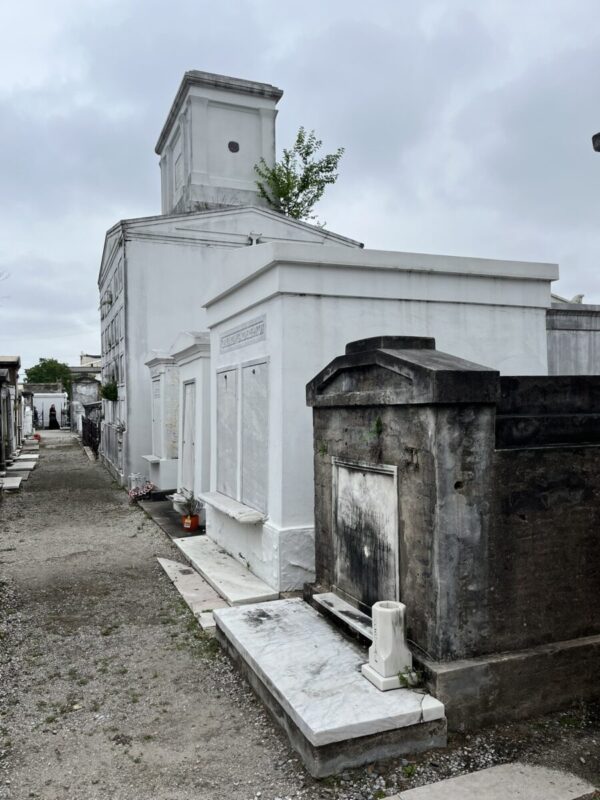
Tombs
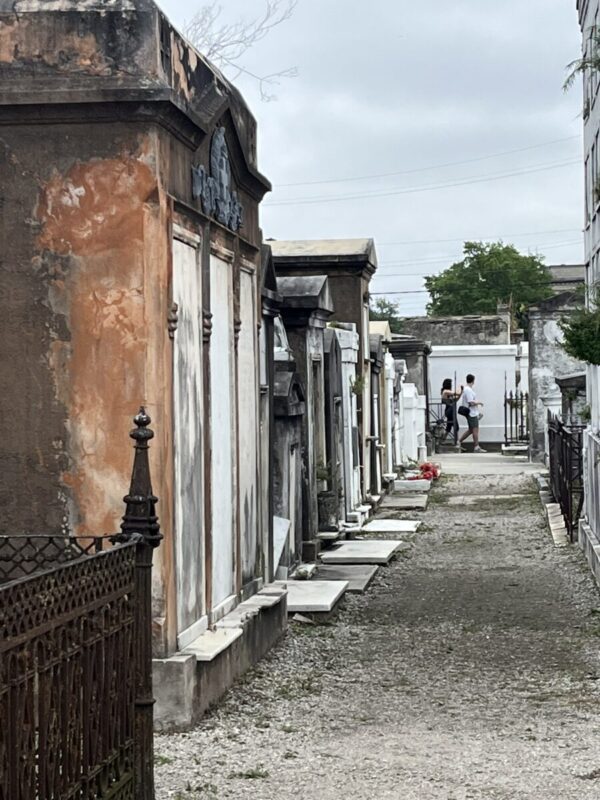
Tombs
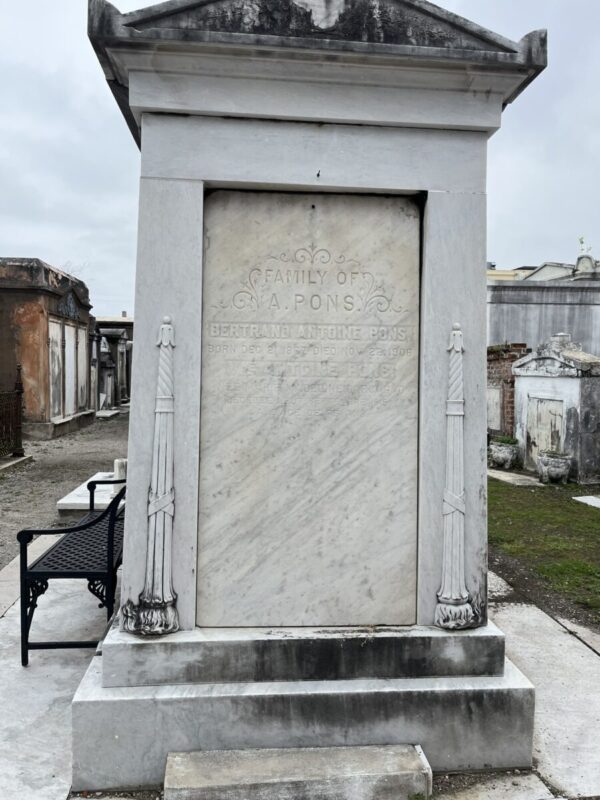
Pons Family Tomb
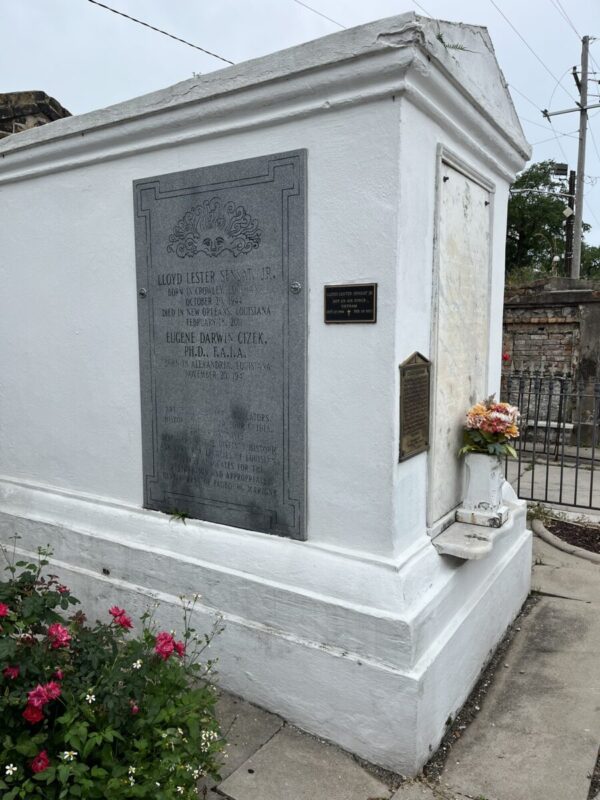
Lloyd Lester Sensat
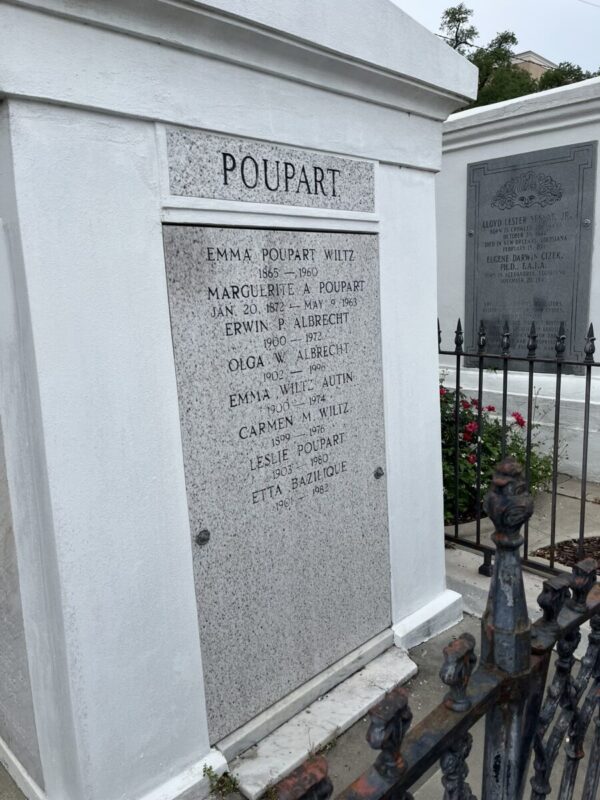
Poupart Family
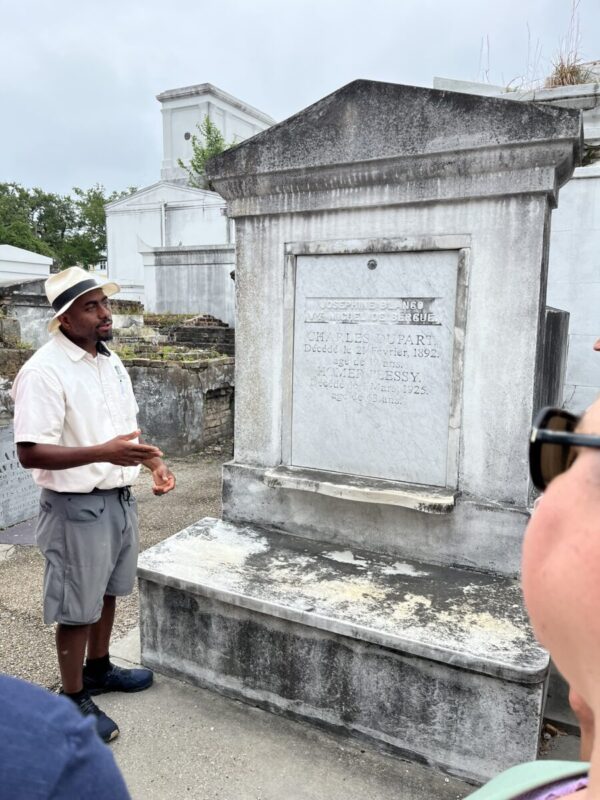
Blanco, DeBurgue, Dupart, and Plessey
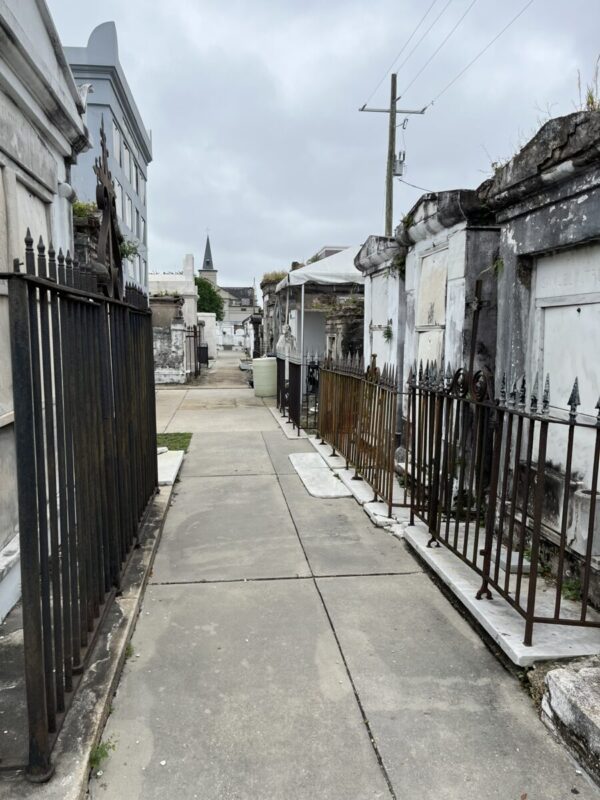
Tombs
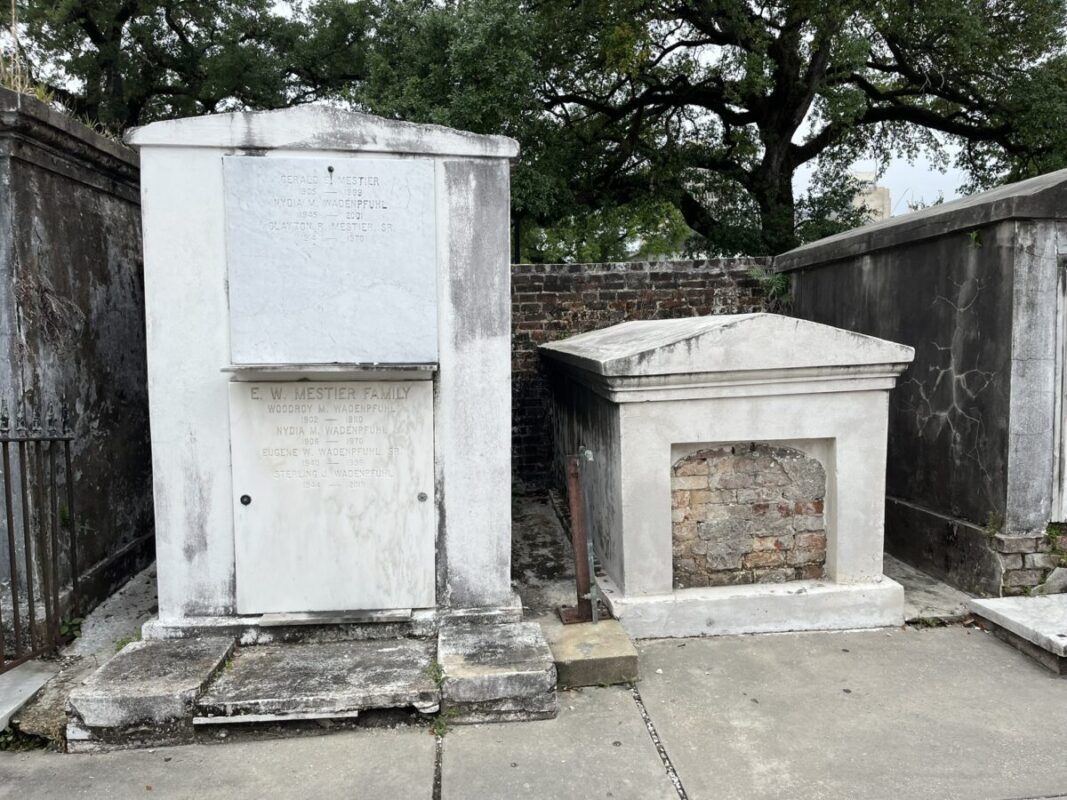
Tombs
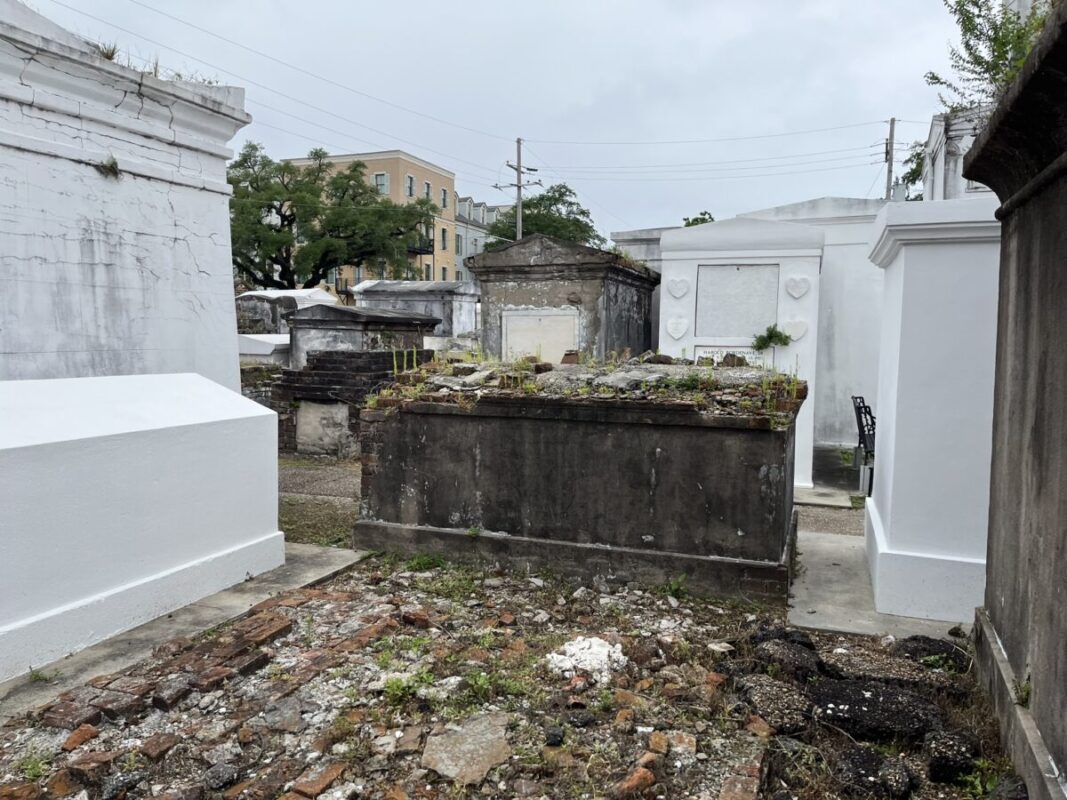
Tombs
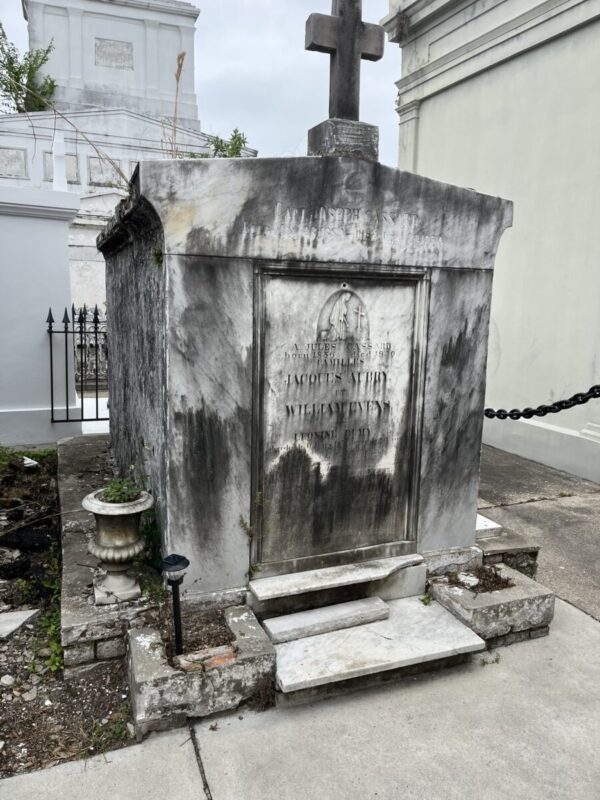
Cassard Family
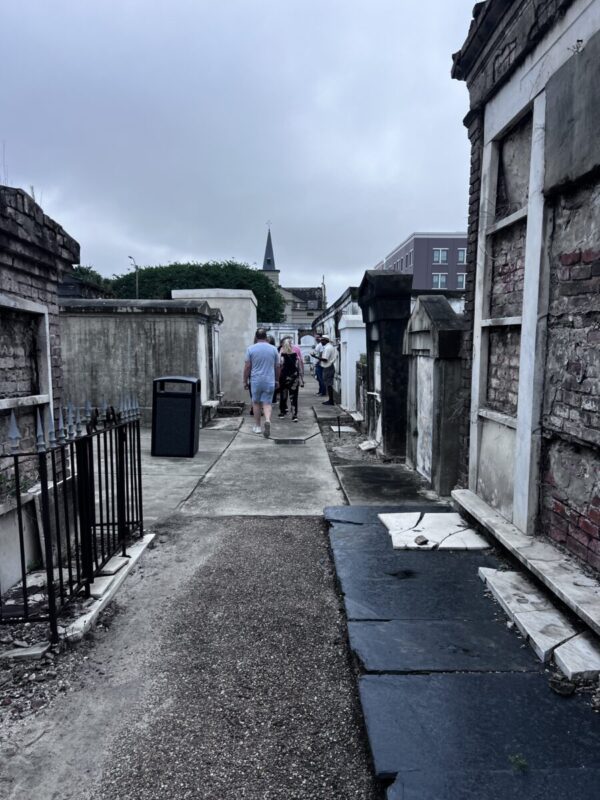
Tombs
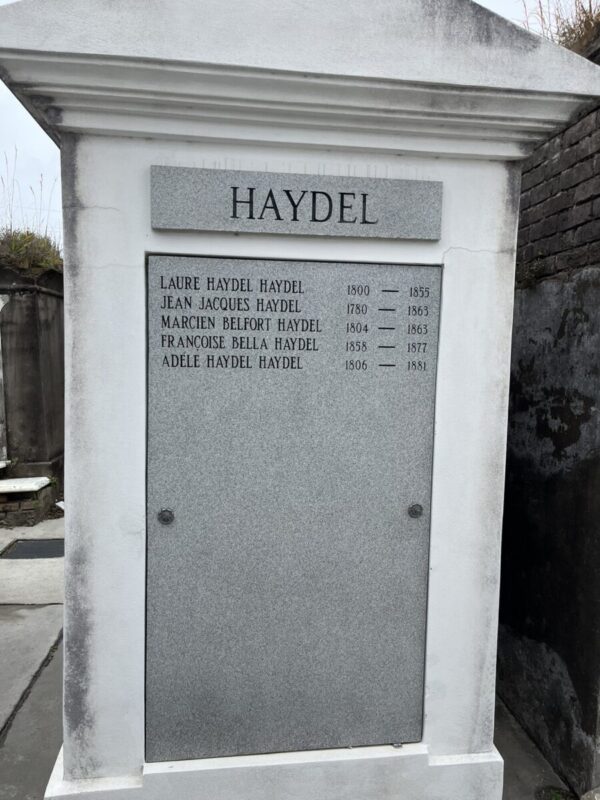
Haydel Family
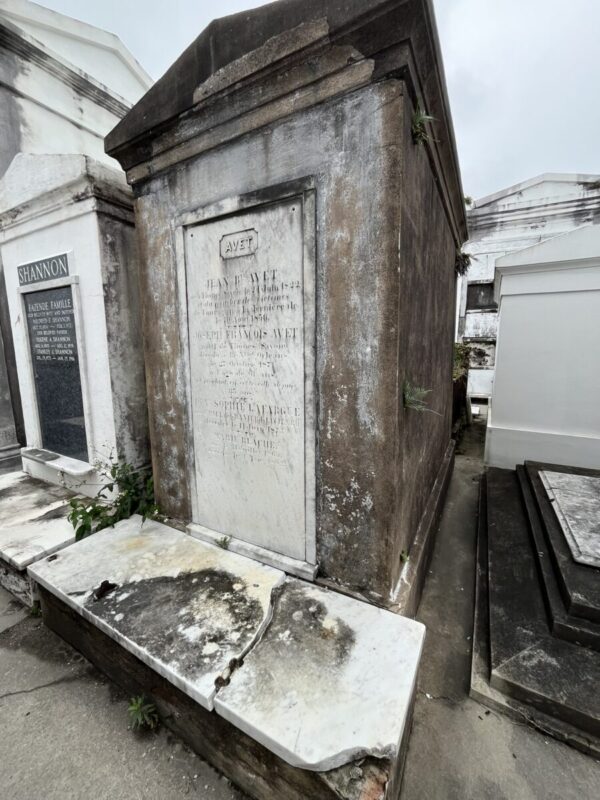
Avet Family
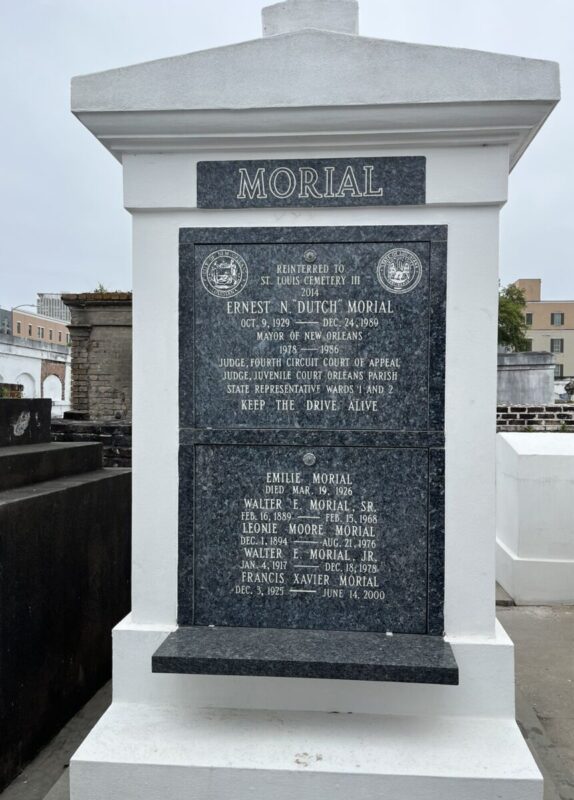
Morial Family
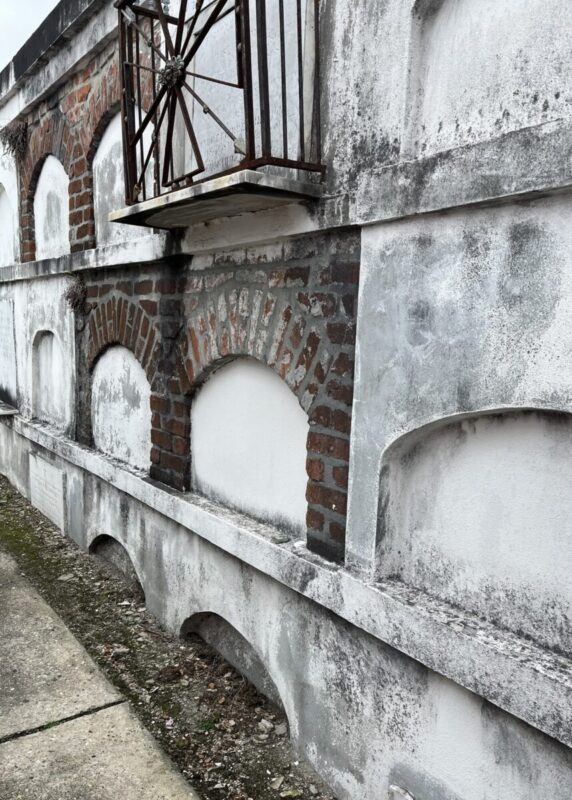
Wall Vaults
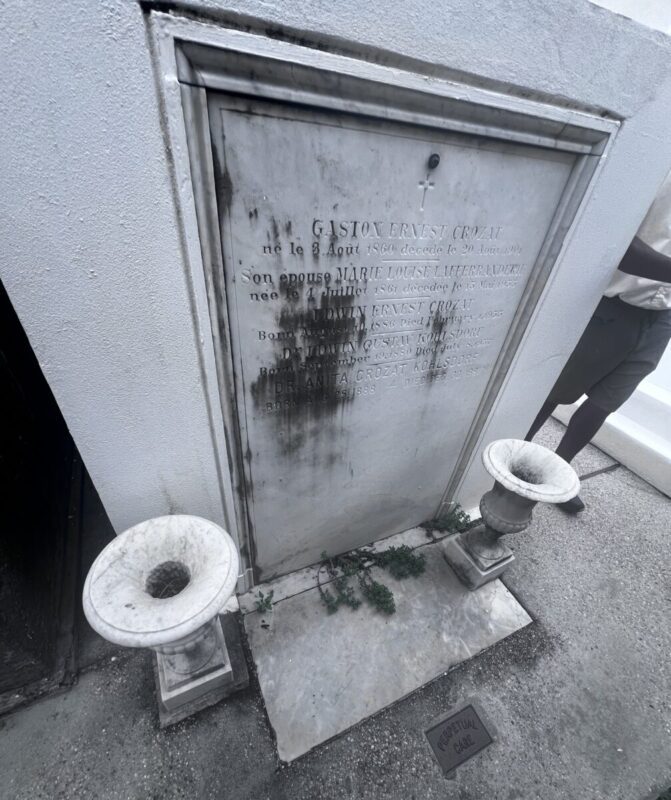
Crozat Family
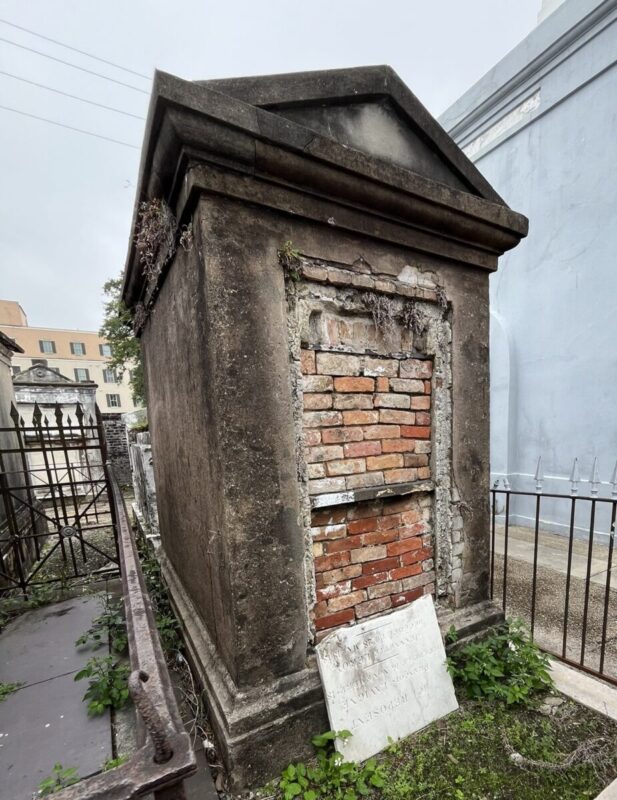
ICT Reposent, Lavigne, and Leroy
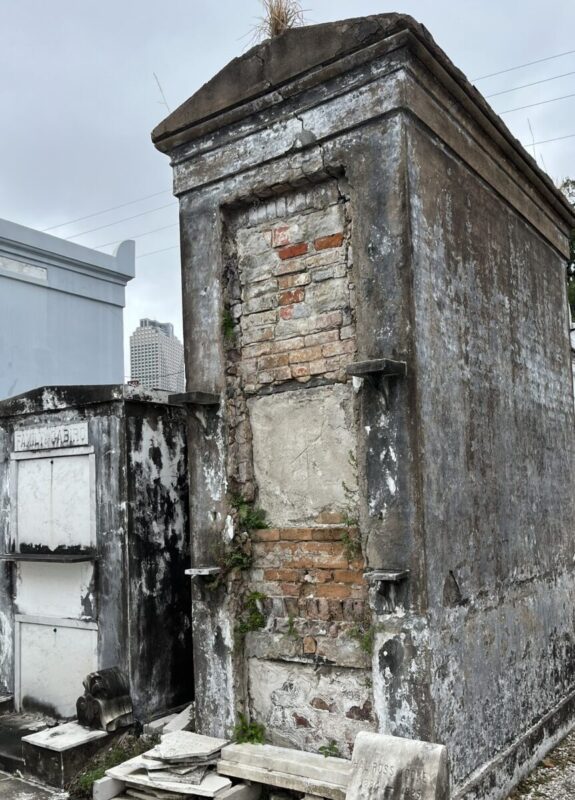
Tombs
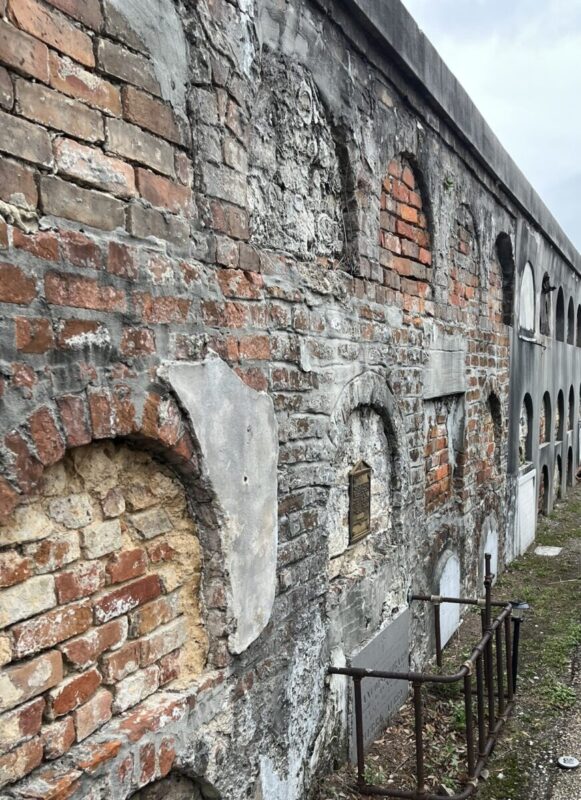
Wall Vaults
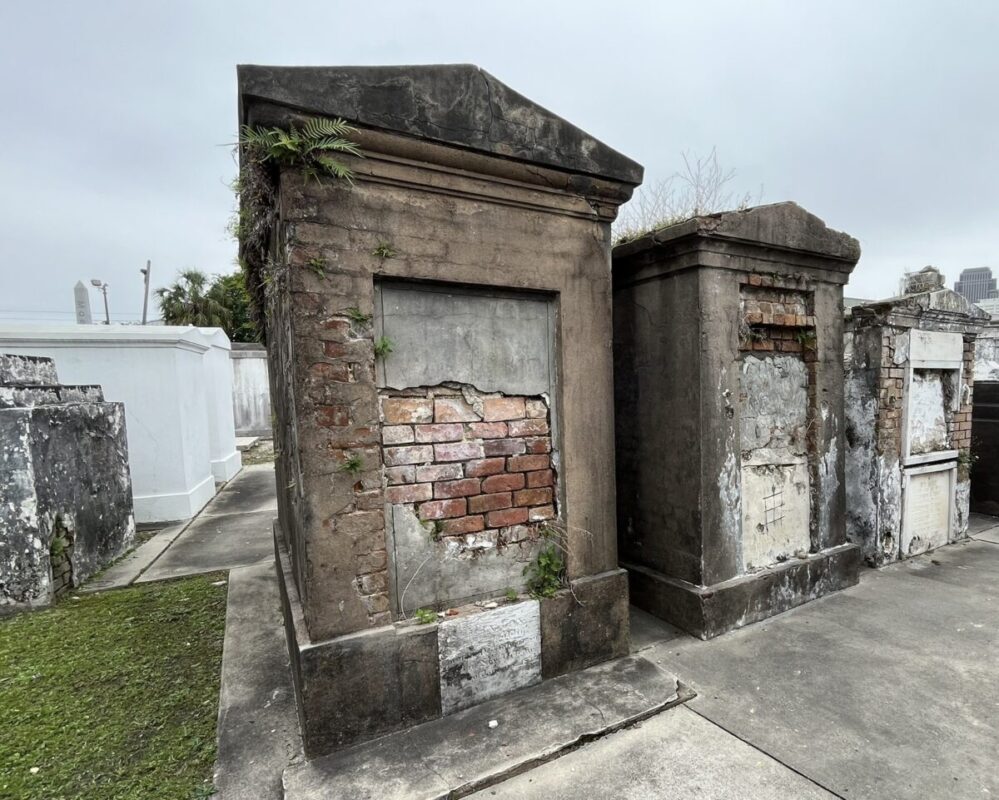
Tombs
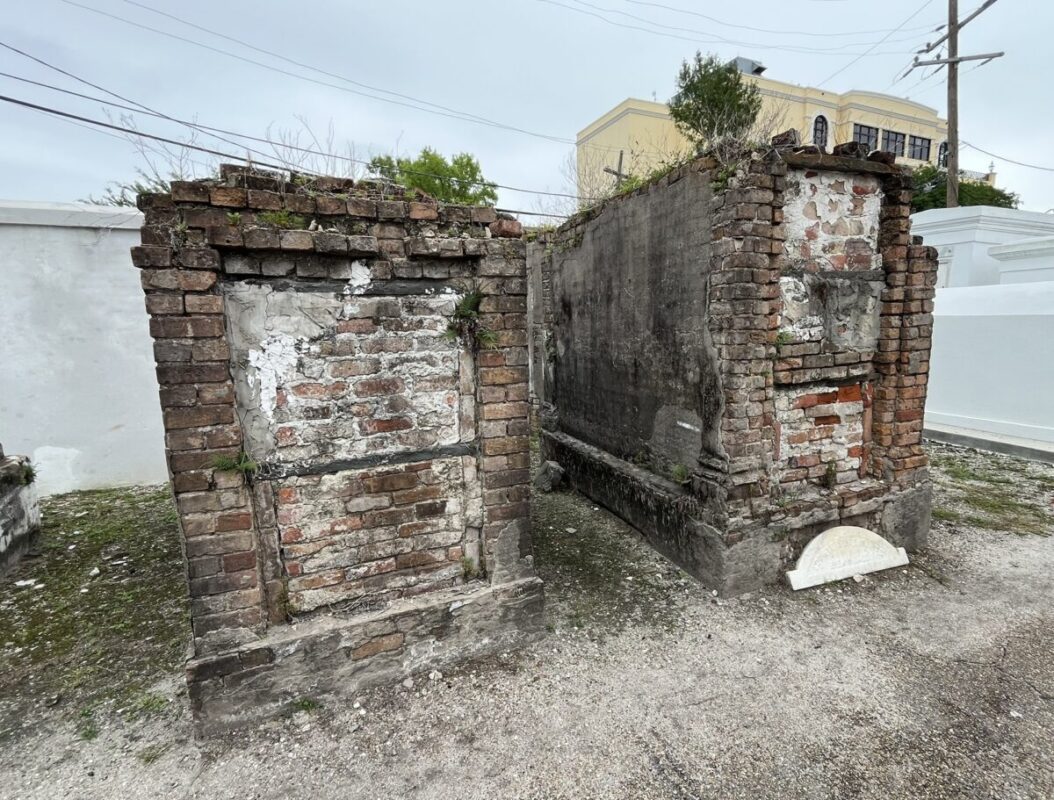
Tombs
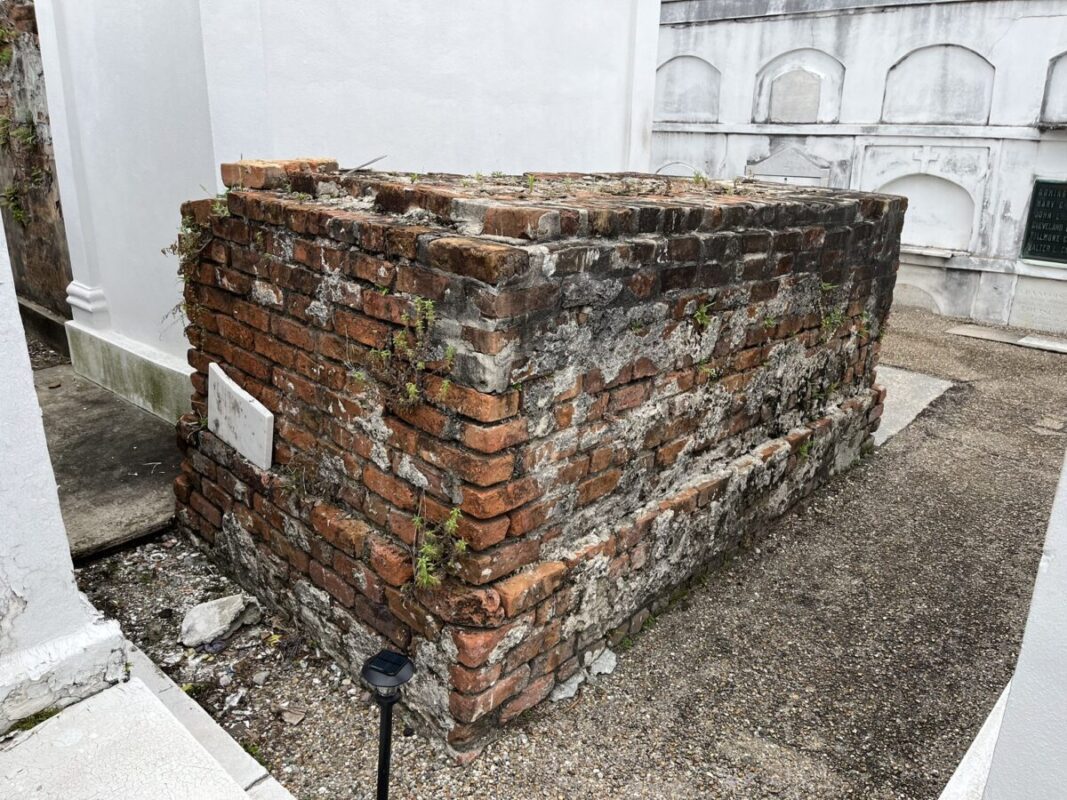
Tomb
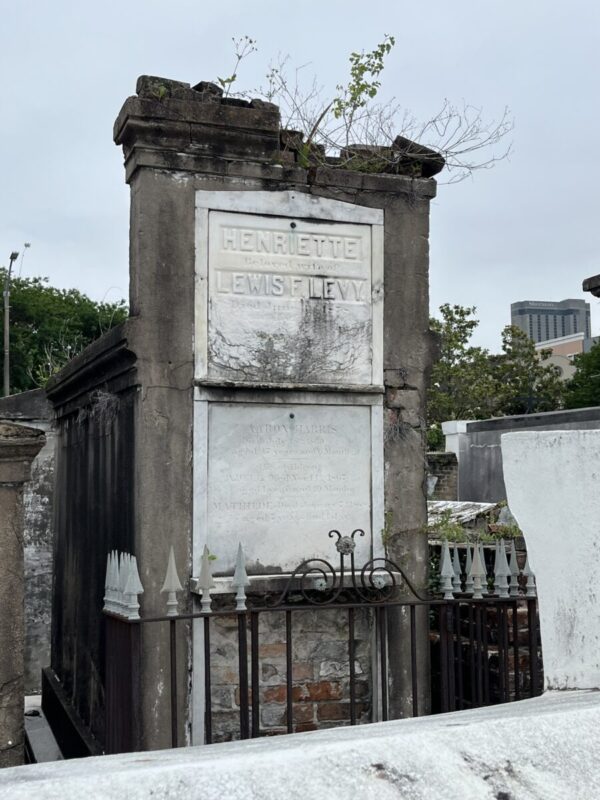
Henriette Levy
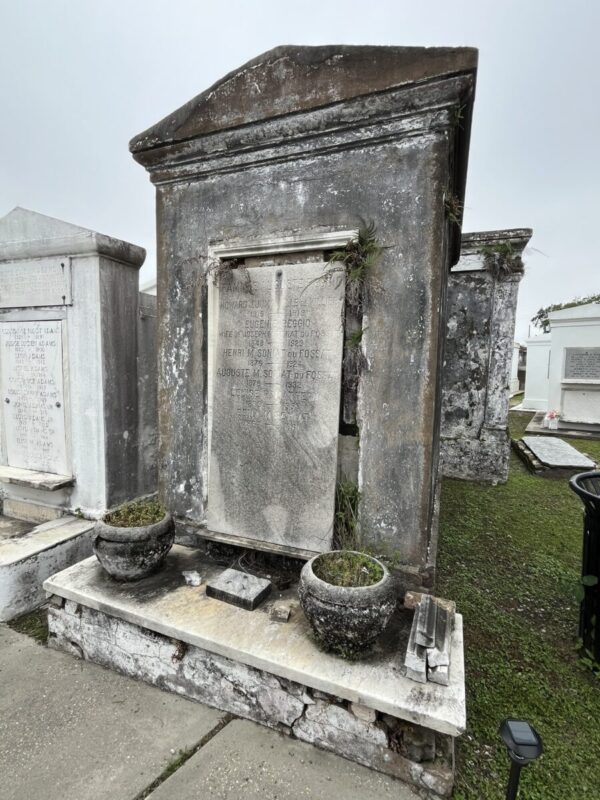
Reggio Family
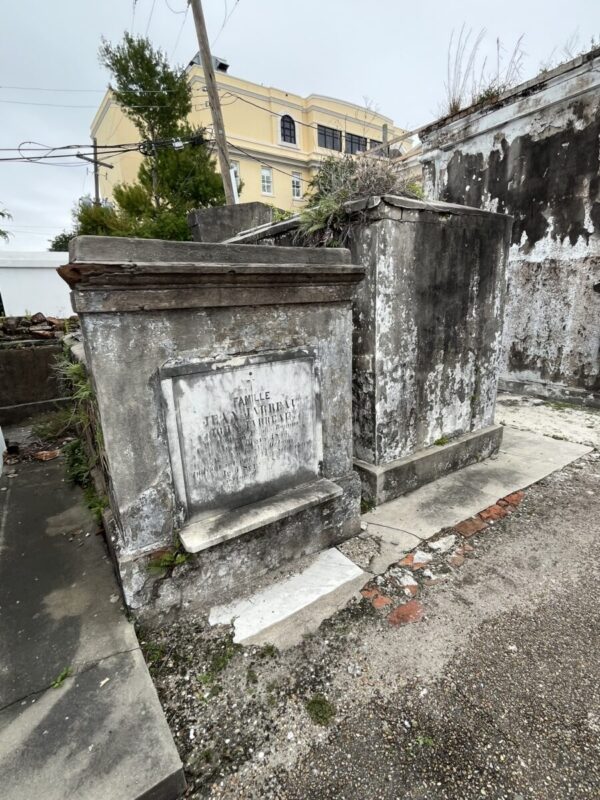
Tombs
The Italian Benevolent Society Tomb and Easy Rider
We also saw the Italian Benevolent Society Tomb, which has an important connection to the 1969 movie Easy Rider. The cemetery was used for the film’s famous cemetery sequence featuring Dennis Hopper, Peter Fonda, and Jack Nicholson. In the scene, Peter Fonda’s character interacts with the large statue above the Italian Benevolent Society Tomb. Contemporary accounts and historical sources document the filming at St. Louis Cemetery No. 1.
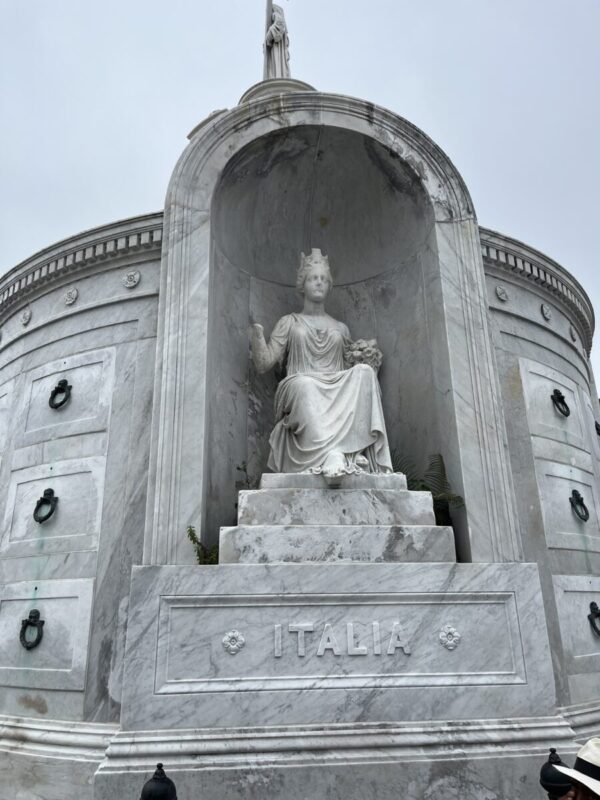
Italia Tomb
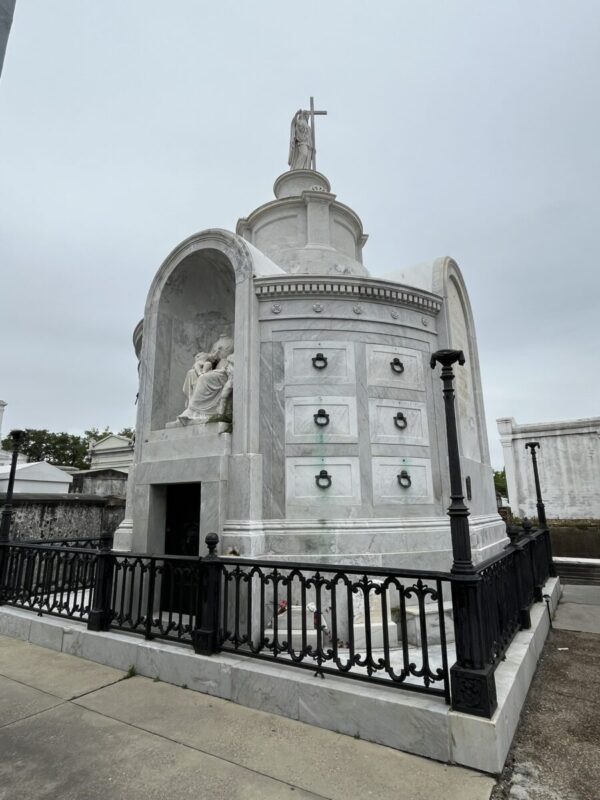
Italia Tomb
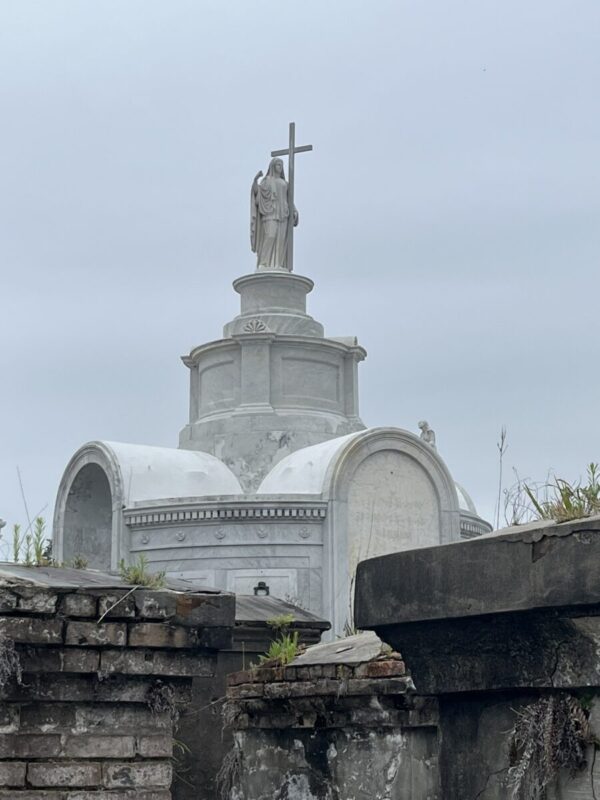
Italia Tomb
A Unique New Orleans Experience
Our visit to St. Louis Cemetery No. 1 was one of the most interesting stops of our New Orleans adventure. From Basin Street Station, the short walk to the cemetery led us into a completely different world filled with historic tombs, fascinating stories, unusual burial traditions, and connections to famous people and movies.
If you are taking the New Orleans hop-on, hop-off bus tour, Stop 5 at Basin Street Station is definitely worth getting off for. Purchase your cemetery tour tickets at Basin St. Station, take some time to browse the gift shop and grab a snack or drink, and then join the guided walk across the street. Because independent entry is not permitted, planning ahead for the guided tour is important. For us, the experience provided a fascinating look at a side of New Orleans history that you simply cannot appreciate from the bus window.
Tombs
Tombs
Tombs
Tombs
Tombs
Tombs
Tomb
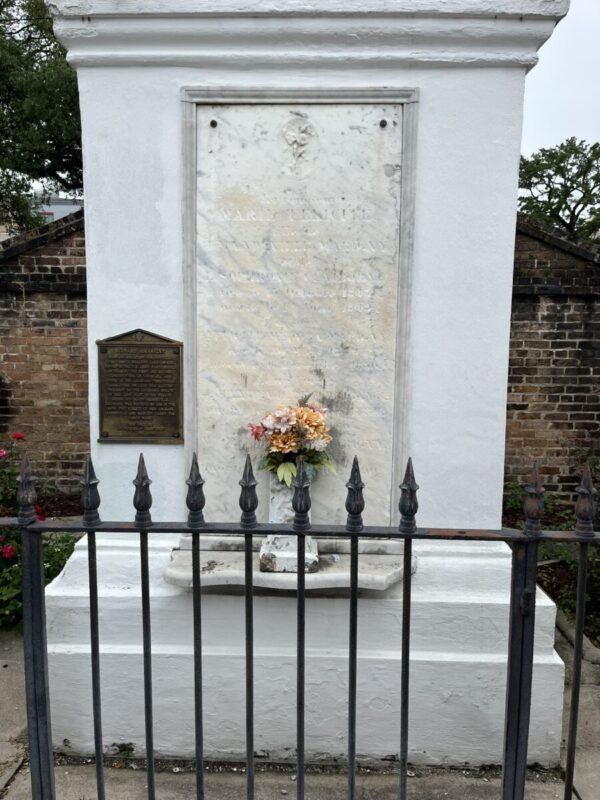
Bernard DeMarigny
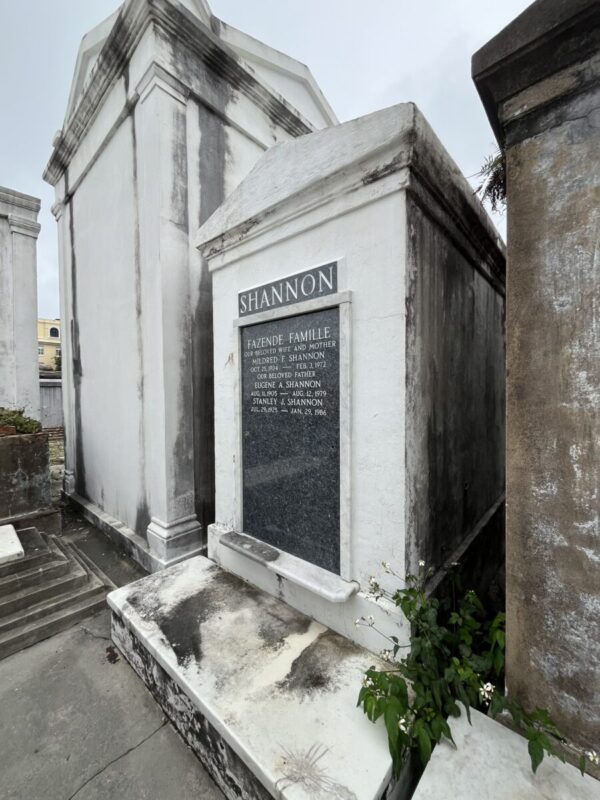
Shannon Family
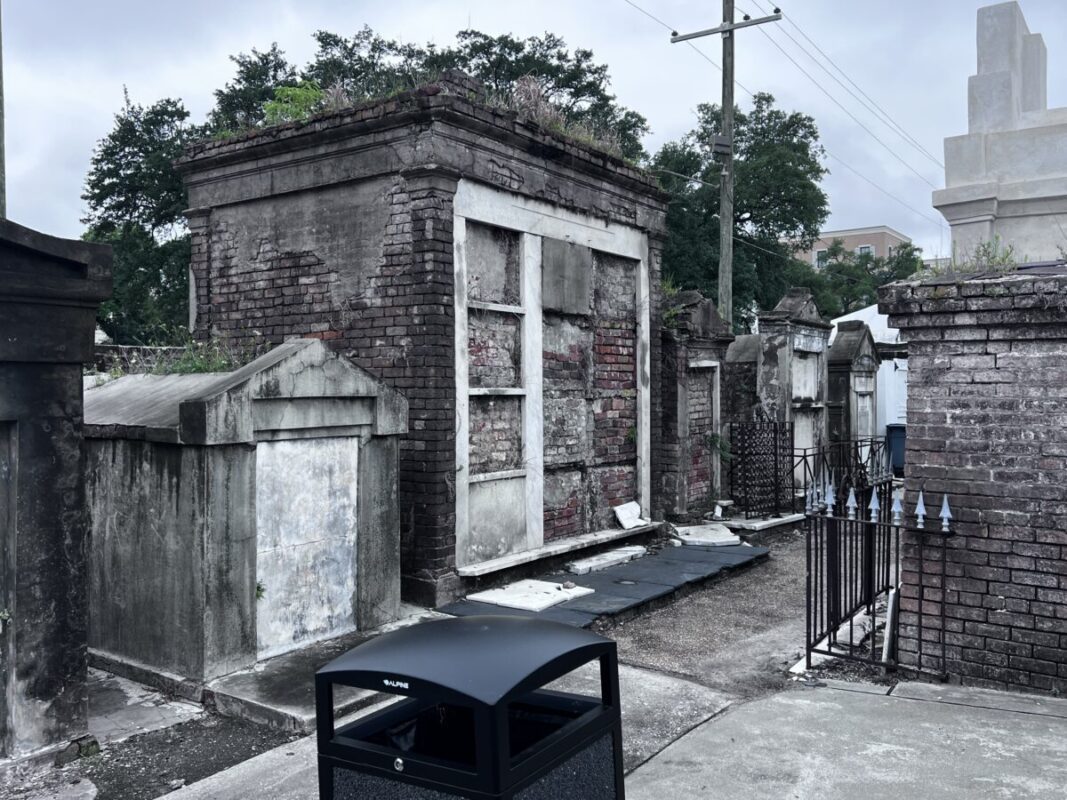
Tombs
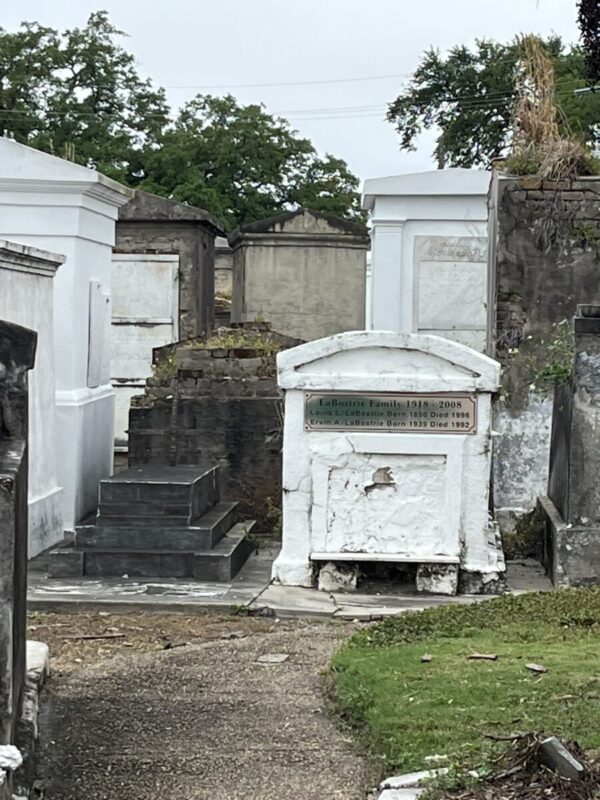
Tombs
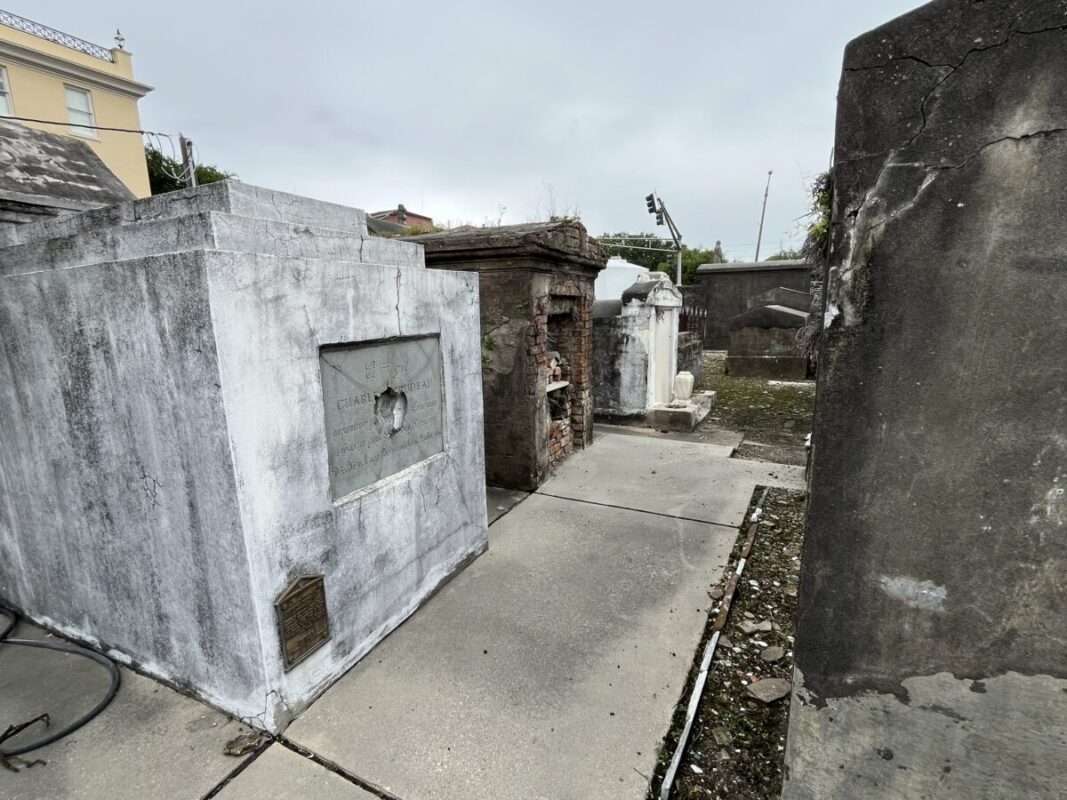
Tombs
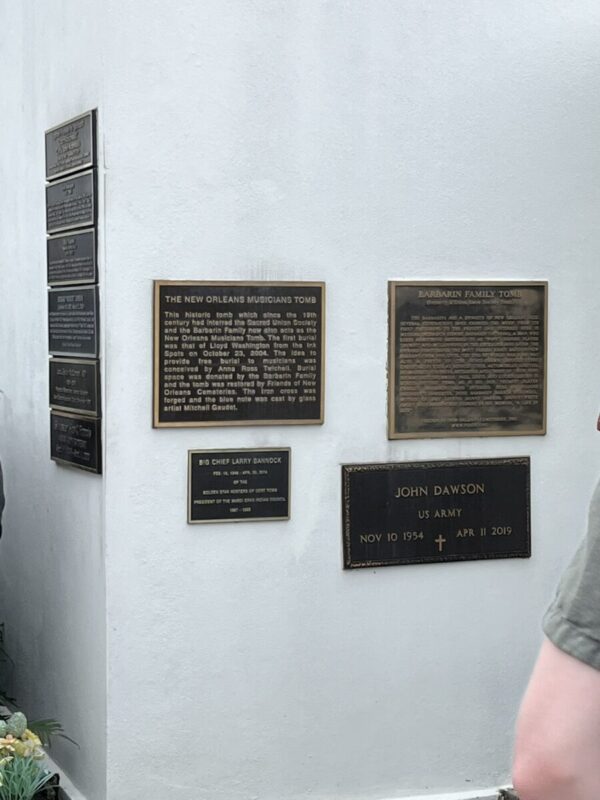
Musicians Tomb
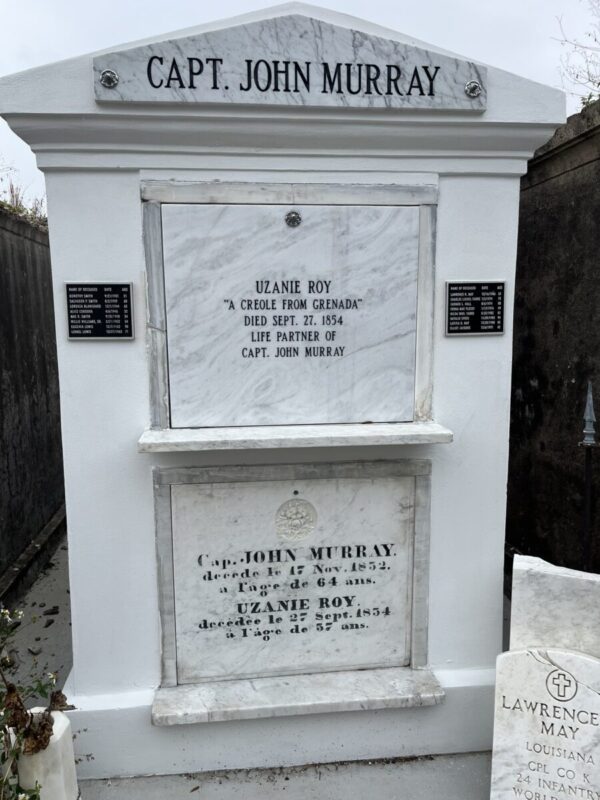
Murray Family
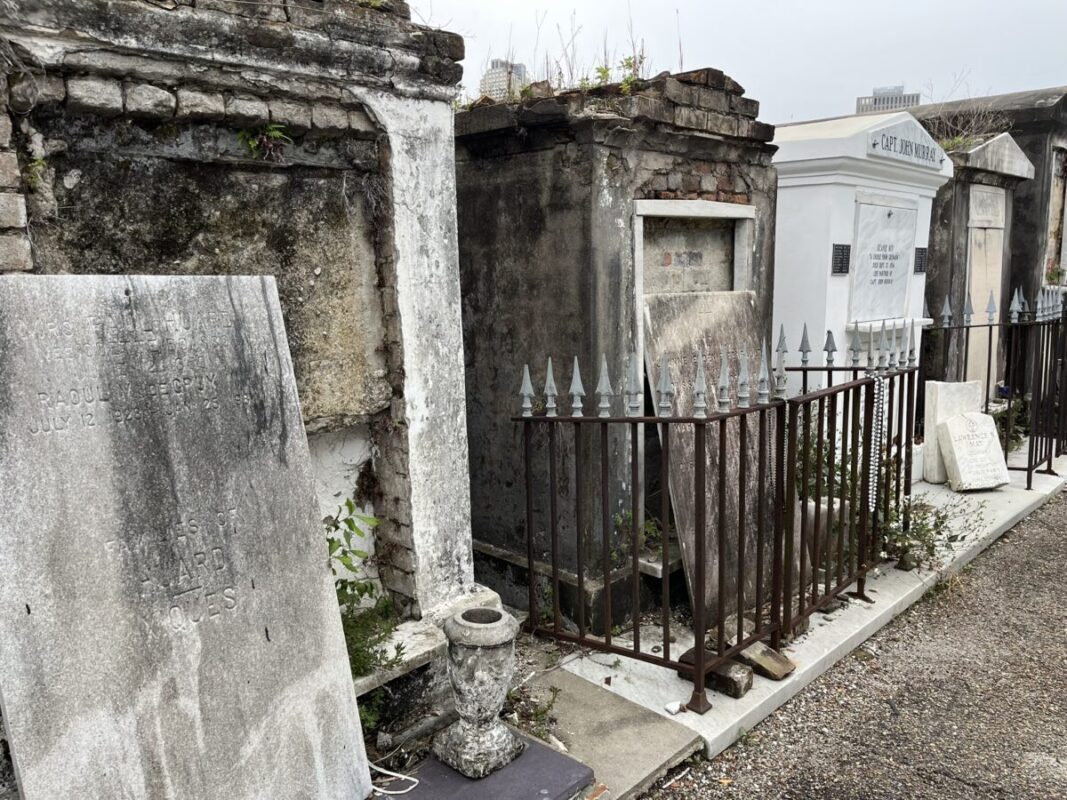
Tombs
Tombs
Tombs
Tomb
Tombs
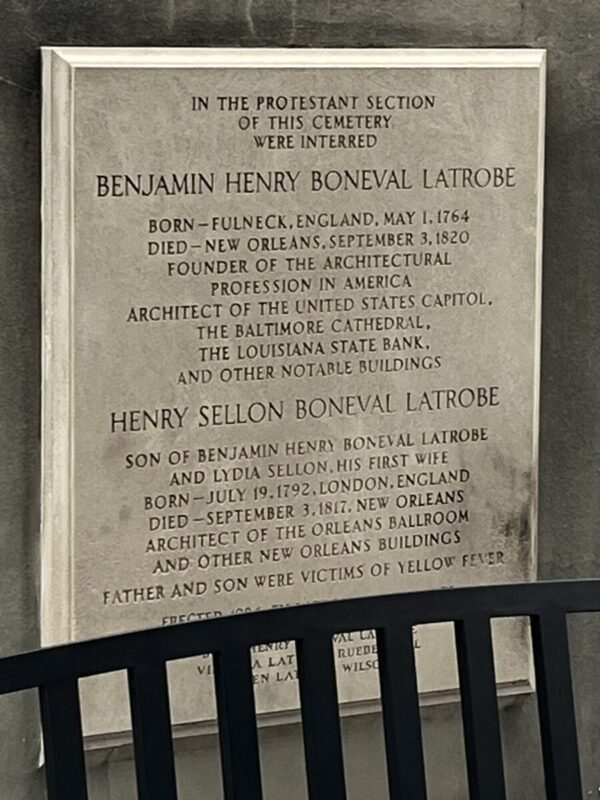
Latrobe Family
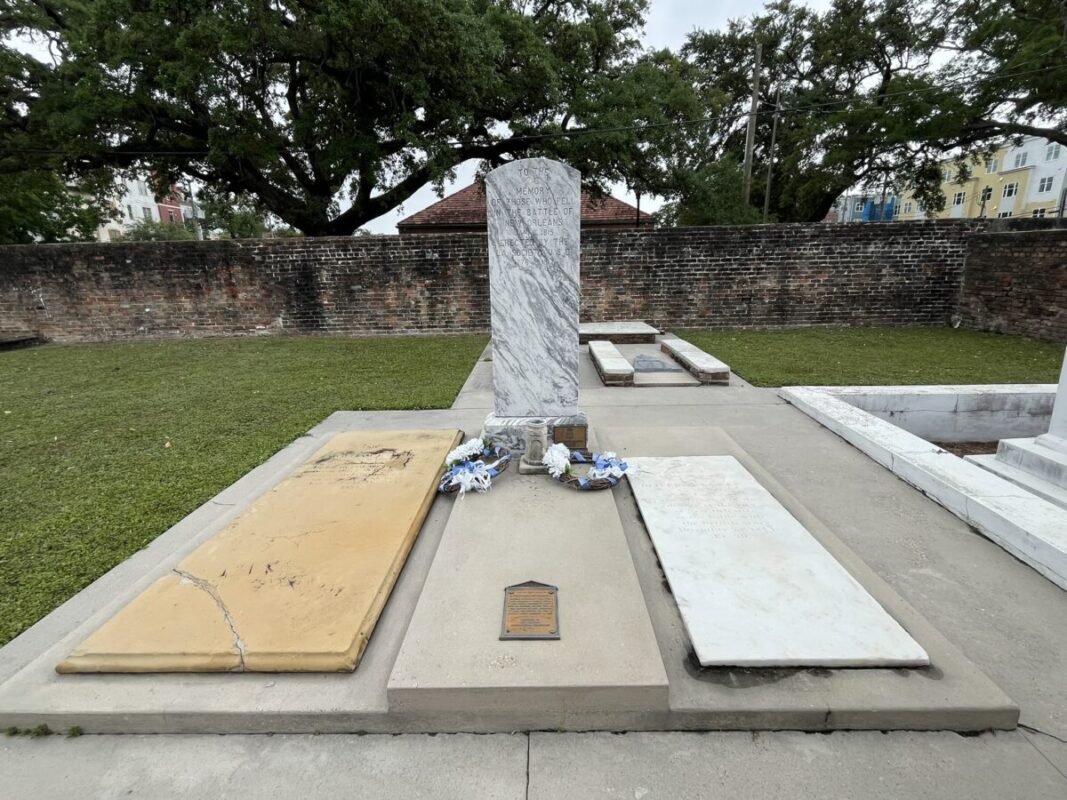
Battle of New Orleans 1815 Memorial
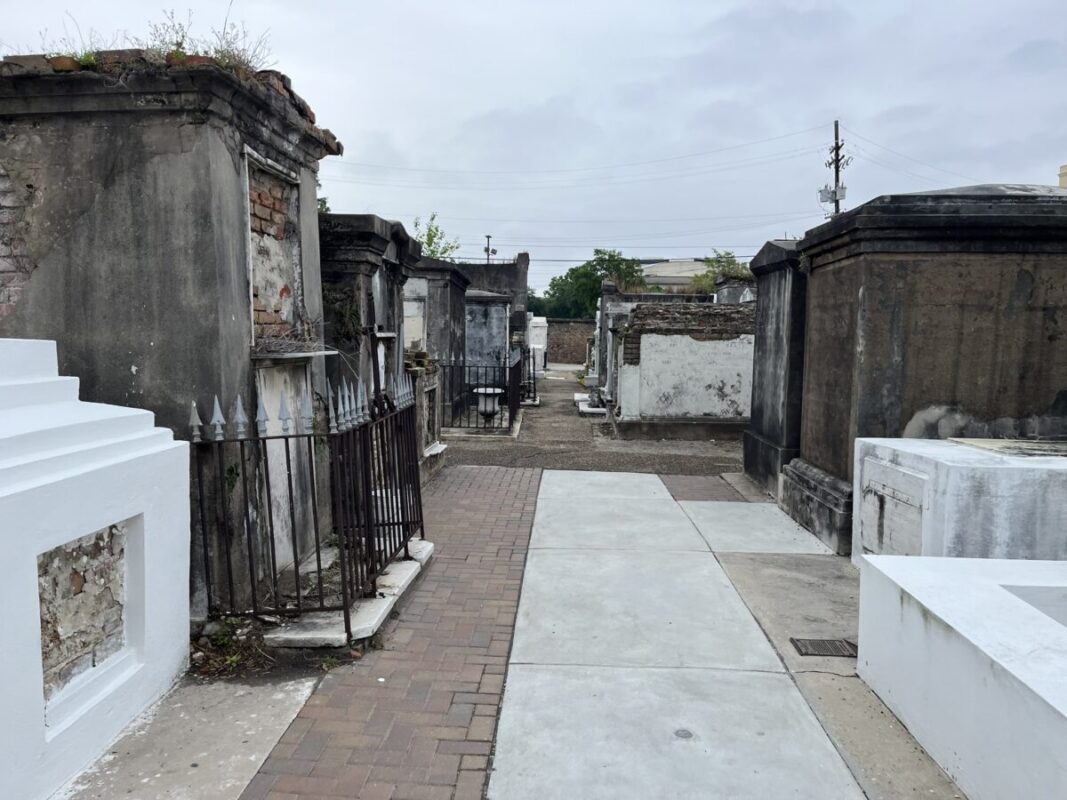
Tombs