Catches Waterfront Grille, Port Richey, FL

Catches Waterfront Grille, Port Richey, FL

Lunch at Catches Waterfront Grille in Port Richey, Florida

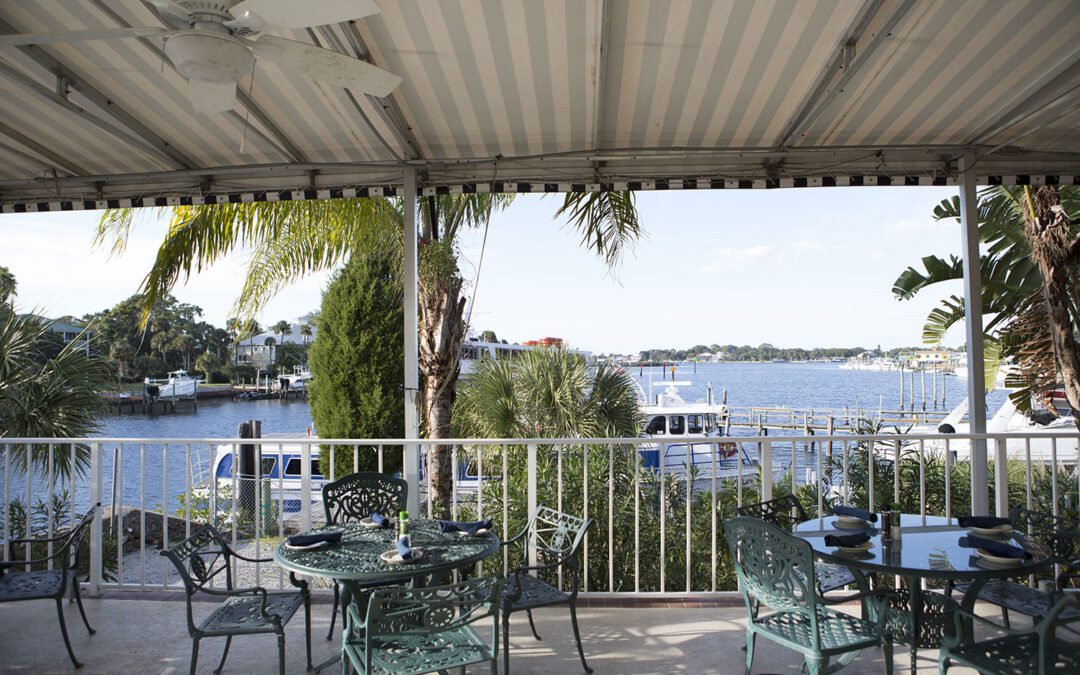
If you’re looking for a casual waterfront restaurant in Pasco County, Catches Waterfront Grille in Port Richey, Florida, is a great place to enjoy lunch while taking in the laid-back atmosphere of Florida’s Gulf Coast.

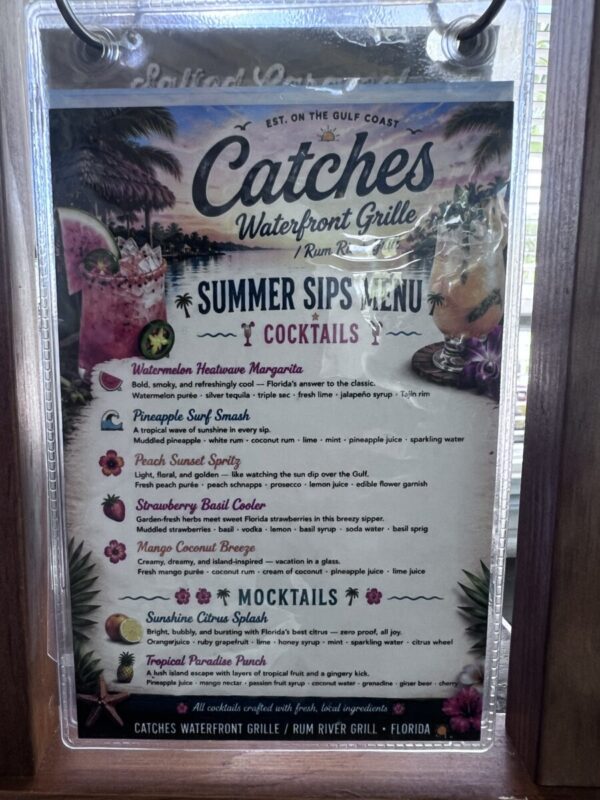
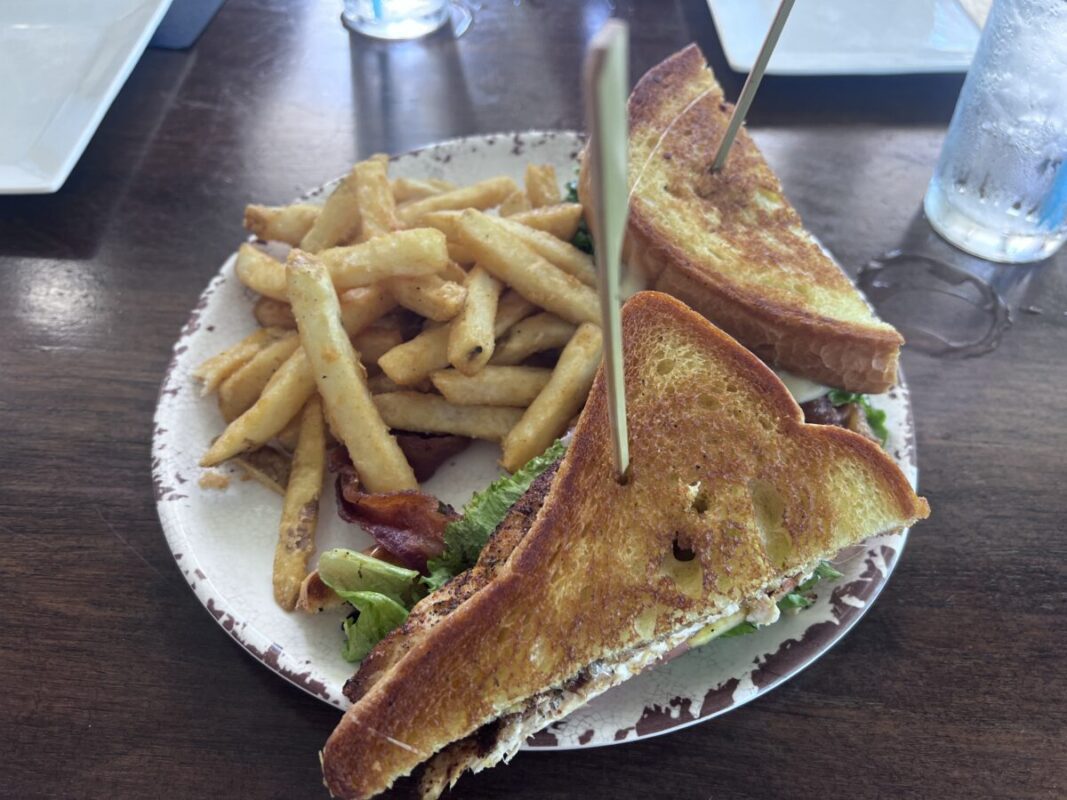
During one of our local adventures, we stopped at Catches Waterfront Grille for lunch. We ordered waters along with crab cakes with remoulade sauce and a Mahi Mahi BLT with fries. It turned out to be a relaxing meal and another opportunity to explore one of the many waterfront dining spots in the area.

Lunch at Catches Waterfront Grille

One of the things we enjoy about living in Florida is having so many opportunities to combine a good meal with a waterfront setting. Catches Waterfront Grille in Port Richey fits nicely into that kind of outing.

The restaurant has the casual atmosphere you’d expect from a Gulf Coast waterfront restaurant, making it a comfortable choice for lunch when you’re looking for something relaxed rather than formal.

After getting settled, we ordered waters and looked over the menu before deciding what to have.

Crab Cakes with Remoulade Sauce

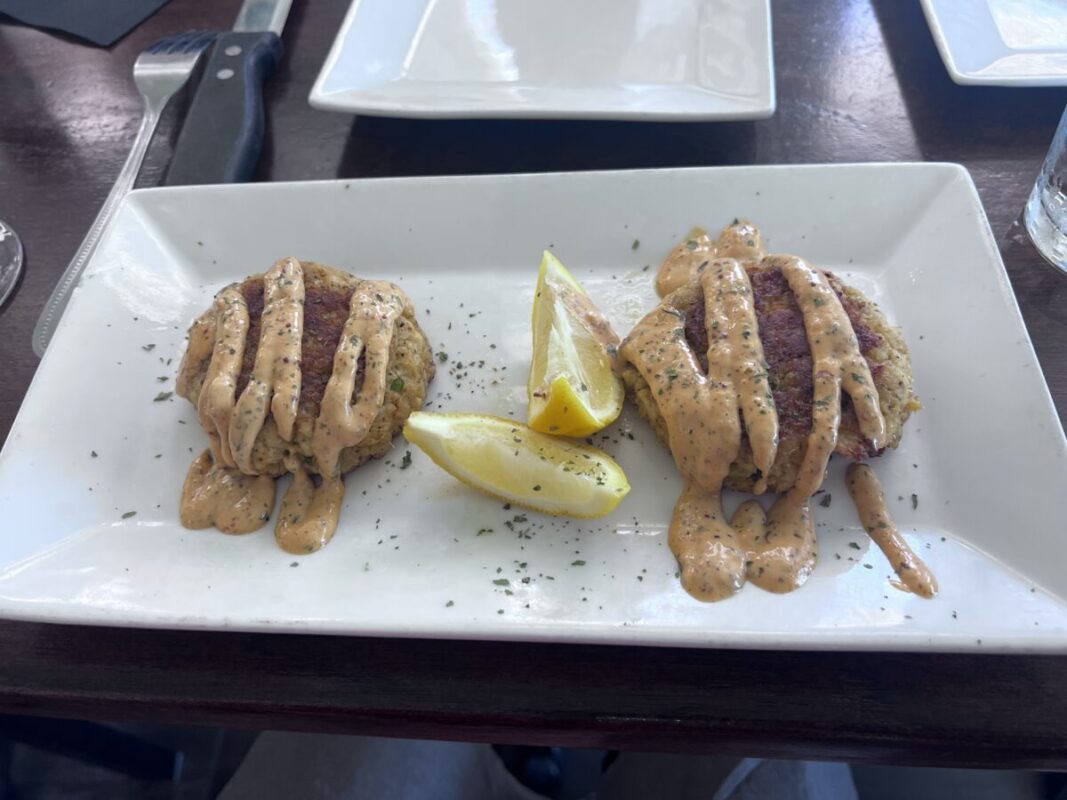
One of our lunch choices was the crab cakes with remoulade sauce.

Crab cakes are always a tempting choice when we’re dining near the Gulf Coast. The combination of crab and the creamy, flavorful remoulade sauce made this a nice seafood option for lunch.

The remoulade provided a good complement to the crab cakes and added some extra flavor to the dish.

Mahi Mahi BLT with Fries

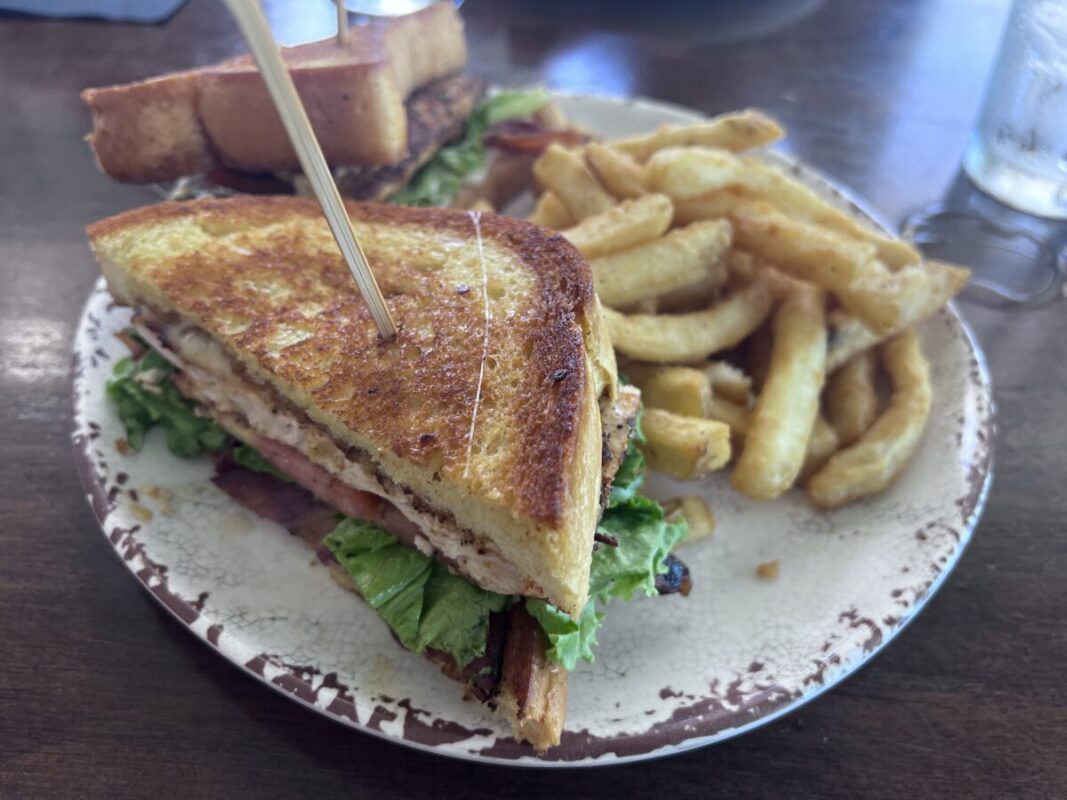
Our other entrée was the Mahi Mahi BLT with fries.

The sandwich puts a Florida twist on the familiar BLT by combining mahi mahi with bacon, lettuce, and tomato. Mahi mahi is one of the fish we especially enjoy when eating around Florida, so combining it with the traditional BLT ingredients made this an interesting choice.

The sandwich was served with fries, giving us a filling lunch that combined seafood with the familiar flavors of a BLT.
A Relaxing Port Richey Waterfront Lunch

What we enjoyed about our visit to Catches Waterfront Grille in Port Richey was the casual nature of the experience. Sometimes a local lunch doesn’t need to be a big event. It’s simply about finding a comfortable place, ordering something good, and enjoying some time together.

Our lunch gave us the opportunity to try a couple of different seafood dishes while enjoying the waterfront atmosphere.

Whether you’re a local looking for another place to have lunch or you’re visiting the Port Richey area and want to experience some casual waterfront dining, Catches Waterfront is worth considering.

What We Ordered at Catches Waterfront Grille

For our lunch, we ordered:

  • Crab cakes with remoulade sauce
  • Mahi Mahi BLT with fries
  • Waters

Final Thoughts on Catches Waterfront Grille

Our lunch at Catches Waterfront Grille was a simple and enjoyable Gulf Coast dining experience. The crab cakes with remoulade and the Mahi Mahi BLT with fries gave us two different seafood options to enjoy, and the waterfront setting added to the experience.

One of the best parts of exploring Florida is discovering restaurants close to home that make for an easy afternoon outing. Catches Waterfront Grille in Port Richey is another restaurant we’ve added to our list of places to enjoy when we’re looking for a casual waterfront meal.

Sometimes the best adventures are the simple ones—a good lunch, a waterfront view, and nowhere else you need to be.

California Road Trip: Crossing State Lines

California Road Trip: Crossing State Lines

Welcome Signs From Florida to California and Back

One of the simple things I enjoyed about our 15-day, 6,169-mile road trip was watching the scenery change as we crossed from one state into another.

We traveled through several states on our journey from Florida to California and back, and along the way, I took pictures of the welcome signs whenever I had the opportunity.

These signs may not be major attractions, but they became little milestones during our trip. Each one meant we had crossed another state line and were one step closer to wherever we were headed that day.

Welcome to Alabama

Our journey west began with Alabama.

The “Welcome to Alabama” sign was one of the first reminders that we were officially leaving Florida behind and beginning the long drive across the country.

There is something about seeing that first state-line sign on a big road trip that makes the adventure feel real. We still had thousands of miles ahead of us, but Alabama was the beginning of our cross-country journey.

Welcome to Mississippi

From Alabama, we continued west into Mississippi.

The “Welcome to Mississippi” sign was another milestone along the way. We would eventually spend time along the Gulf Coast in Biloxi, so Mississippi wasn’t simply a state we passed through—it became one of our stops along the journey.

Welcome to Louisiana

Continuing west, we crossed into Louisiana. This would become an especially memorable state for us because New Orleans was one of the final major stops on our trip home. By the time we reached Louisiana on the return journey, we had already traveled all the way to California and were making our way back toward Florida.
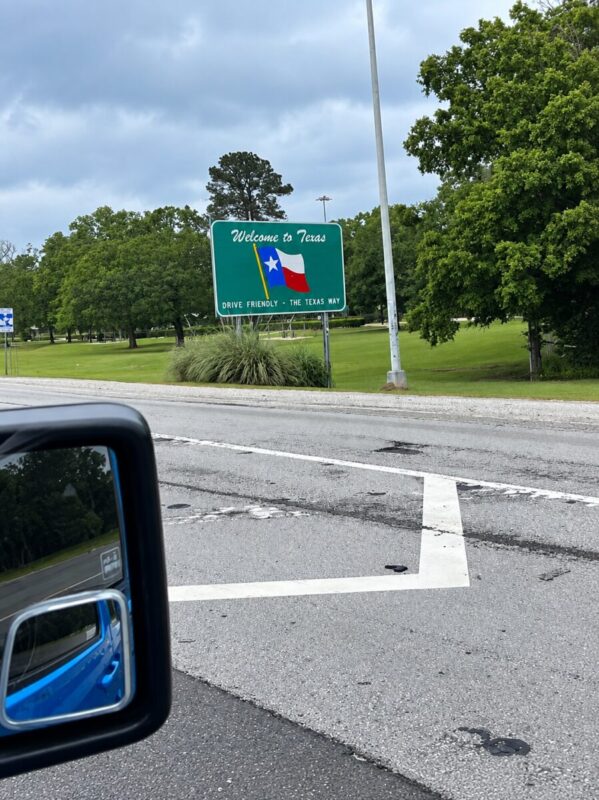
Welcome to Texas

Texas was a completely different experience. We spent a lot of time driving across Texas because of its enormous size. From Groom and the Cross of Our Lord Jesus Christ to Columbus, San Antonio, El Paso, and the long stretches of Interstate 10, Texas became one of the states that we experienced the most during the trip. The “Welcome to Texas” sign was another reminder that we were entering one of the biggest portions of our journey.

Welcome to New Mexico

After crossing Texas, we entered New Mexico. The landscape immediately began to change. The wide-open spaces and increasingly dry terrain were a big contrast to the green scenery we had seen farther east. Our trip through New Mexico included Gallup, where we stayed at the historic Hotel El Rancho before continuing west toward Arizona.

Welcome to Arizona

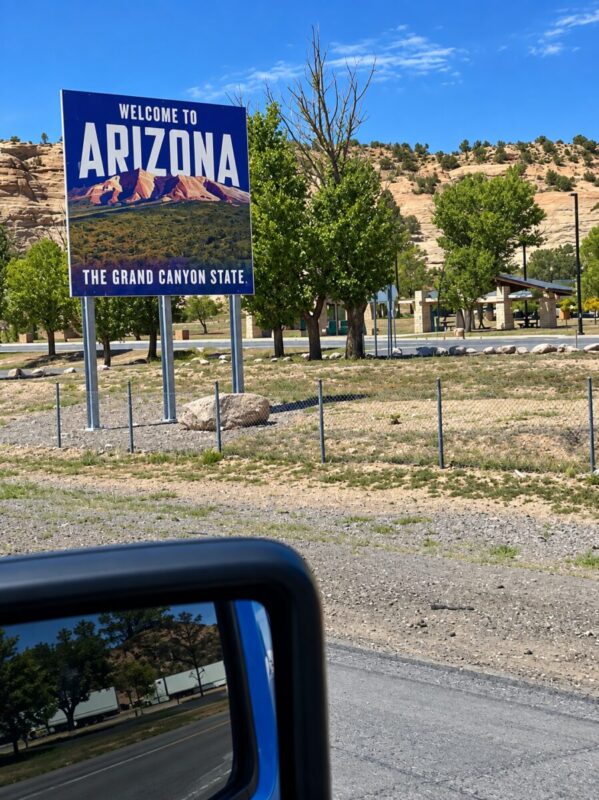
Arizona was one of the highlights of our entire road trip. We entered the Grand Canyon State and eventually made our way to Grand Canyon National Park, one of the most spectacular places we visited during our 15 days on the road. Seeing the Arizona welcome sign was especially memorable because we knew we were getting closer to one of the major destinations on our trip.

Welcome to Nevada

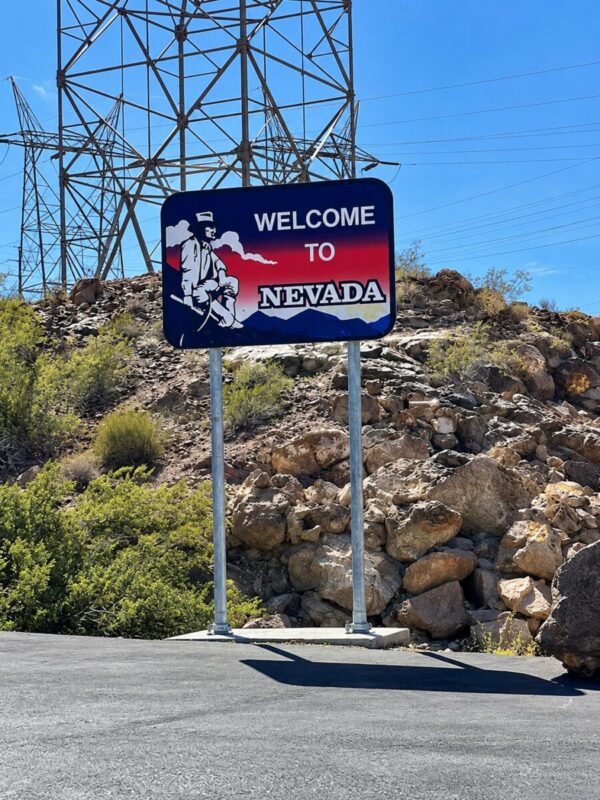
From Arizona, we continued toward Nevada. The “Welcome to Nevada” sign marked our arrival in the state that would soon bring us to Hoover Dam and Las Vegas. This was another major change in scenery, with rugged desert landscapes replacing the forests and mountains we had encountered earlier.

Welcome to California

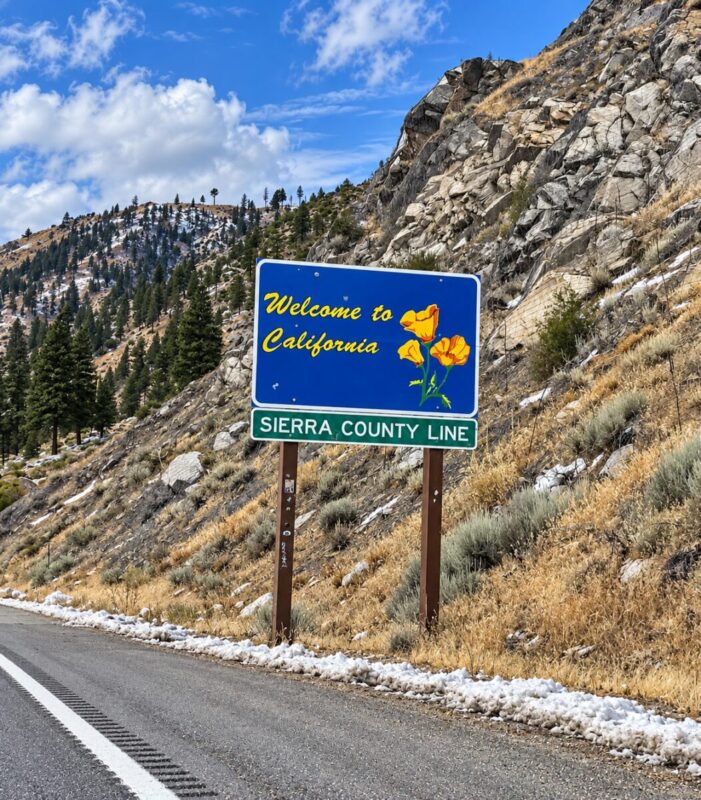
Eventually, we reached the state that was the ultimate destination of our journey—California. The California welcome sign was particularly special because this was the goal we had been driving toward for days. We explored Nevada City, Campbell, San Jose, Santa Cruz, the California coast, and several other places during our stay. We also spent time with family and visited Testarossa Winery before beginning the long journey back east. Seeing this sign meant we had officially made it to California.

And Then We Started Heading Home

Of course, reaching California wasn’t the end of the adventure. It was only the halfway point. After enjoying our time in California, we began the long drive back toward Florida. We traveled back through the Southwest and Texas before eventually reaching Louisiana and continuing east. Along the way, we saw many of the same state signs again, but this time they meant something different. We weren’t heading toward California anymore. We were heading home.

Back Through the States

Our return journey took us through California, Arizona, New Mexico, Texas, Louisiana, Mississippi, Alabama, and finally Florida. By then, the welcome signs had become more than just photographs. Each one represented another section of the journey completed. After thousands of miles on the road, we were getting closer and closer to home.

Welcome Home to Florida

Finally, we reached Florida. For this post, I wanted to include a special image of the Florida welcome that represents what it felt like to finally return home after such a long journey. I also created a Florida state-line image with the bridge-style entrance you were looking for, similar to the type of large architectural welcome structure you see when entering Florida on I-10.

California Road Trip: The Souvenirs We Brought Home

California Road Trip: The Souvenirs We Brought Home

Memories From 6,169 Miles on the Road

After 15 days, 6,169 miles, and countless stops along the way, our California road trip eventually came to an end. We had seen beaches, historic towns, the Grand Canyon, Hoover Dam, Las Vegas, California, Route 66, and plenty of places in between.

Of course, no road trip would be complete without bringing a few souvenirs home. During our journey from Florida to California and back, we picked up a collection of souvenirs that now remind us of the places we visited. Some were practical, some were decorative, and a few were simply things we couldn’t resist.

A Little Piece of Each Stop

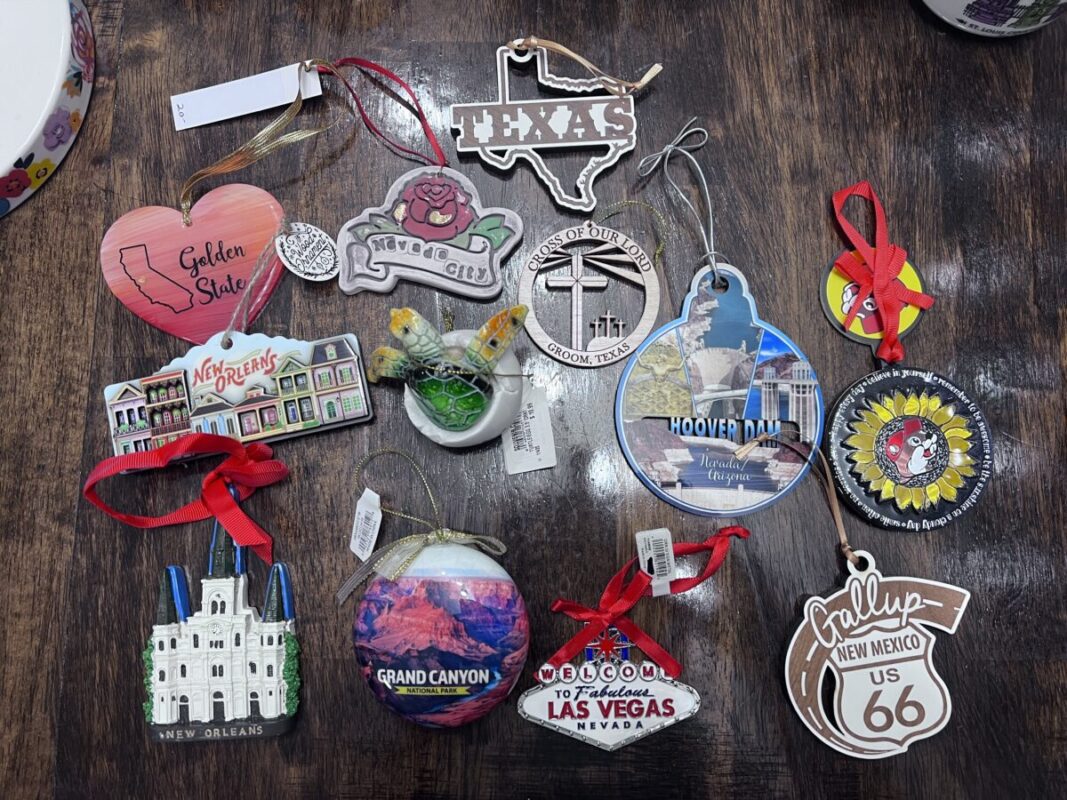
Looking back at everything we brought home, it’s interesting to see how many different places are represented. There are souvenirs from New Orleans, Las Vegas, Gallup, the Grand Canyon, Hoover Dam, Groom, Texas, and Route 66. Together, they make a pretty good snapshot of our trip.

One of my favorites is the New Orleans ornament featuring the colorful buildings of the French Quarter. We also brought home a New Orleans cathedral ornament, along with a few other items celebrating our time in the city.

Souvenirs from our 6,169-mile California road trip


Souvenirs From the Road

Our collection also includes reminders of some of the most memorable stops along the way. The Grand Canyon ornament brings back memories of standing along the South Rim and taking in one of the most incredible sights of the entire trip. The Hoover Dam ornament reminds us of another major highlight, while the Cross of Our Lord Jesus Christ ornament takes us back to our stop in Groom, Texas. We also picked up Route 66 souvenirs in Gallup, New Mexico, including items connected with the historic El Rancho Hotel. Those little souvenirs may not seem like much individually, but each one brings back a specific memory from the trip.

Hats, Mugs and Other Road Trip Memories

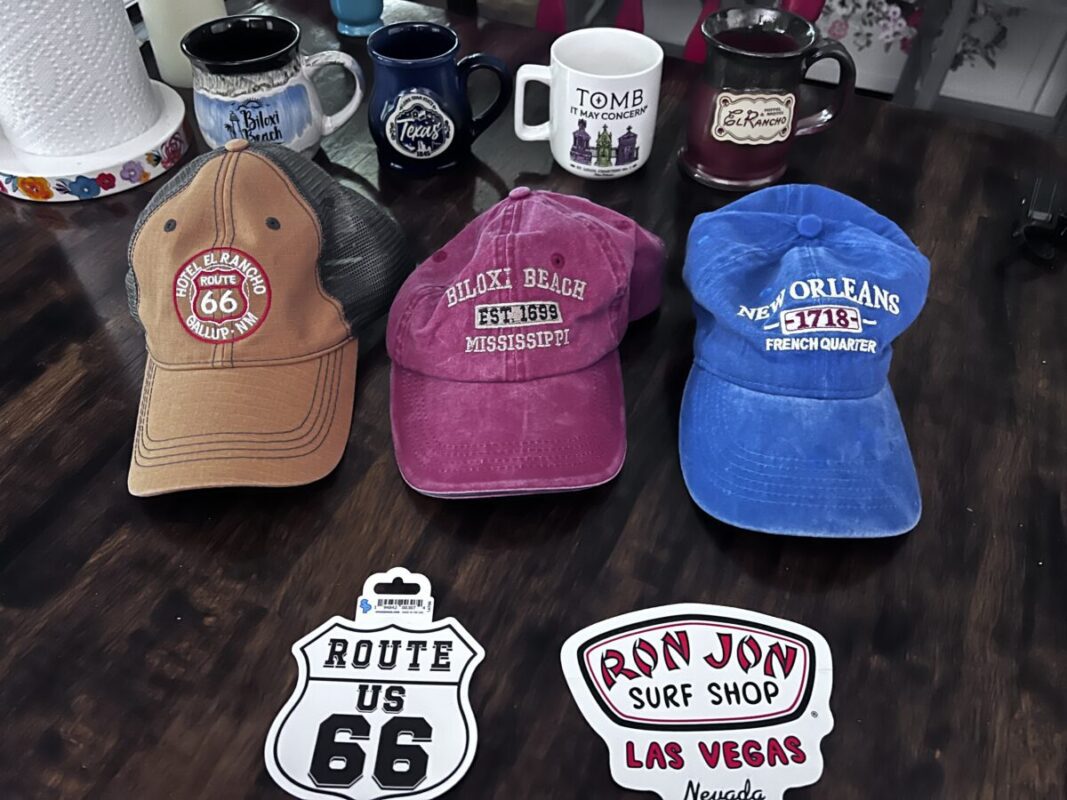
We didn’t stop with ornaments. We also brought home several hats and coffee mugs from different places we visited. The mugs include Biloxi Beach, Texas, Hotel El Rancho in Gallup, and St. Louis Cemetery No. 1, while the hats represent places including Gallup, Biloxi Beach, and New Orleans.

Hats, Mugs and Other Road Trip Memories

One thing I like about souvenirs like these is that they actually become part of everyday life. A coffee mug sitting in the kitchen or a hat hanging in the closet can bring back a memory of a particular day on the road.

New Orleans Came Home With Us

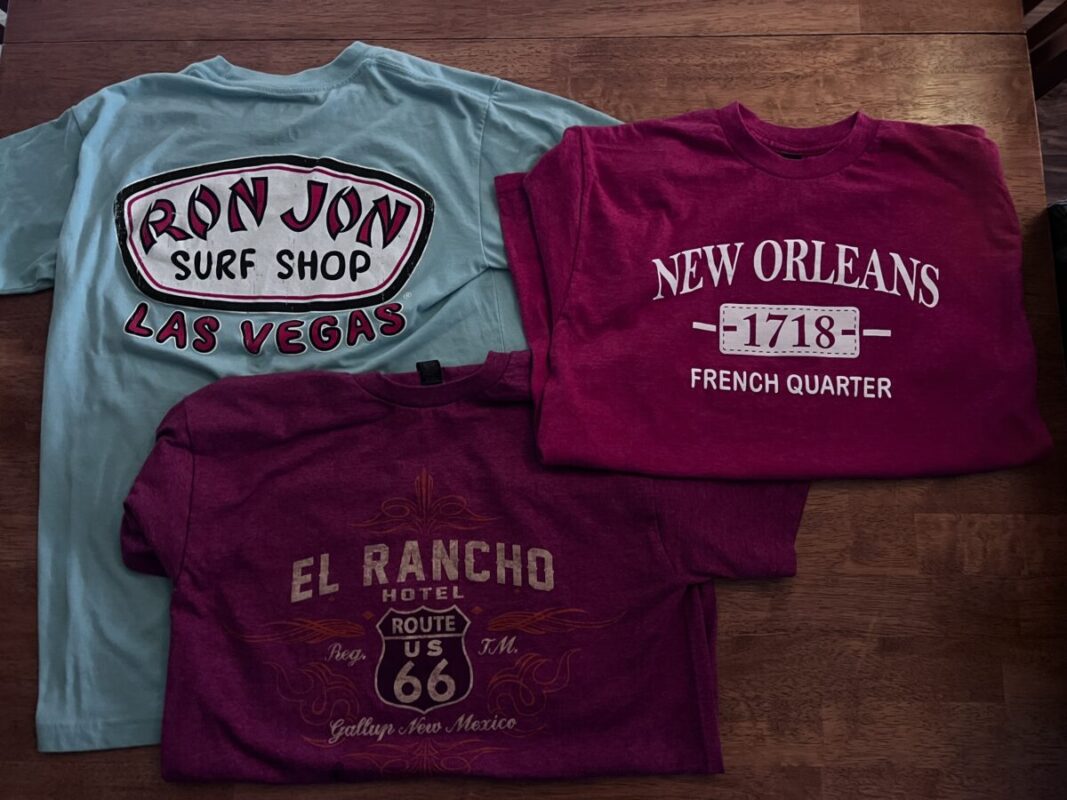
New Orleans may have been one of our final stops, but it certainly wasn’t forgotten. We brought home several New Orleans souvenirs, including shirts, ornaments, and other items celebrating the French Quarter and the city. The blue New Orleans shirt with 1718 on it is a reminder of the city’s founding, while the other shirts connect us to some of the places that stood out during our visit.

After spending several days exploring New Orleans, it was nice to bring a few reminders of the city home with us.

More Than Just Souvenirs

When we first started this trip, I don’t think I realized how much we would end up seeing. We drove more than 6,000 miles, crossed numerous states, visited major landmarks, explored cities and small towns, and experienced everything from the Gulf Coast to the Pacific Coast and back again. Now, looking at these souvenirs, each one tells a little part of that story.

  • The Grand Canyon reminds us of the breathtaking views in Arizona.
  • Hoover Dam brings back memories of one of America’s greatest engineering achievements.
  • Groom, Texas reminds us of the enormous Cross of Our Lord Jesus Christ.
  • Gallup brings back our stay at the historic Hotel El Rancho.
  • Las Vegas reminds us of several days exploring the Strip.
  • And the New Orleans souvenirs bring back our final days of the trip before beginning the long drive home.

Bringing the Adventure Home

One of the best things about taking a long road trip is that the memories don’t end when you pull back into your driveway. Every time we see one of these souvenirs, we can remember where we bought it, what we saw that day, and the miles we traveled to get there. After 15 days and 6,169 miles in our Jeep Gladiator, we had accumulated quite a collection of memories—and a few things to put on the shelf. Our California road trip may have ended, but these souvenirs make sure that a little piece of the adventure is still with us. And there was still one more part of our New Orleans experience I wanted to share—the beautiful interior of St. Louis Cathedral, which deserves a post of its own.

California Road Trip: Our Final Morning in New Orleans

California Road Trip: Our Final Morning in New Orleans

Our time in New Orleans was coming to an end

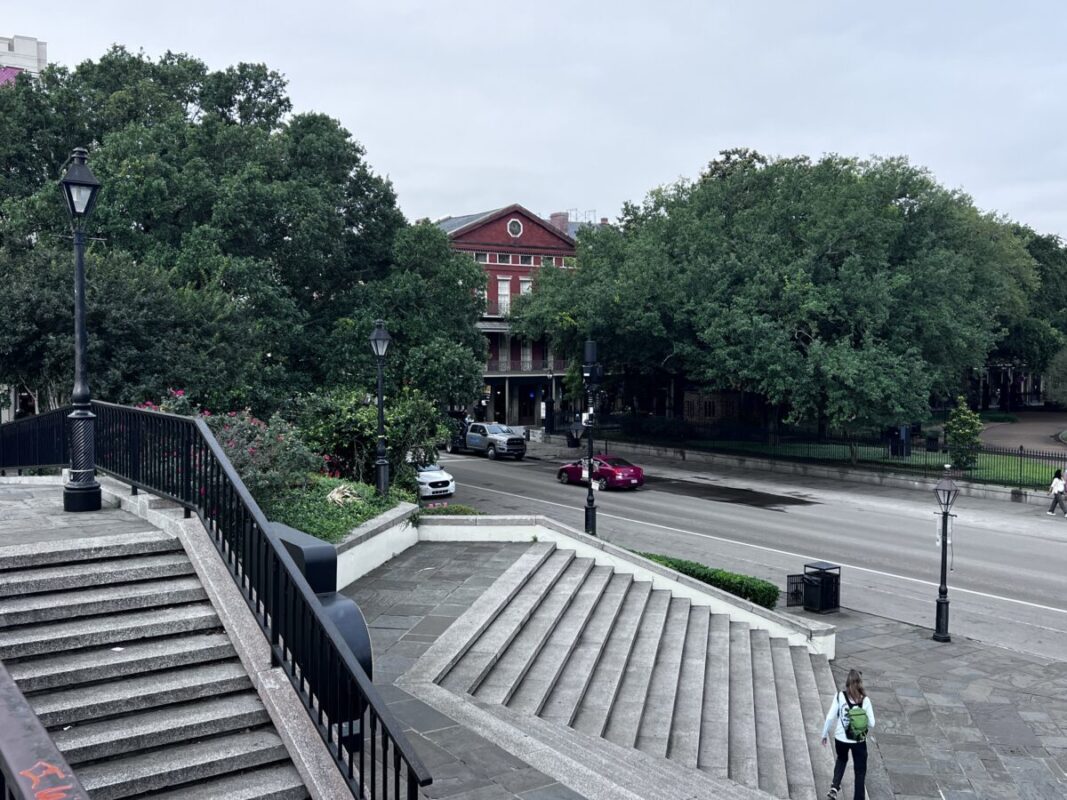
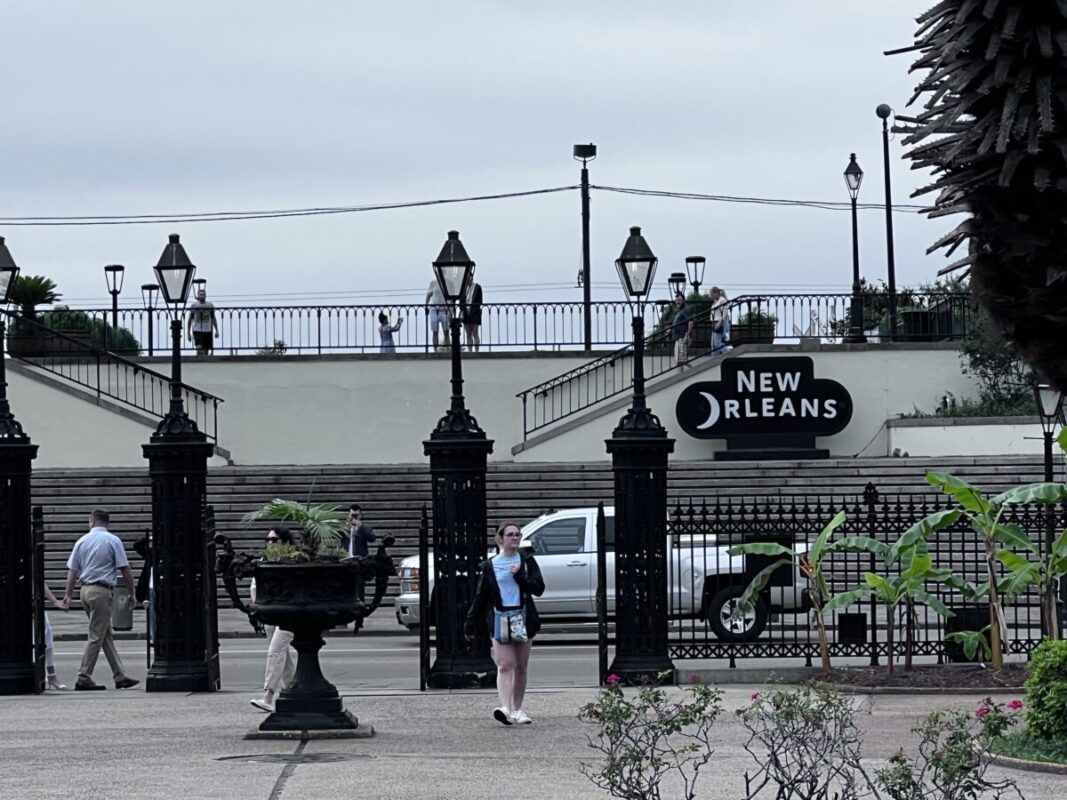
Before we loaded up the Jeep Gladiator and continued the long drive back to Florida, I decided to head out on my own one more time. I wanted to pick up a few souvenirs and take some last-minute photos of the French Quarter. It was a gray morning, and some of the streets were still relatively quiet. That gave me a chance to slow down and really look at the architecture and historic landmarks that make this part of New Orleans so unique. I made my way toward Jackson Square, St. Louis Cathedral, and the Mississippi River, taking pictures along the way.

One Last Walk Through the French Quarter

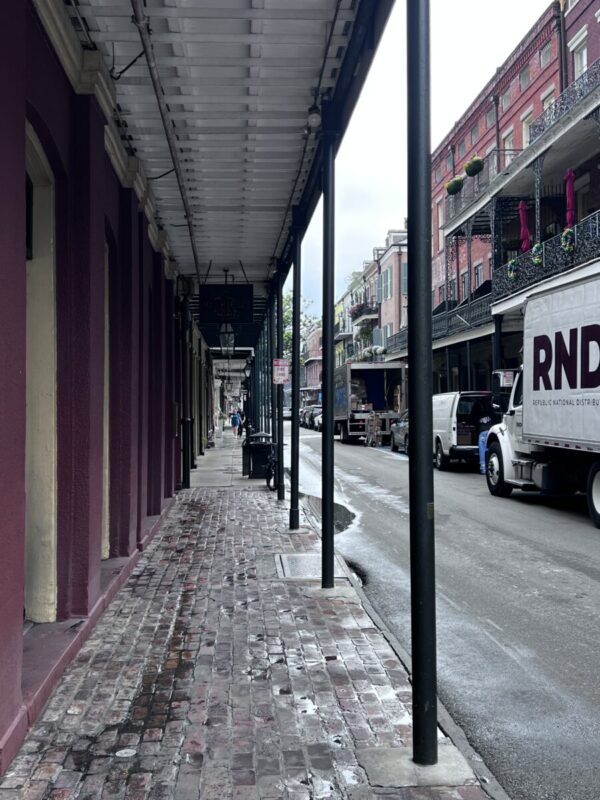
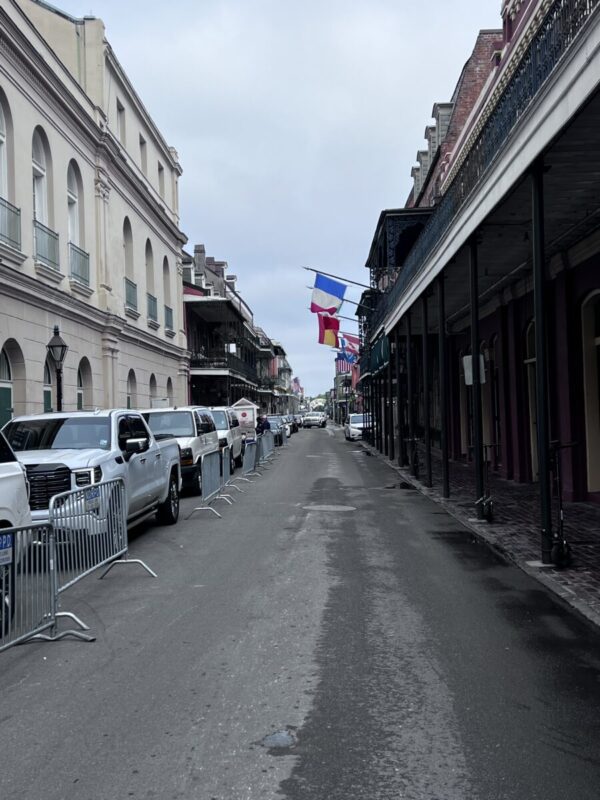
Even before reaching Jackson Square, there was plenty to photograph. The French Quarter is filled with historic buildings featuring balconies, decorative ironwork, colorful facades, and covered sidewalks. Walking the streets early in the day gave me a completely different perspective than the busy evening we had experienced on Bourbon Street.

Pontalba Buildings surrounding Jackson Square

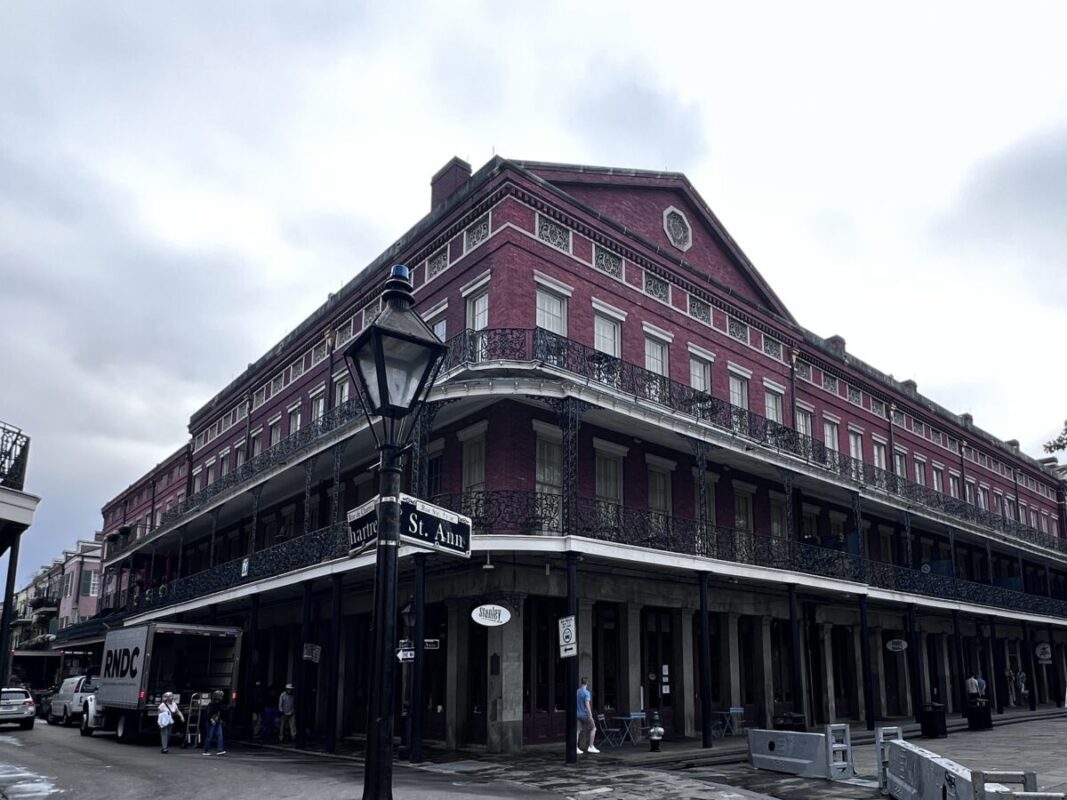
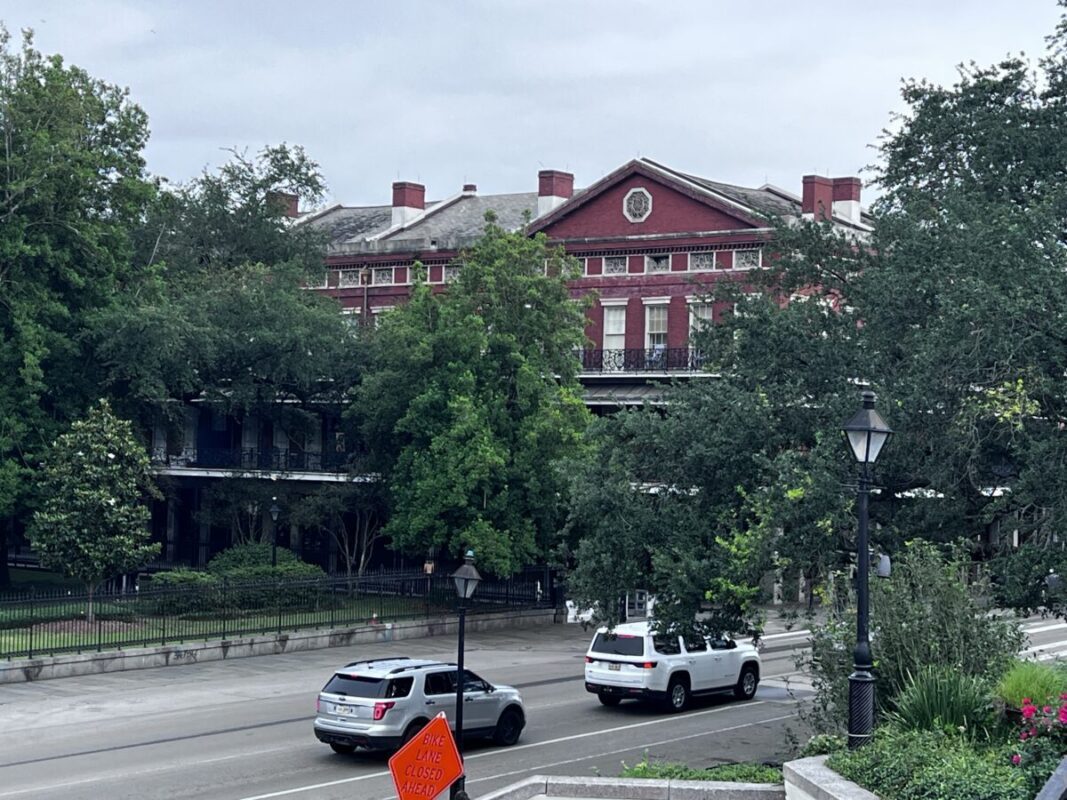
One of the buildings that immediately caught my attention was the large red-brick building at the corner of St. Ann Street. The Pontalba Buildings are among the most recognizable architectural features surrounding Jackson Square. Built in 1849–1851, they helped establish the distinctive appearance of the square that visitors see today.

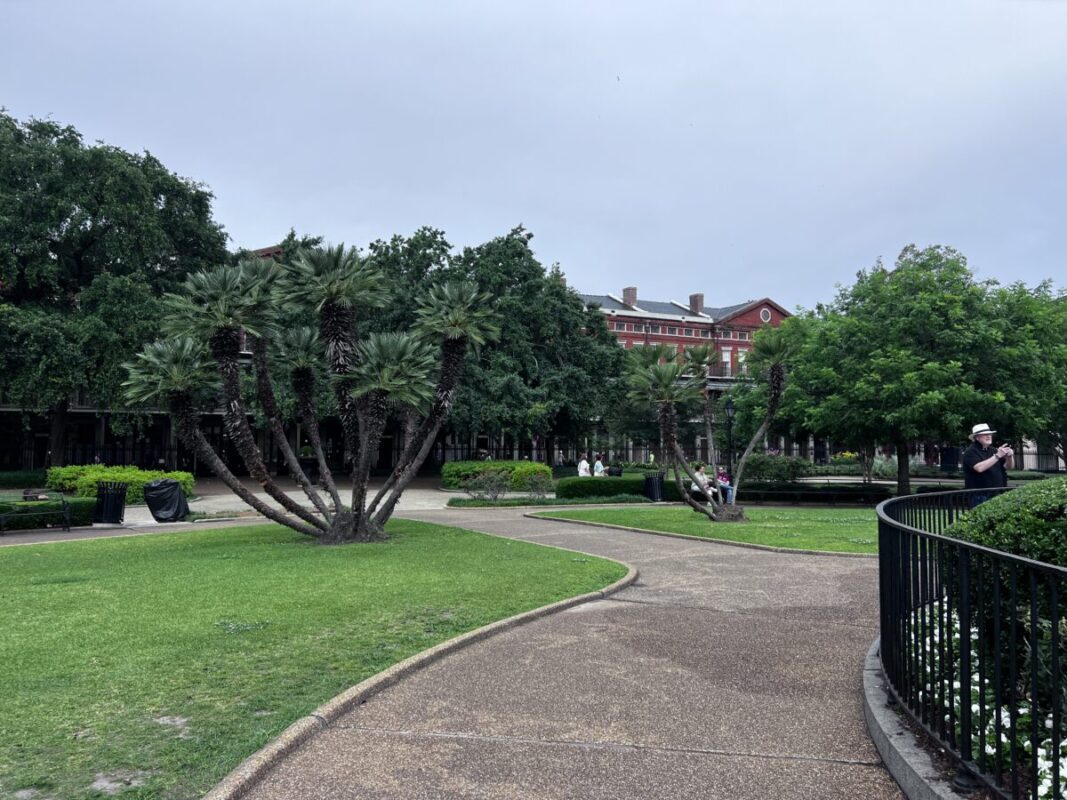
After spending some time around the monuments, I continued wandering through the surrounding streets. The architecture changes from block to block, but the balconies and ironwork remain a constant reminder of the neighborhood’s distinctive character. Even buildings that aren’t major landmarks are interesting to photograph. That’s one of the things I enjoy most about walking around New Orleans—you don’t necessarily have to be looking for a particular attraction to find something worth photographing.

A Sobering Memorial

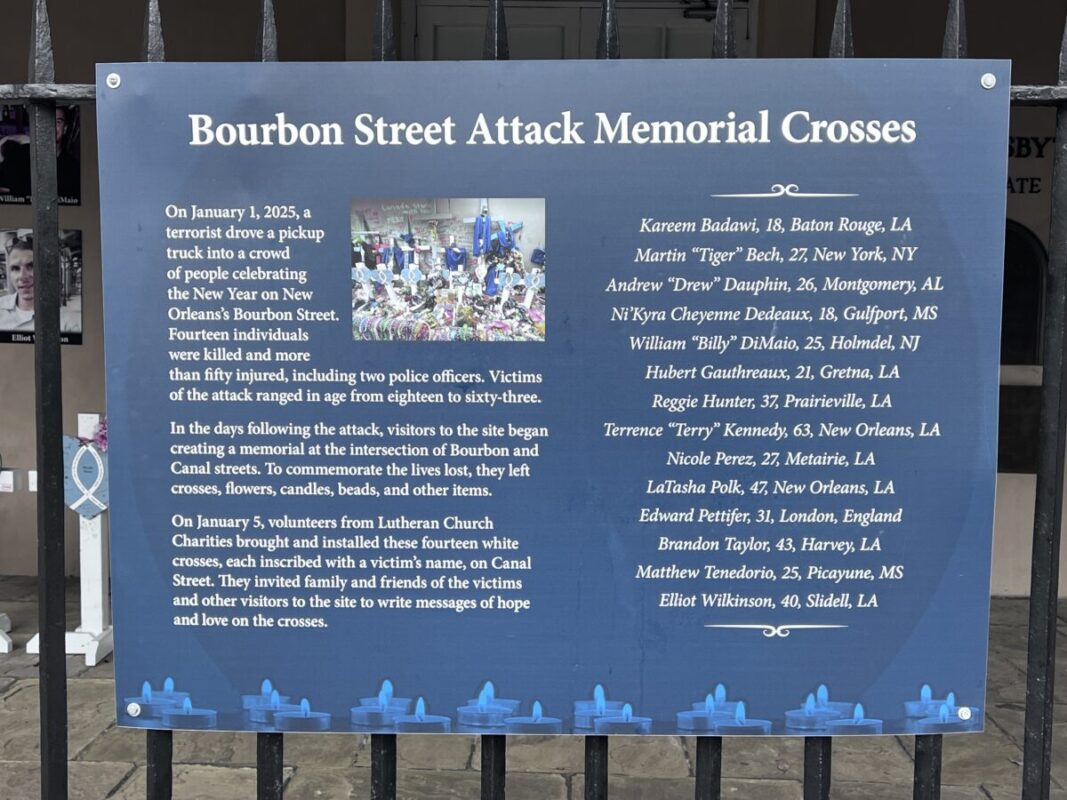
While walking through the Quarter, I also came across a memorial remembering the victims of the January 1, 2025 attack on Bourbon Street.

Bourbon Street Attack Memorial Crosses

The memorial commemorates the fourteen people who lost their lives and the many others who were injured when a pickup truck was driven into a crowd celebrating New Year’s Day. The memorial includes fourteen white crosses, each bearing the name of one of the victims.

It was a sobering moment during an otherwise leisurely morning of sightseeing. Seeing the names and reading the story on the memorial was a reminder that the places we visit can carry much more history than what we see on the surface.

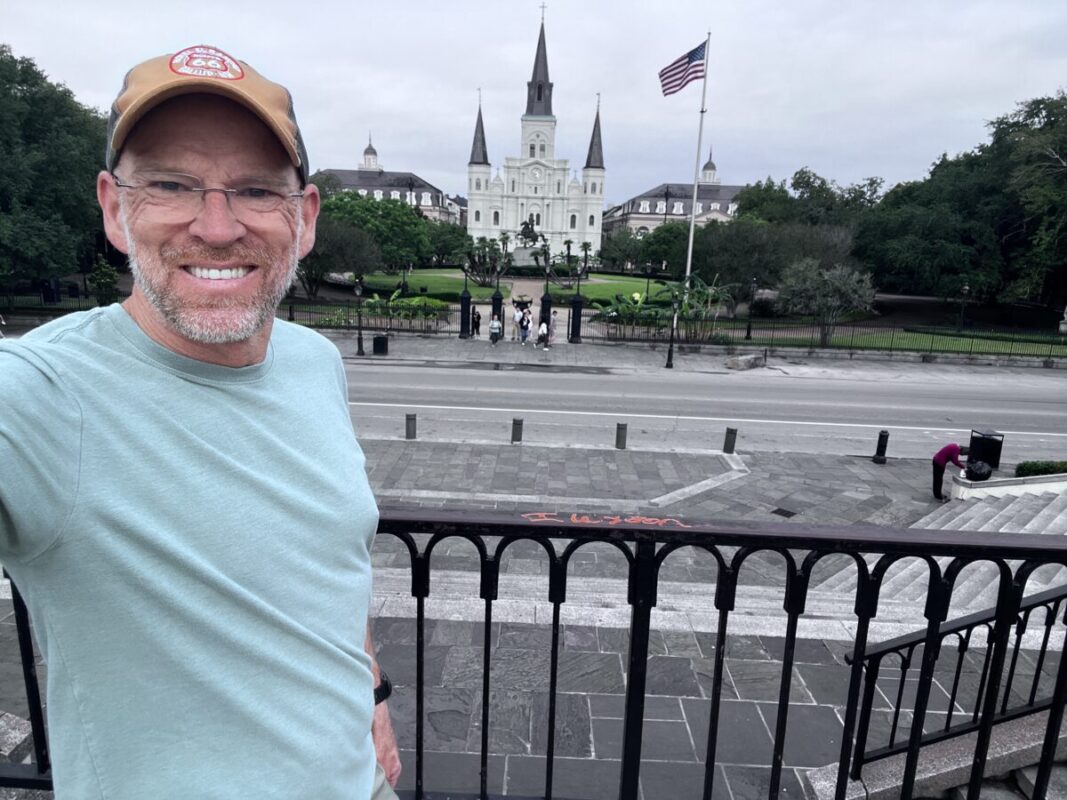
Jackson Square and St. Louis Cathedral

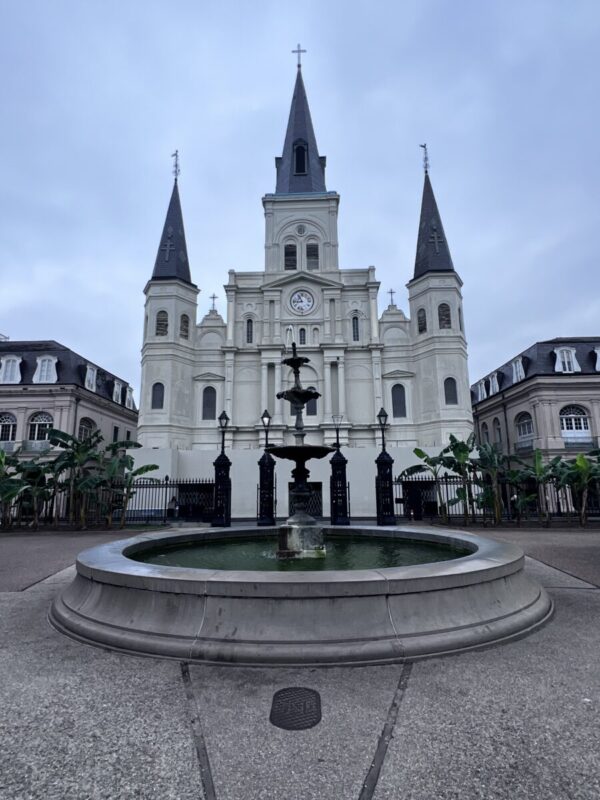
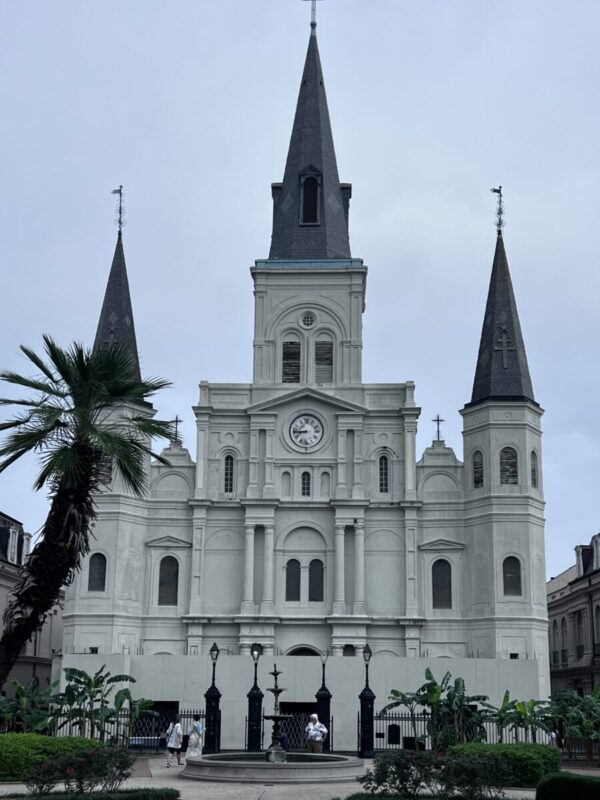
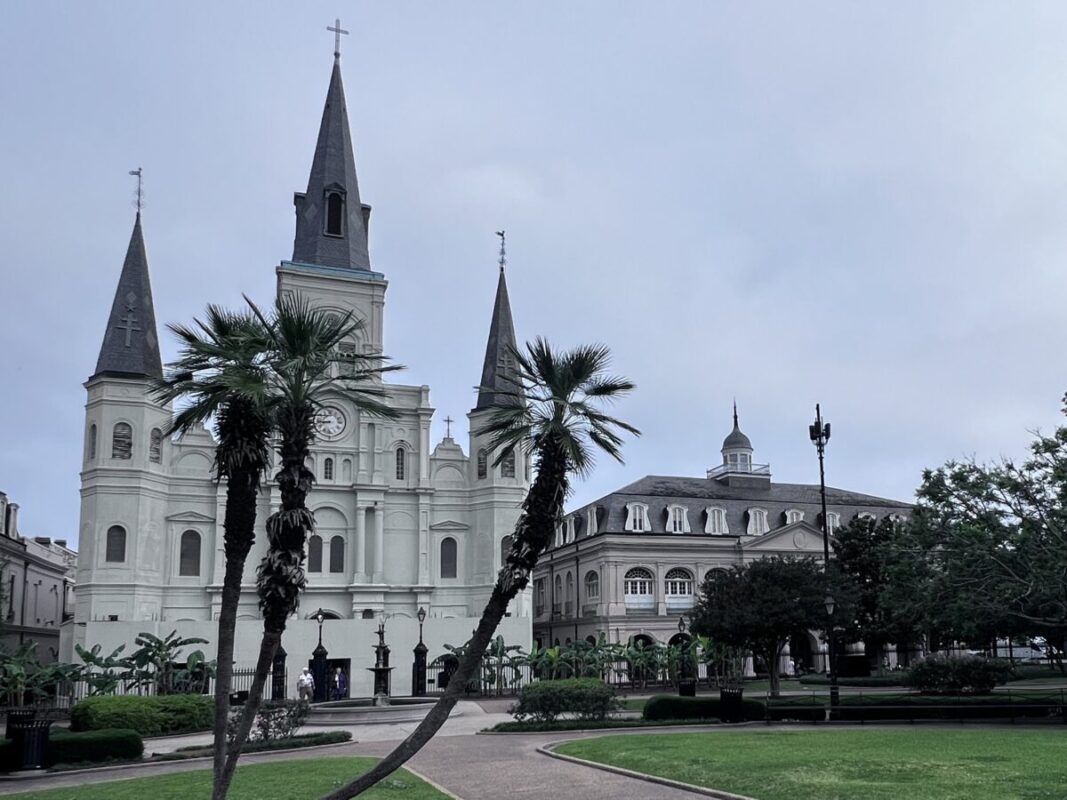
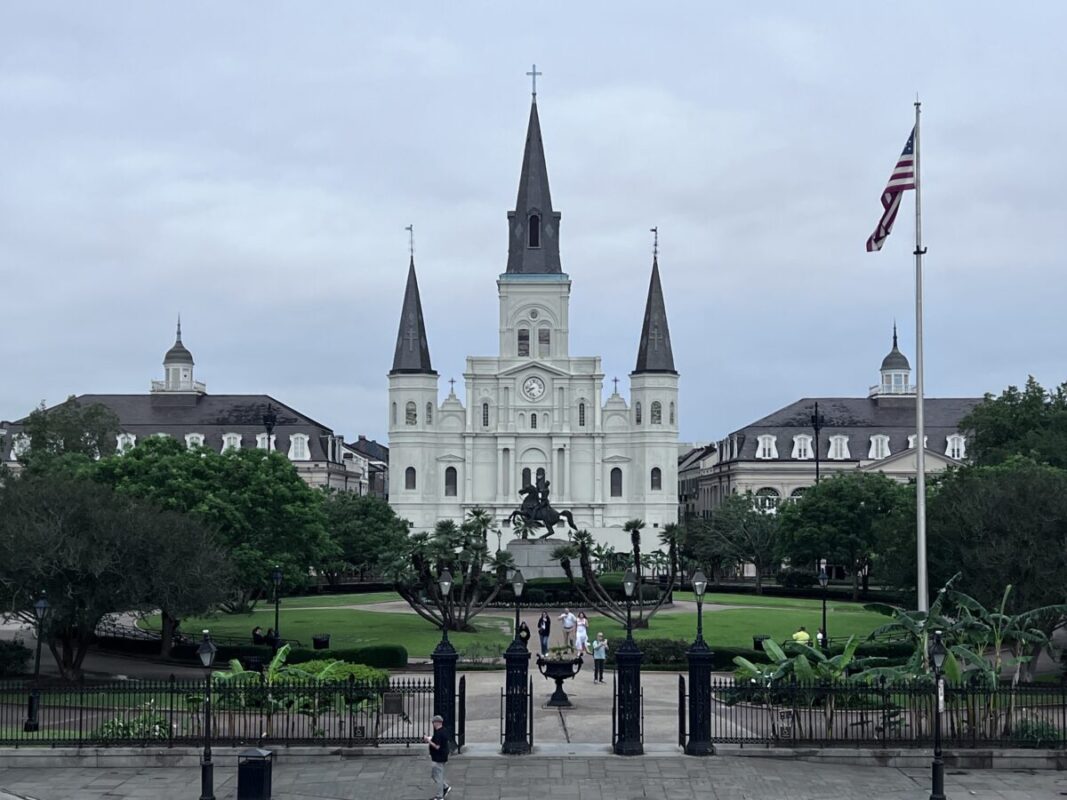
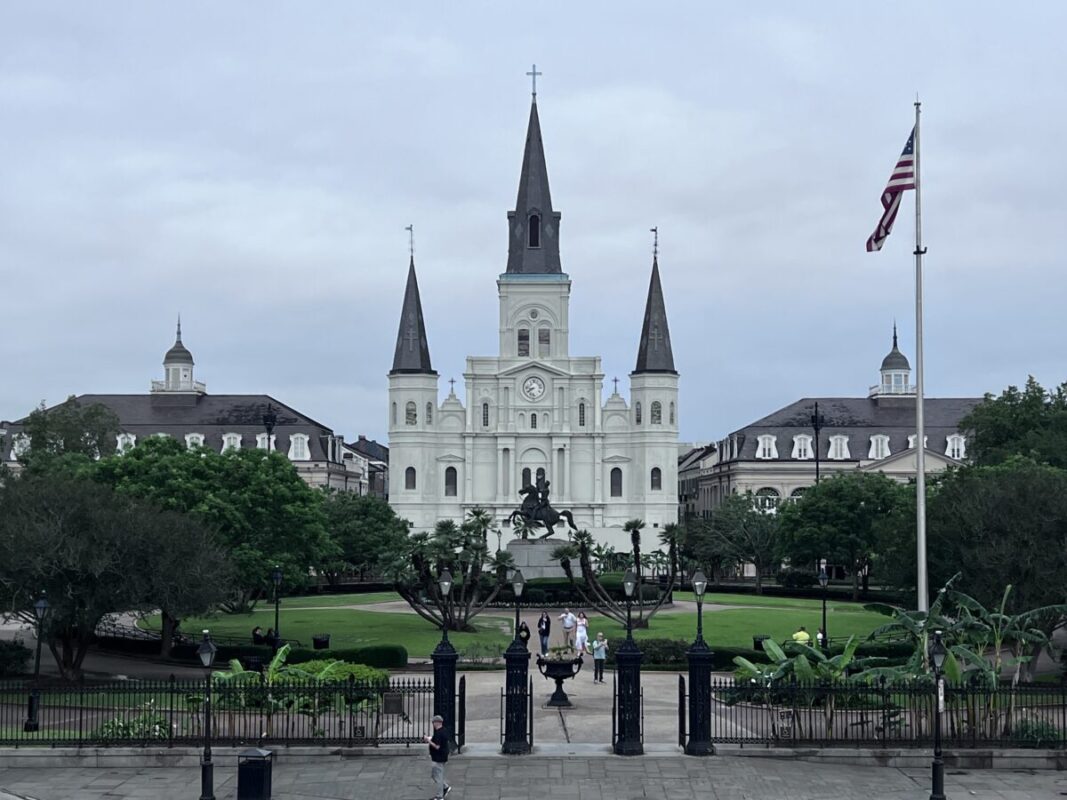
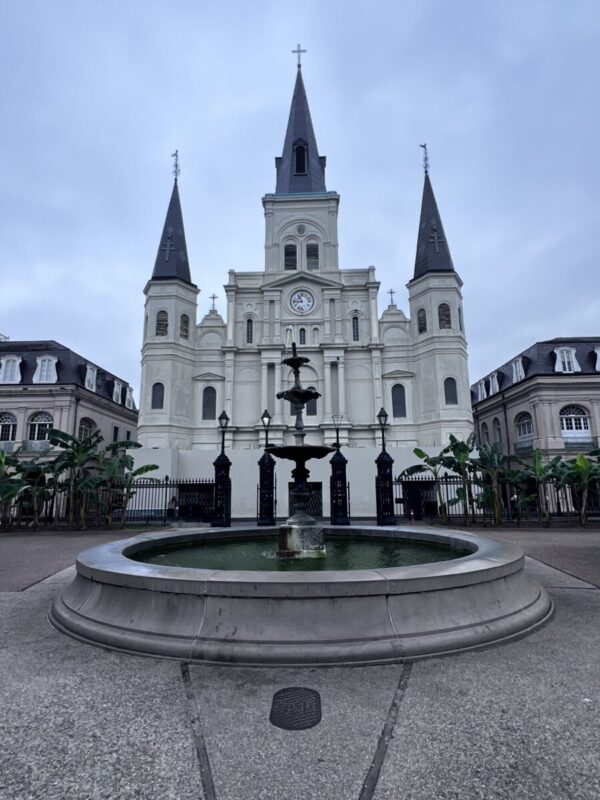
From there, I continued toward Jackson Square. Jackson Square sits in the heart of the French Quarter, overlooking the Mississippi River. The 2.5-acre park is one of New Orleans’ best-known landmarks and is also a National Historic Landmark.  The view across the square toward St. Louis Cathedral is one of those classic New Orleans scenes that never gets old. The cathedral community dates back to the founding of New Orleans in 1718, making it one of the oldest continuously active Catholic cathedral communities in the United States. I took several pictures of the cathedral from different angles, including a straight-on view showing the fountain in the foreground.

The cathedral was not the only historic building that caught my attention. The Presbytère sits immediately beside it and forms part of the impressive architectural ensemble surrounding Jackson Square. Construction of the Presbytère began in 1791 and was completed in 1813. The square itself has changed considerably over the centuries. What began as the Place d’Armes eventually became Jackson Square, and the surrounding gardens, ironwork, buildings, and monuments created the appearance we see today.

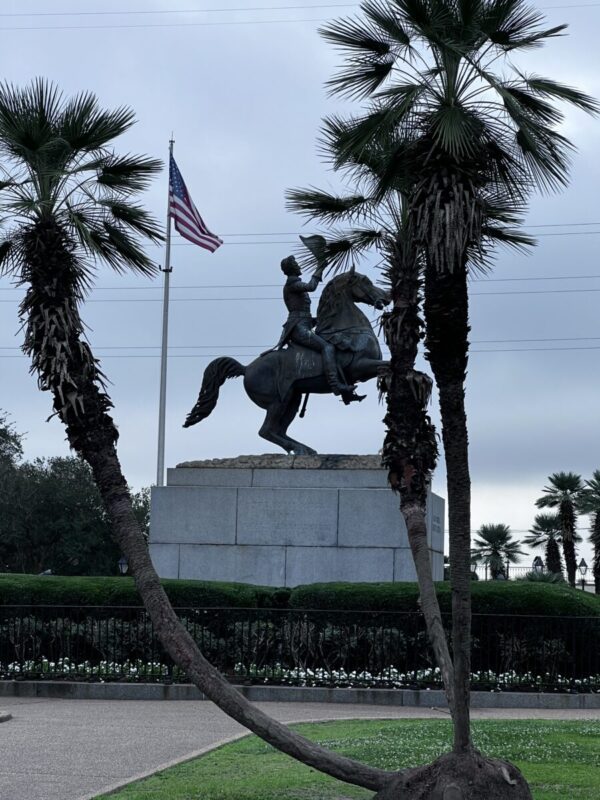
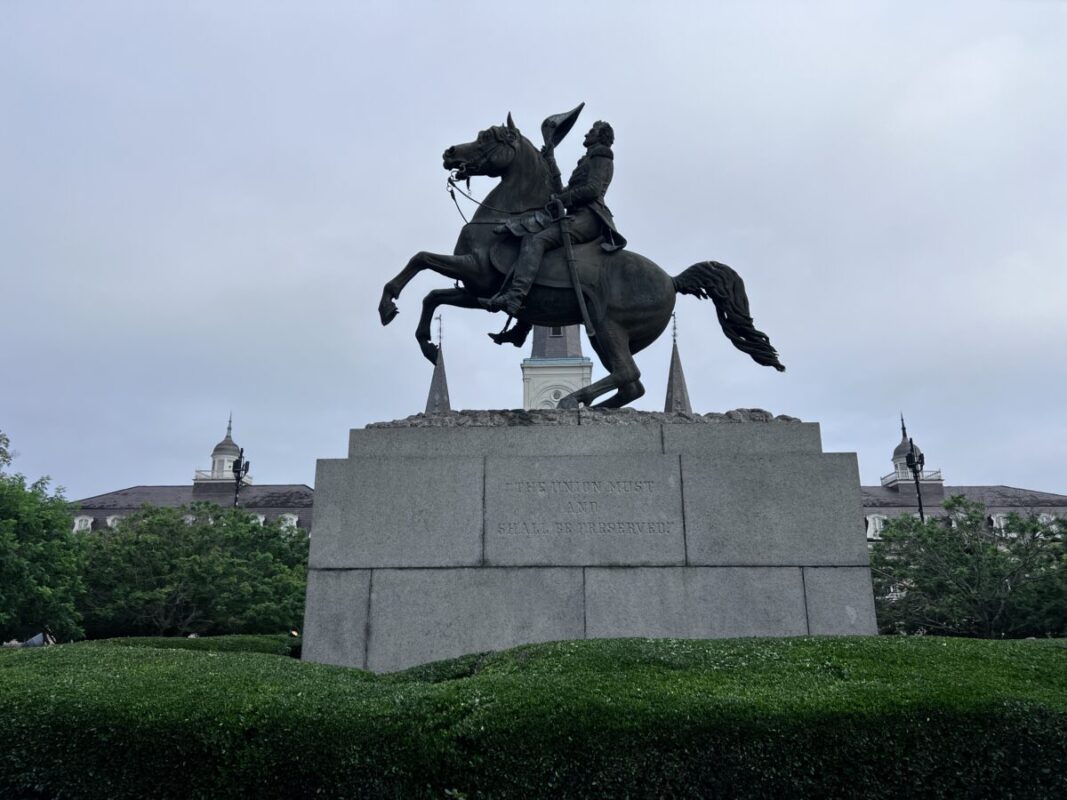
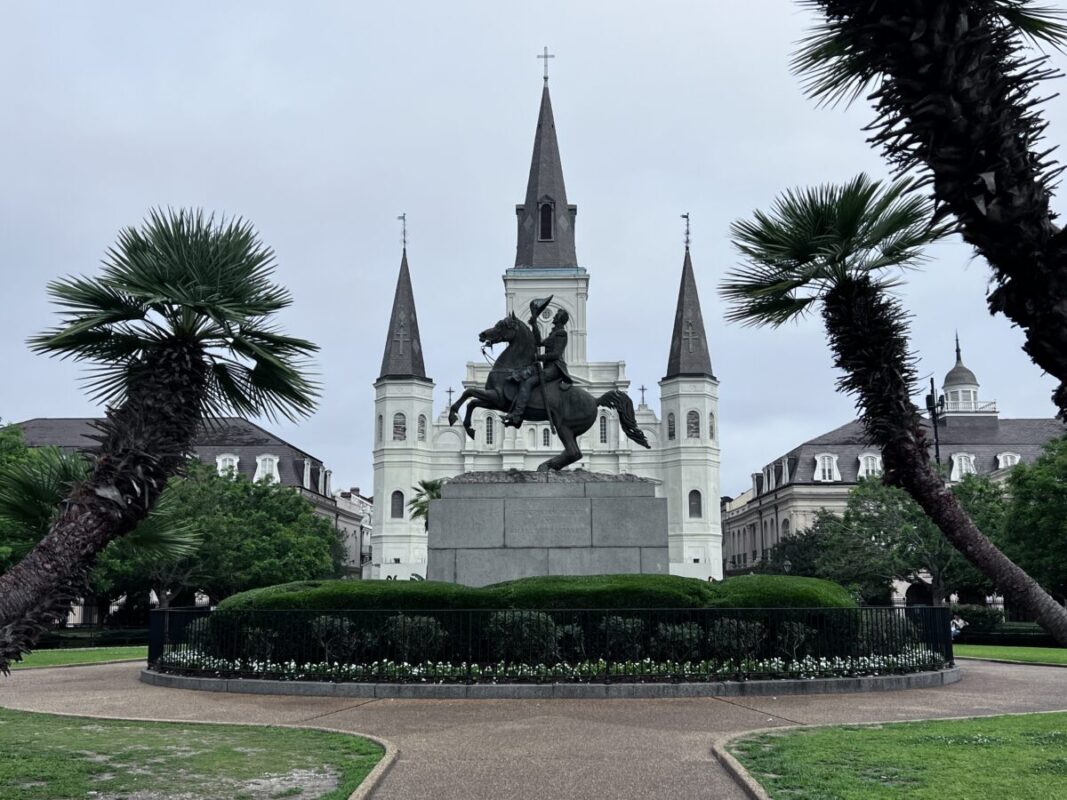
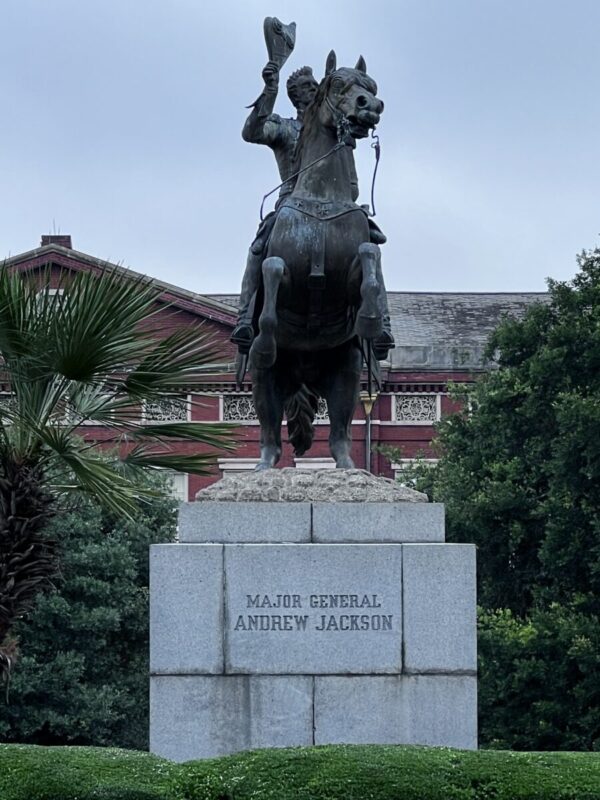
Of course, you can’t visit Jackson Square without seeing the monument that gives the square its name. The equestrian statue of Major General Andrew Jackson stands prominently in the center of the square. I liked the way the palm trees framed this view of the statue. The monument is especially striking when viewed against the historic buildings surrounding the square.

The Founder of New Orleans

As I continued walking, I came across another monument that tells an important part of New Orleans’ story.

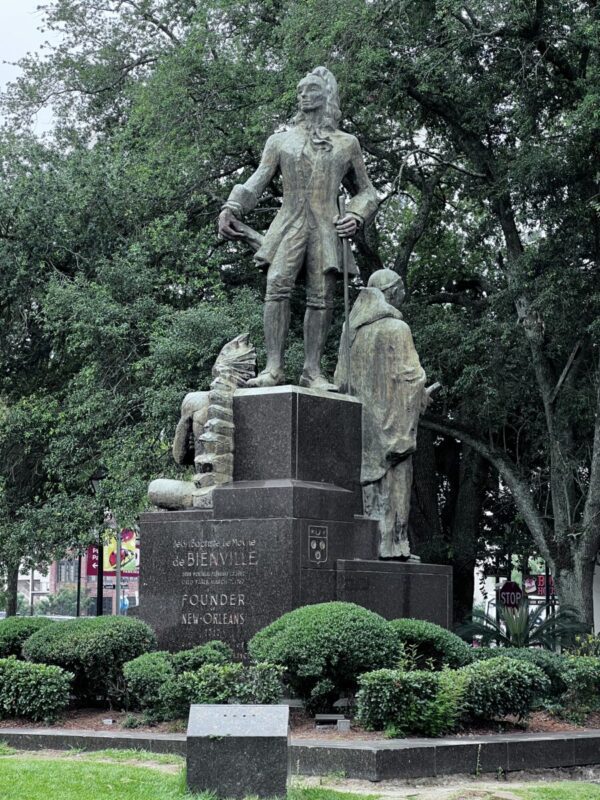
Jean-Baptiste Le Moyne de Bienville monument

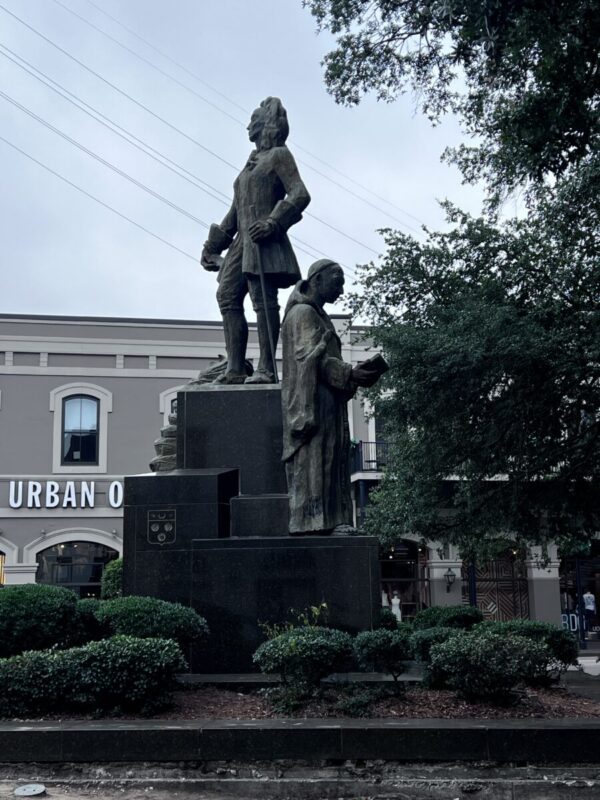
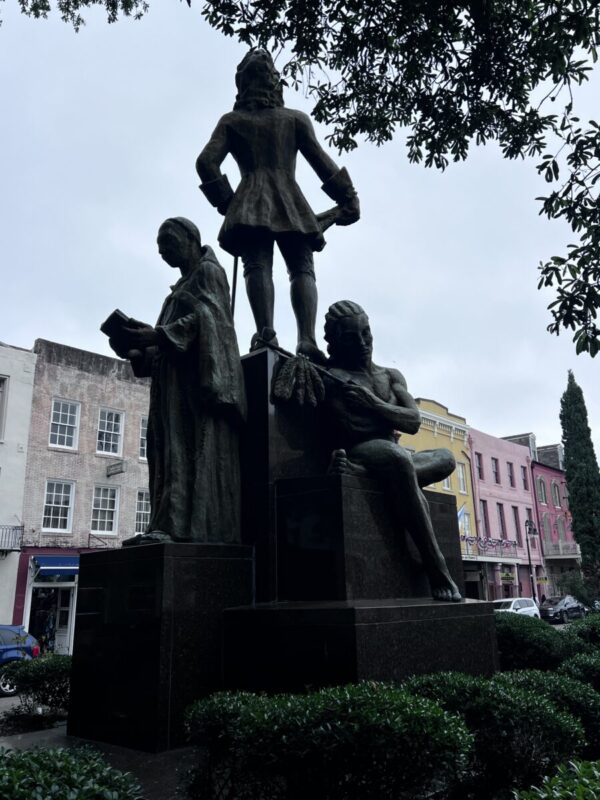
The monument honors Jean-Baptiste Le Moyne de Bienville, the French colonial official associated with the founding of New Orleans. The monument was created by sculptor Angela Gregory and depicts Bienville along with other figures representing the city’s early history. I walked around the monument and took several pictures because each side provides a completely different view.  Seeing the monument from the side also made it easier to appreciate the different figures incorporated into the sculpture.  It’s one of those landmarks that could easily be overlooked if you’re simply walking through the French Quarter, but taking a few minutes to look at it reveals another piece of New Orleans history.

One Last Look at the Mississippi River

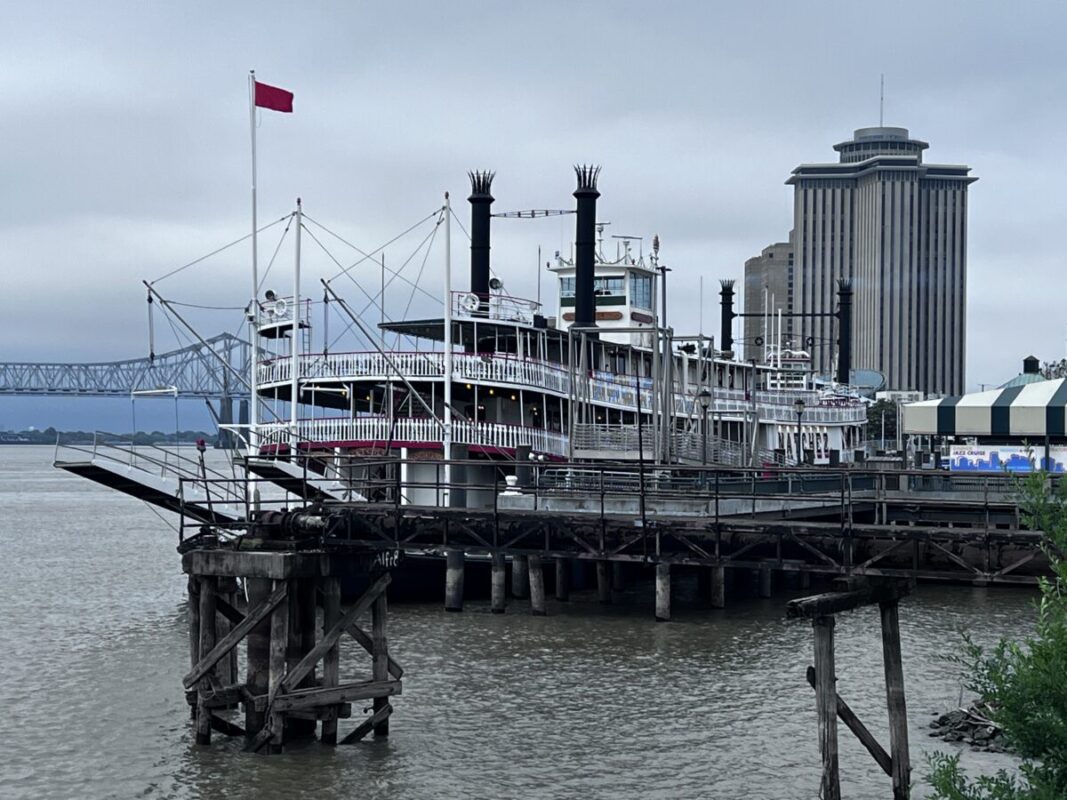
Eventually, I made my way down toward the riverfront. The Mississippi River has been central to New Orleans since the city’s earliest days, and the riverfront provides a completely different view of the city compared with the narrow streets of the French Quarter. The Steamboat NATCHEZ was docked along the riverfront when I arrived. The NATCHEZ is one of the most recognizable sights along the New Orleans riverfront and continues to operate sightseeing cruises on the Mississippi. I also captured a few wider views of the river. Watching the barge make its way down the river was a nice reminder that this isn’t just a scenic waterfront. The Mississippi remains an active working river and an important part of New Orleans.

Another Piece of New Orleans History

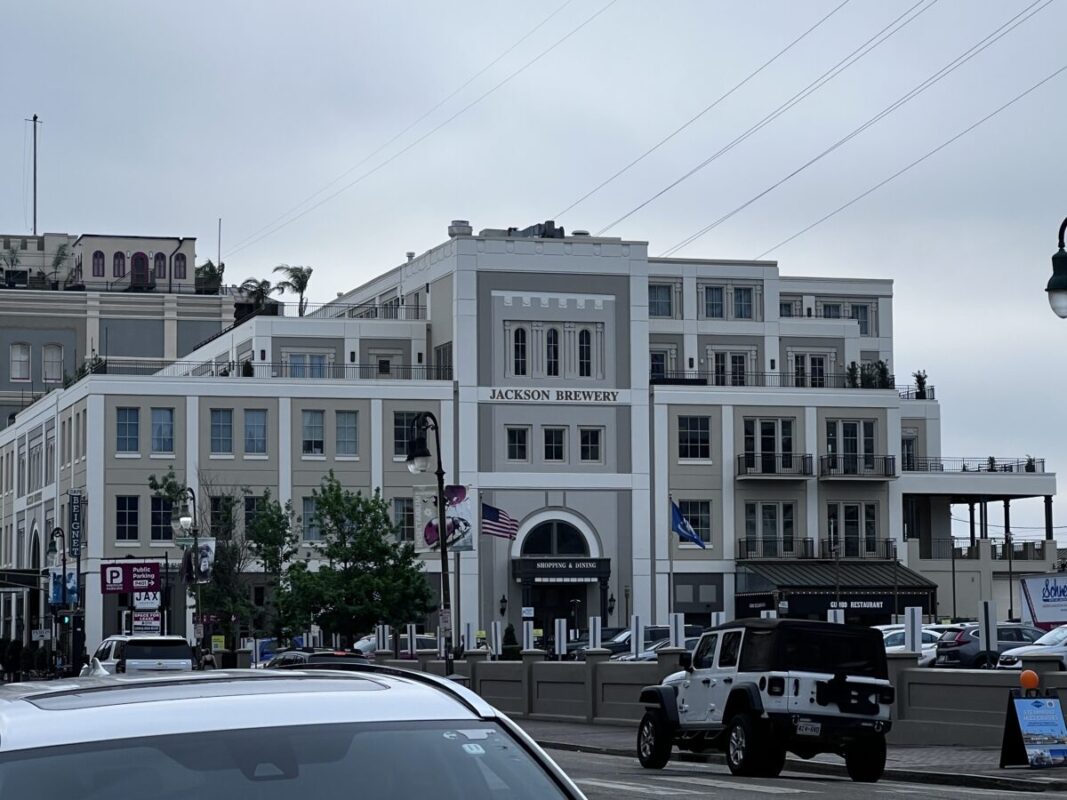
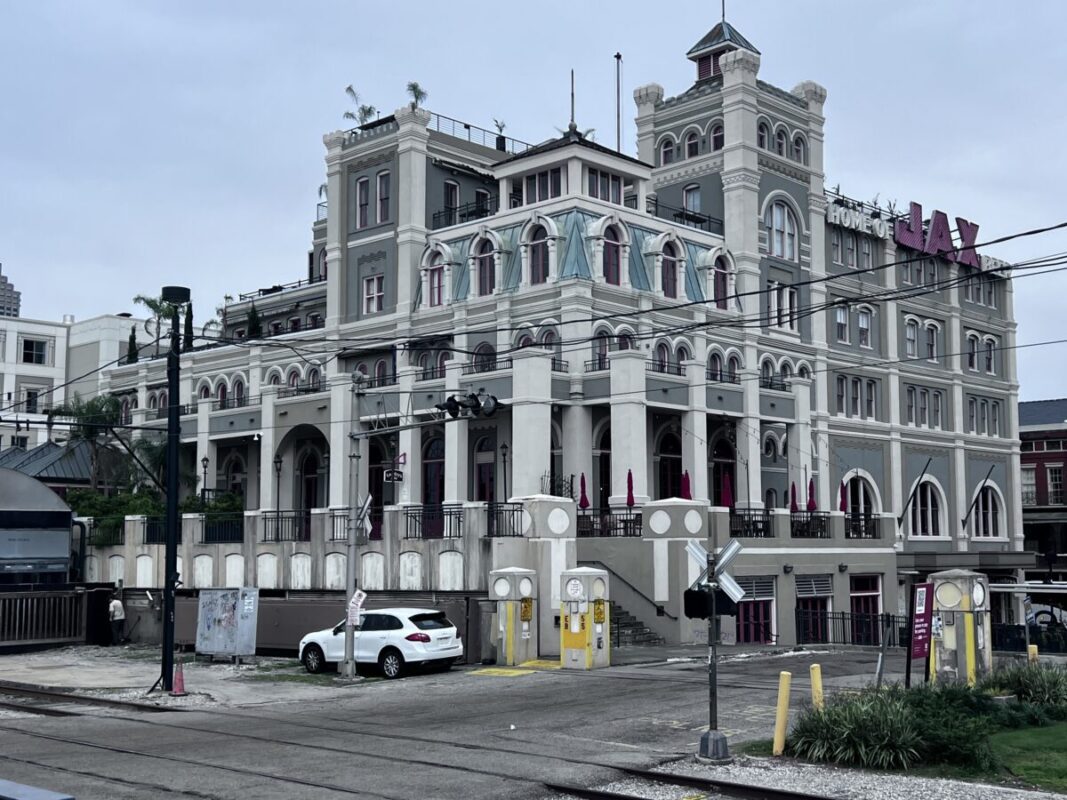
Before heading back, I also photographed the Jackson Brewery building. The Jackson Brewery, also known as Jax Brewery, dates to 1891 and was originally built as a brewery. The building later closed as a brewery and was converted into shops. Its location near the river makes it an easy landmark to encounter while exploring the lower French Quarter.

One Last Morning in New Orleans

By this point, I had spent the morning walking much farther than I originally intended. What started as a quick trip to pick up souvenirs turned into one final opportunity to photograph New Orleans before leaving. I had photographed St. Louis Cathedral, Jackson Square, Andrew Jackson, the Bienville monument, the French Quarter streets, the Mississippi River, and the Steamboat NATCHEZ. I also encountered a memorial that provided a much more sobering reminder of the city’s recent history. That mix of beautiful architecture, centuries of history, riverfront scenery, and unexpected discoveries is what makes New Orleans such an interesting place to explore.

After taking my final pictures, it was time to head back. Our stay in New Orleans had come to an end, and the road home was waiting. We had already traveled thousands of miles during our California road trip, and there were still plenty of miles ahead of us before we would finally arrive back in Florida. But before leaving New Orleans, I’m glad I took the time to go out on my own that morning. Sometimes the unplanned walks turn out to be some of the best parts of a road trip.

California Road Trip: A Visit to St. Louis Cathedral

California Road Trip: A Visit to St. Louis Cathedral

Exploring One of New Orleans’ Most Historic Landmarks

As our time in New Orleans was coming to an end, I headed out on my own for one more walk through the French Quarter. I wanted to pick up a few souvenirs and take some last-minute photos before we continued our long drive home.

After spending time around Jackson Square, I decided to step inside the Cathedral-Basilica of St. Louis, King of France.

From the outside, the cathedral is one of the most recognizable landmarks in New Orleans. Standing at the center of Jackson Square, its three distinctive towers have overlooked the historic French Quarter for generations. The cathedral describes itself as America’s oldest continuously active Catholic cathedral community.

Stepping Inside St. Louis Cathedral

Walking through the doors was quite a contrast to the busy streets of the French Quarter.

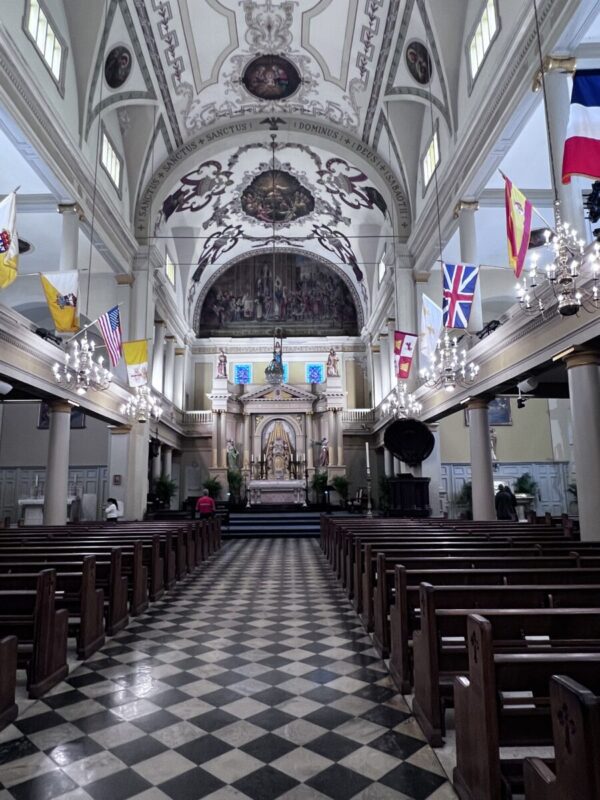
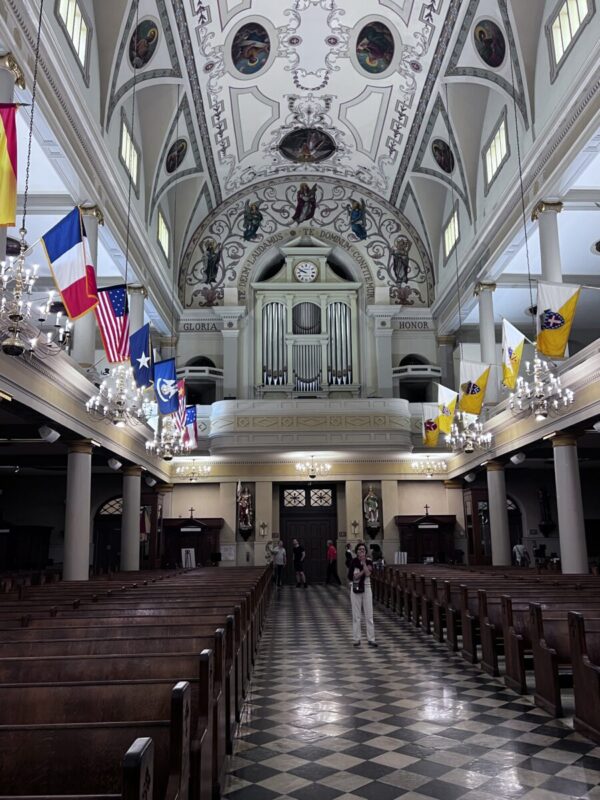
Inside, the cathedral was quiet and peaceful. The ornate decorations, stained-glass windows, statues, paintings, chandeliers, and detailed architectural features made it easy to spend time simply looking around.

The history of the site goes back to the founding of New Orleans in 1718. An early church was established here by 1722, while the first permanent church was built in 1727. That church was destroyed in the great fire of 1788. The present cathedral developed through later construction and major restoration, with the expanded cathedral blessed in 1851. Pope Paul VI raised it to the rank of Minor Basilica in 1964.

The Umbraculum and Tintinnabulum

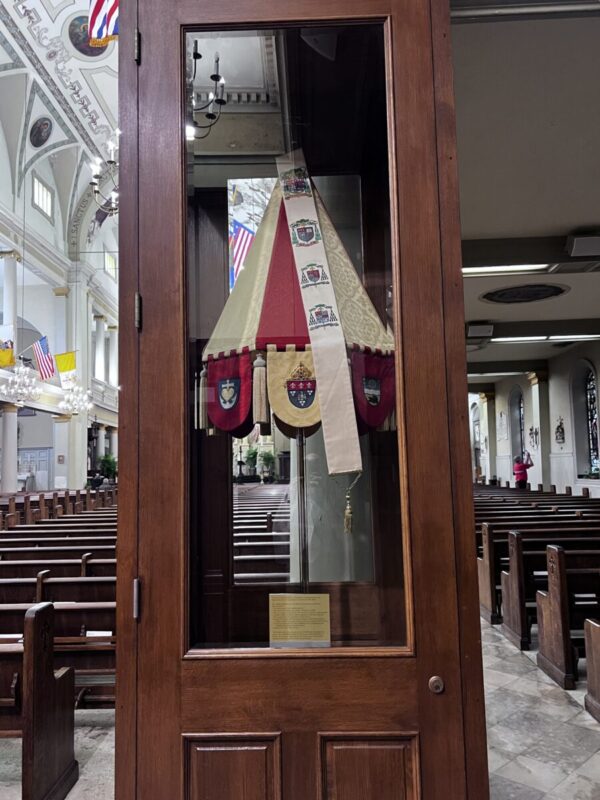
One of the details I noticed inside St. Louis Cathedral was an unusual red-and-gold ceremonial umbrella. At first, it might look like simply another piece of church décor, but it actually has an important meaning.

The umbraculum, sometimes called an ombrellino, is one of the traditional symbols associated with a Minor Basilica. It is displayed along with the tintinnabulum, a ceremonial bell. Together, these objects signify the cathedral’s status as a basilica and its special relationship with the Holy See.

St. Louis Cathedral is officially the Cathedral-Basilica of St. Louis, King of France, and the cathedral describes itself as America’s oldest continuously active Catholic cathedral community.

Seeing the umbraculum in person was one of those little details that would be easy to walk right past without knowing its significance. Once I learned what it represented, it became another interesting part of our visit.

The Main Altar

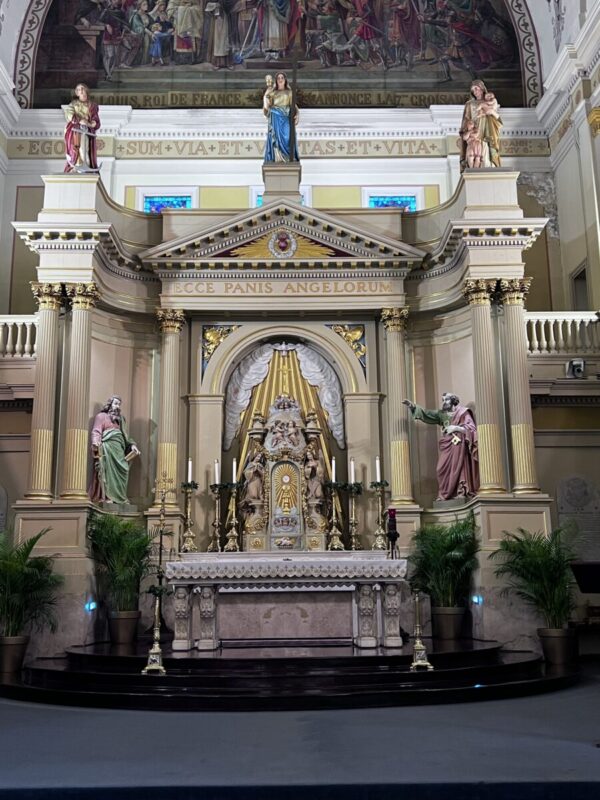
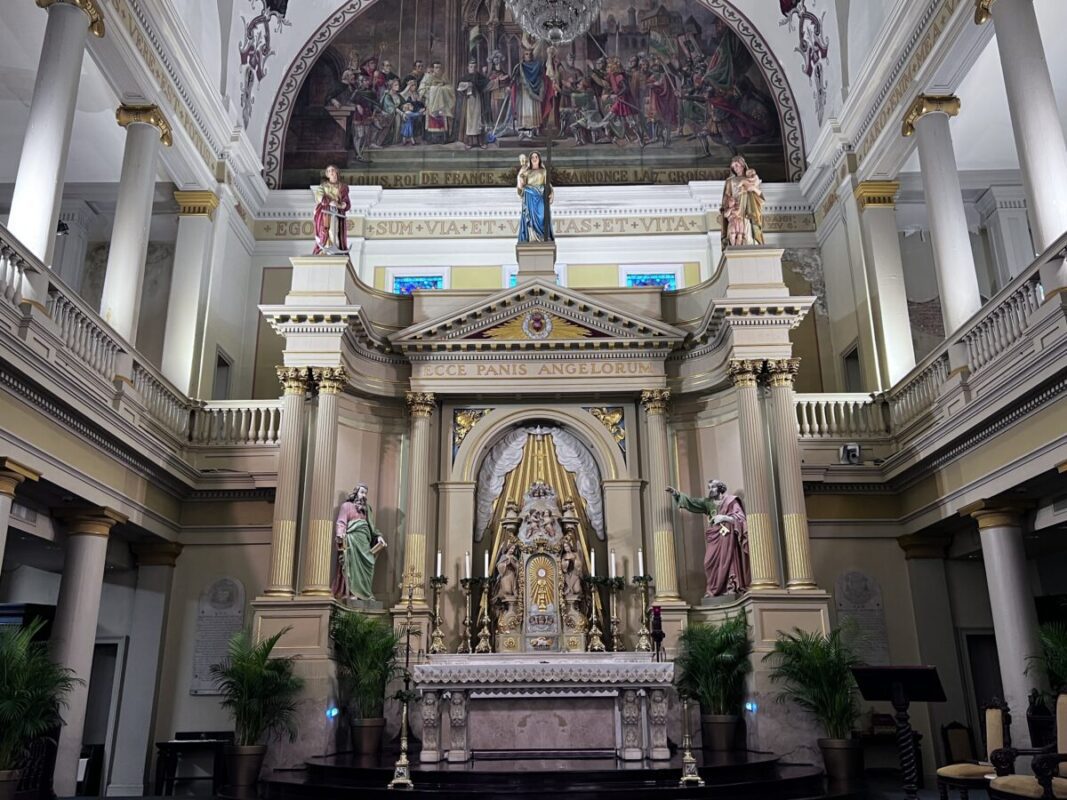
One of the first things that caught my attention was the impressive main altar. The combination of the columns, gold detailing, statues, artwork, and large painting above the altar makes this one of the most dramatic areas inside the cathedral. I took several pictures from different distances because there was so much detail to see.

The Artwork Above the Altar and on the Ceiling

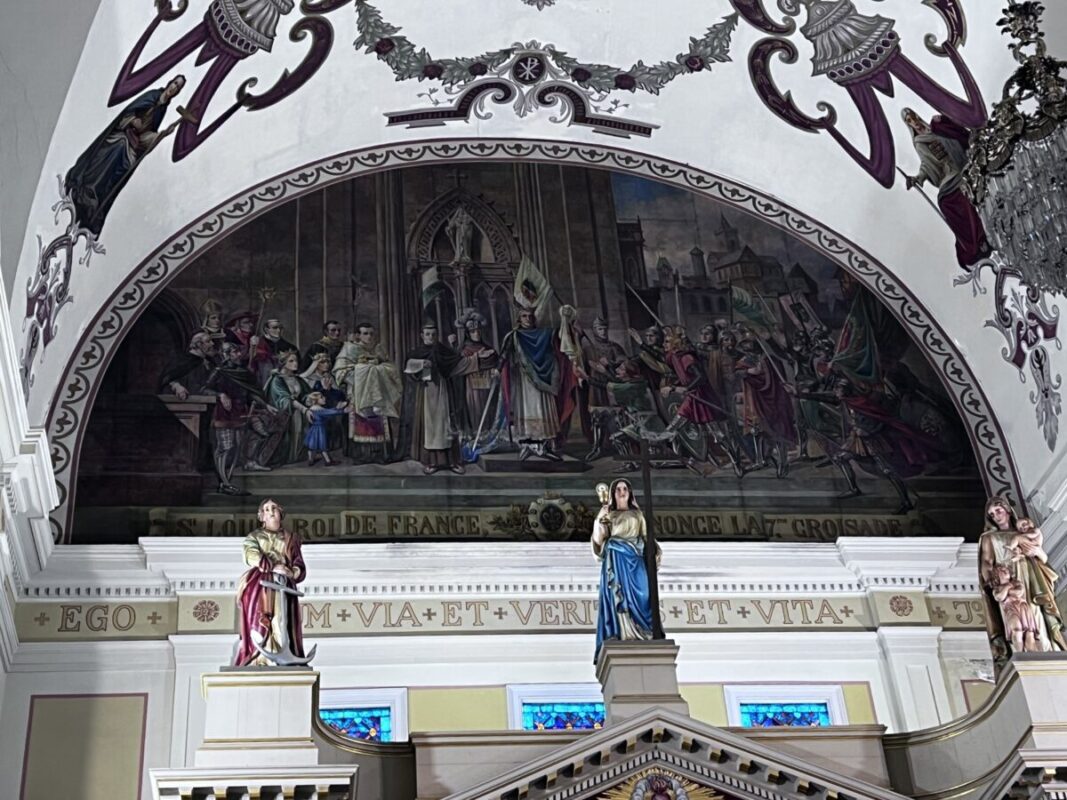
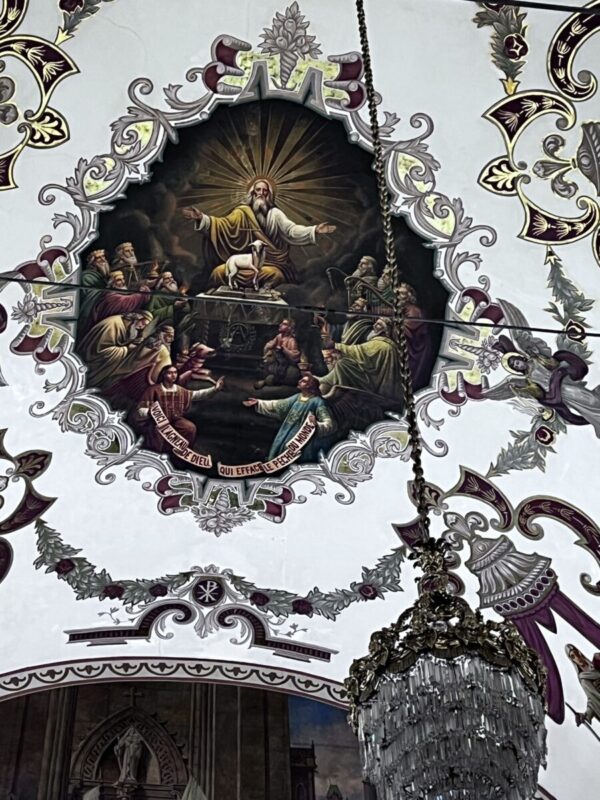
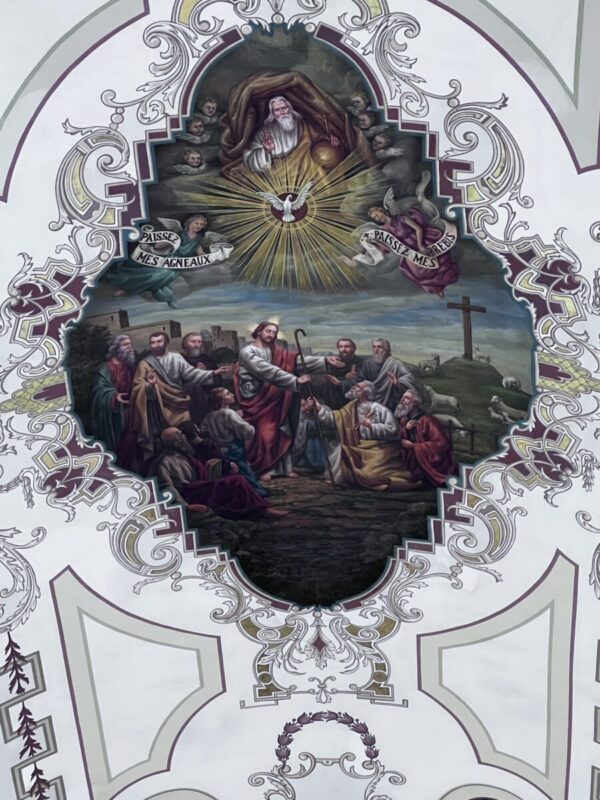
Looking upward reveals even more of the cathedral’s artwork. Large paintings and decorative designs cover portions of the ceiling and walls, while the chandeliers and architectural details add another layer to the interior. This is one of those places where a wide-angle photograph gives you an idea of the scale, but looking at the individual details makes you appreciate how much work went into the building.

The Bible of St. Louis

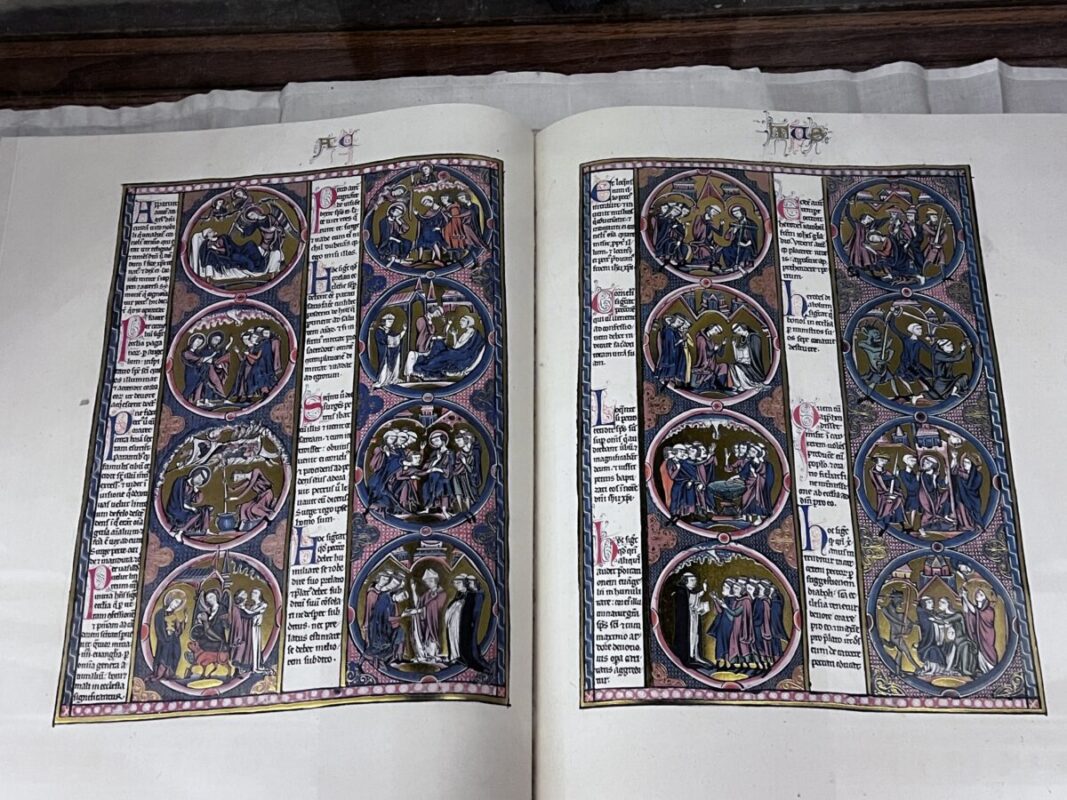
One of the more unusual things I noticed was The Bible of St. Louis. A plaque explains that the original Bible belonged to St. Louis IX, King of France, and was copied and illustrated in Paris between 1226 and 1234. The original is preserved in the Cathedral of Toledo in Spain, while the copy displayed at St. Louis Cathedral was presented to the cathedral in 2007. The illuminated pages are filled with colorful medieval artwork and provide an interesting connection between the cathedral’s patron, St. Louis IX, and the religious history represented inside the building.

Pope John Paul II’s Visit

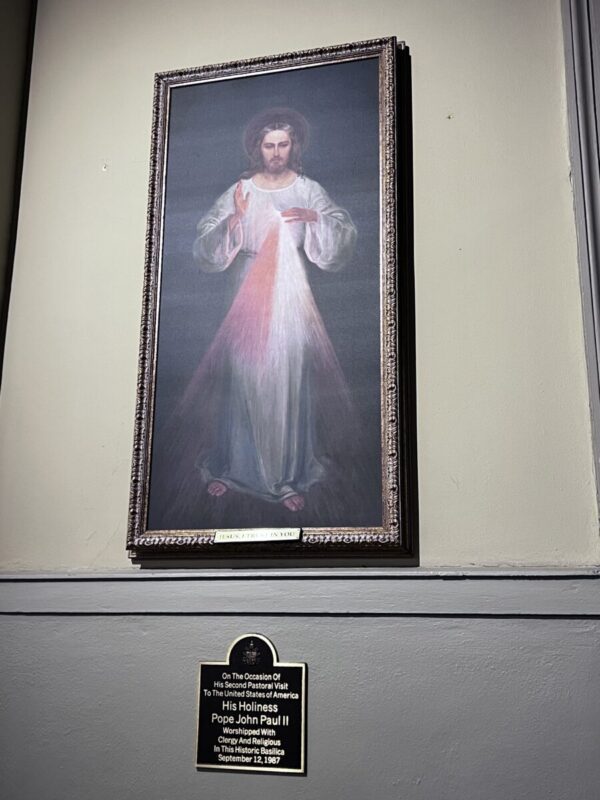
Another interesting piece of history inside the cathedral is a plaque commemorating Pope John Paul II’s visit. Pope John Paul II visited New Orleans in September 1987 and visited St. Louis Cathedral during his second pastoral visit to the United States. According to the cathedral, he paused for prayer before the statue of Our Lady of Prompt Succor, the patroness of New Orleans and Louisiana. Seeing the plaque in person was a nice reminder that this isn’t simply a historic building—it remains an active Catholic church and an important part of New Orleans’ religious history.

Crucifix, Statues, Confessional and Stained Glass

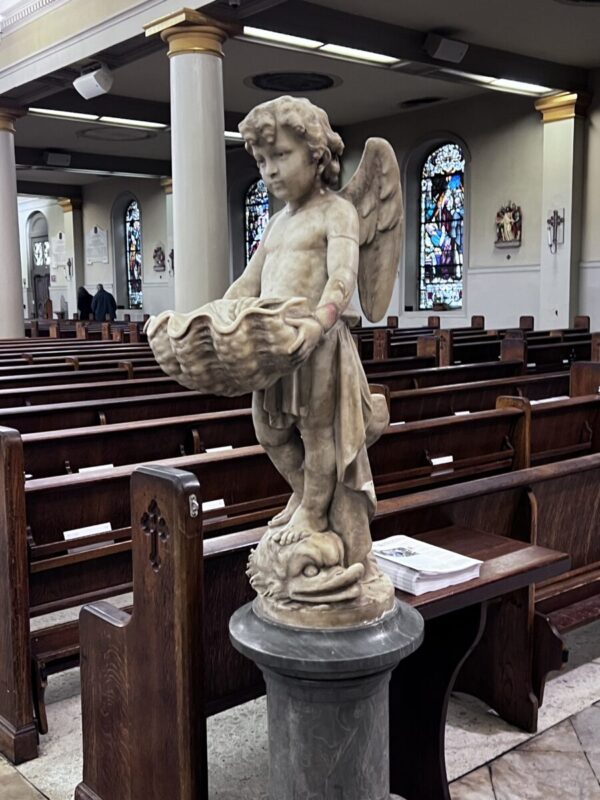
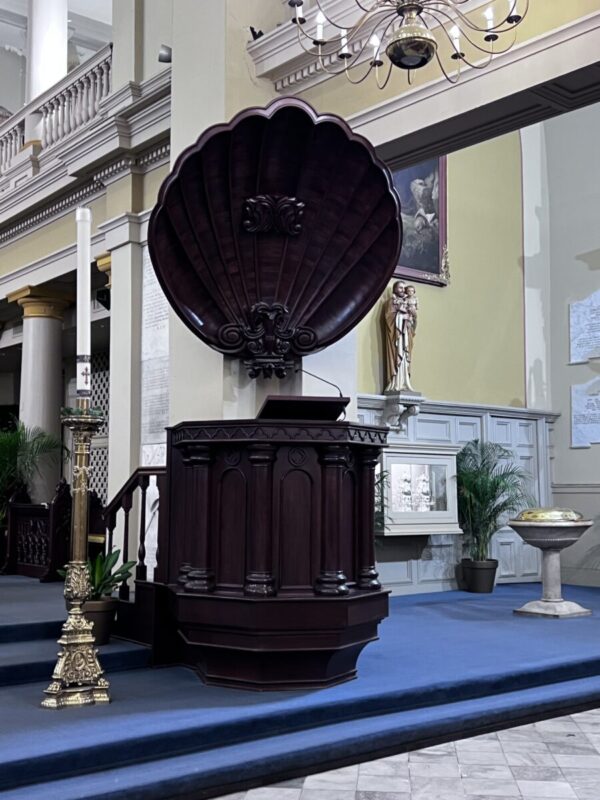
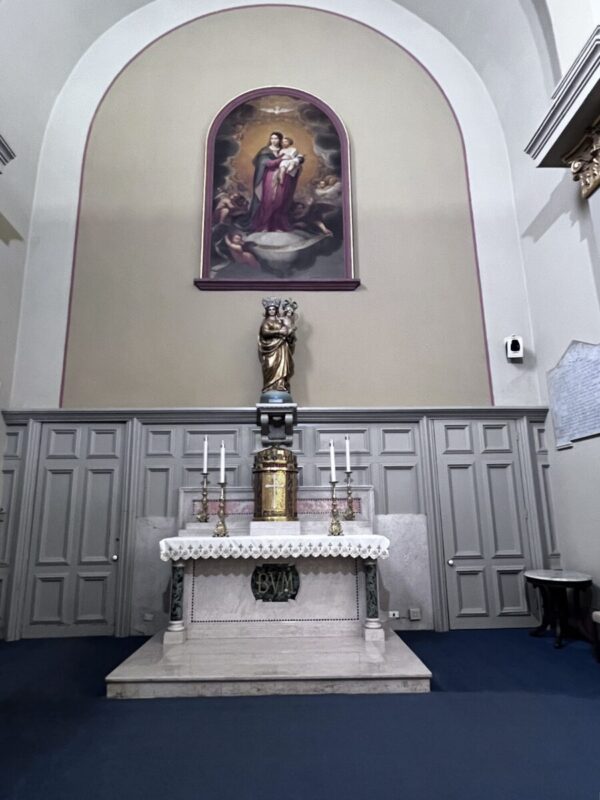
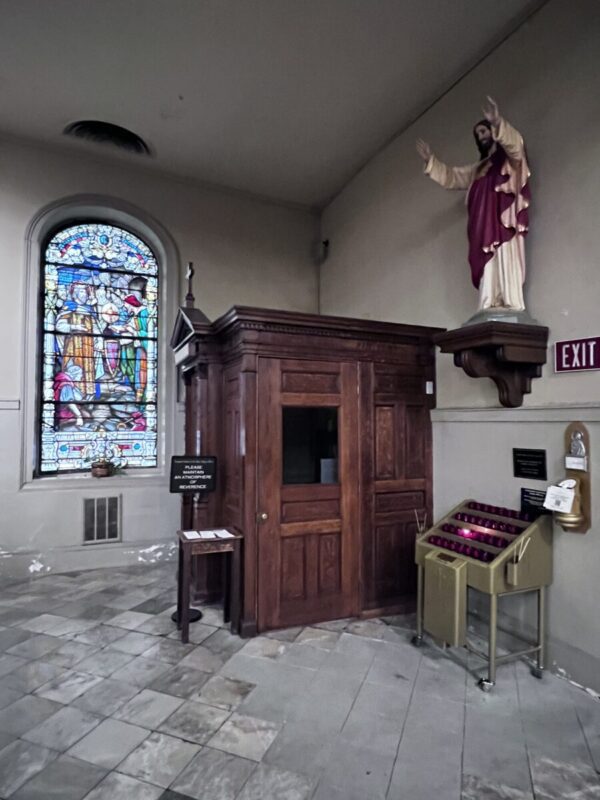
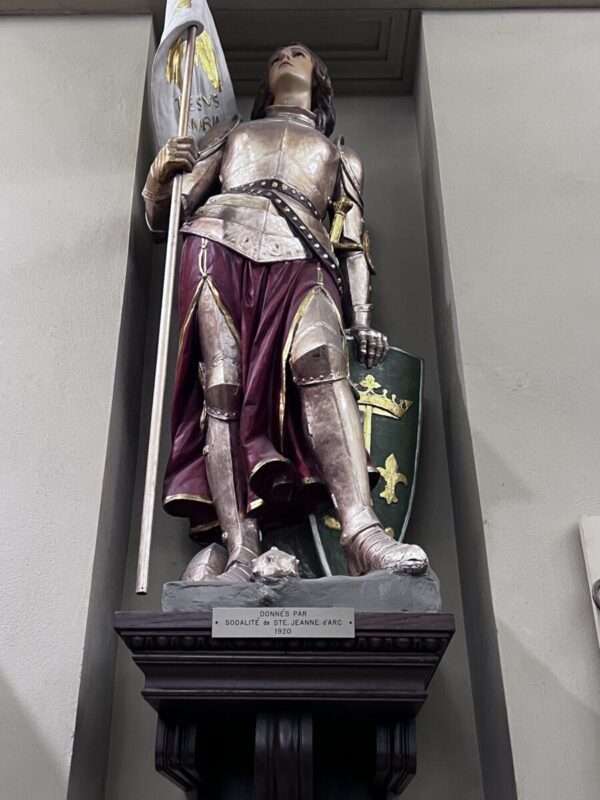
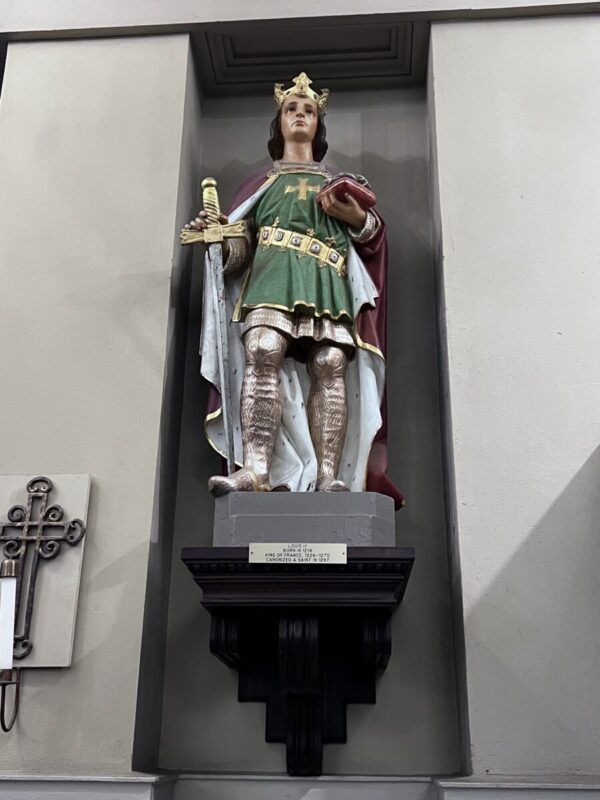
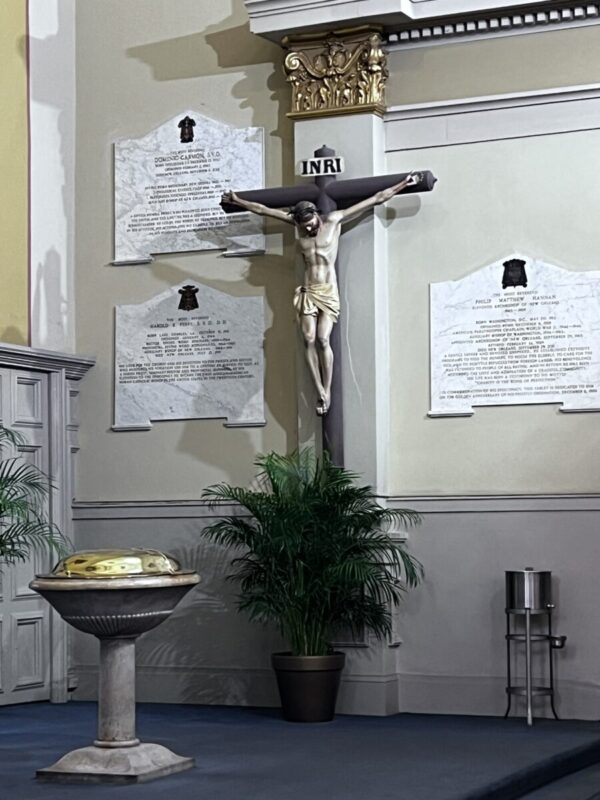
As I walked through the cathedral, I found plenty of smaller details that were easy to overlook at first. There were statues of saints, including Joan of Arc, intricate stained-glass windows, religious paintings, and beautifully carved furnishings. The baptismal area, pulpit, crucifix, and other devotional pieces each had their own character. I kept finding another photograph to take before moving on.

A Quiet Moment Before Leaving

After walking around the cathedral, I made my way back outside toward Jackson Square. It was a peaceful change of pace from the activity of the French Quarter. I had gone out that morning simply looking for souvenirs and some final photographs, but the visit to St. Louis Cathedral ended up being one of the more memorable parts of my final morning in New Orleans. The cathedral has been a center of Catholic worship and community life for more than three centuries, and standing inside it gave me a much better appreciation for the history behind the familiar landmark I had photographed from Jackson Square. There was still more of New Orleans to see, and I had one more set of photographs to take before we loaded up the Jeep and continued our journey home.